
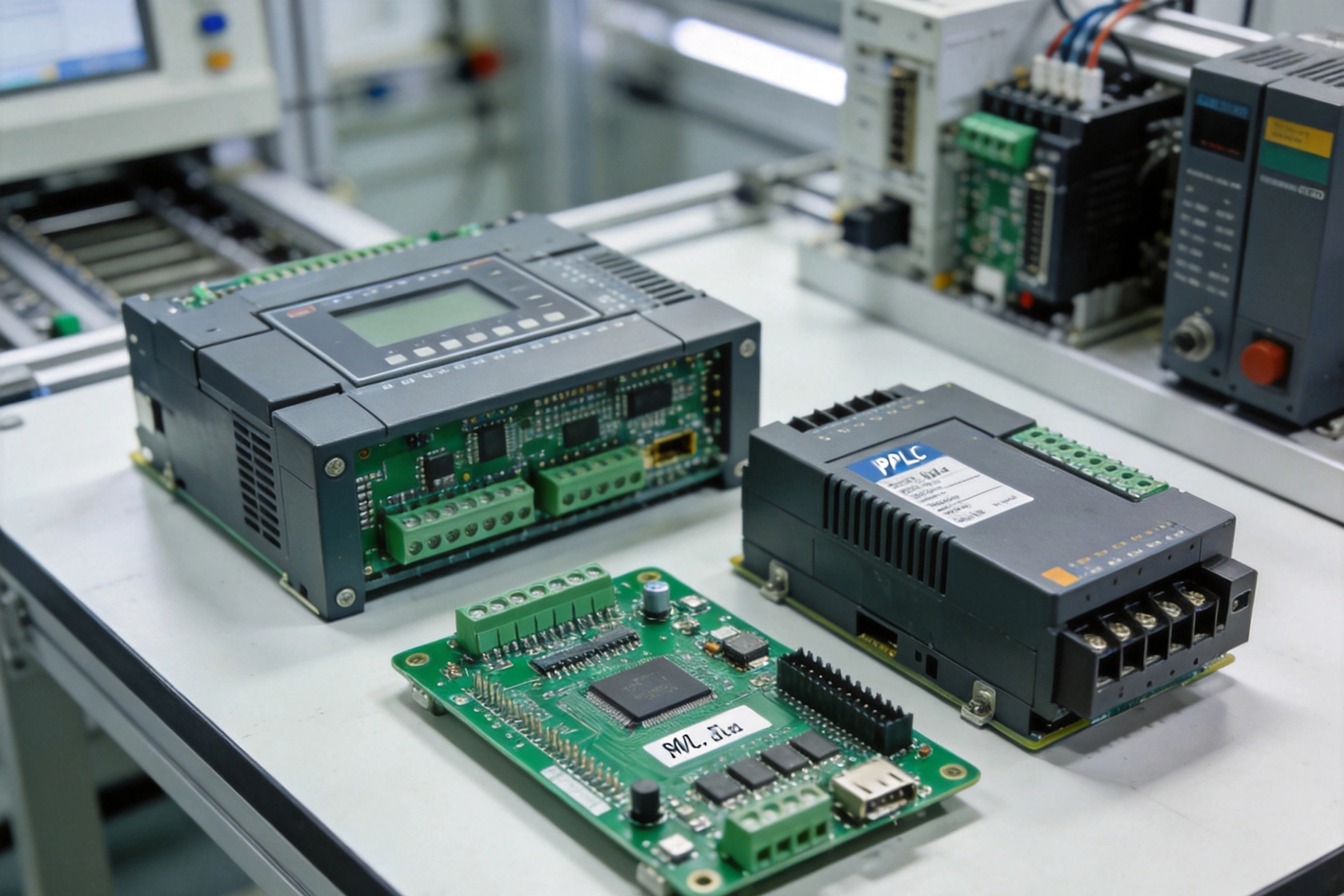
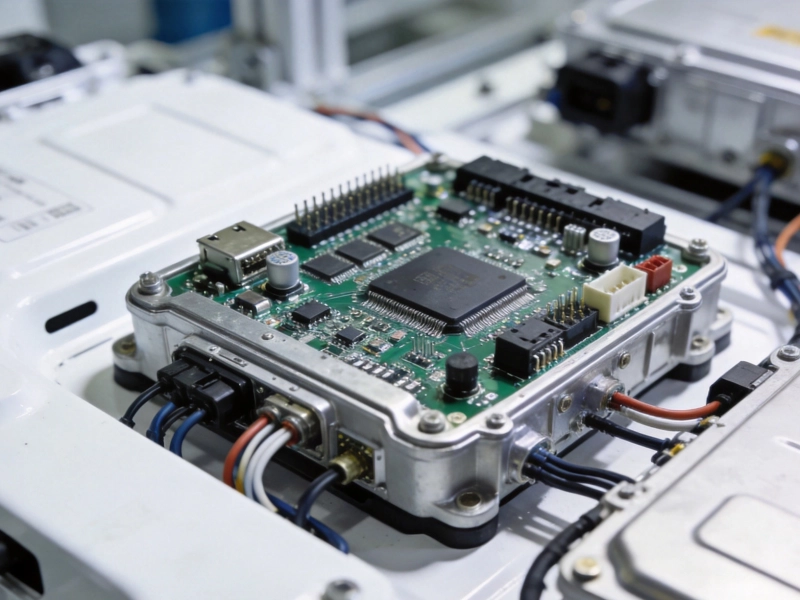
Programmable Logic Controllers and motor control drives are the workhorses of industrial automation. PLCs process sensor data and execute control logic across factories and plants. Motor drives regulate the speed, torque, and direction of electric motors that move conveyor belts, robotic arms, pumps, and compressors. Both categories of equipment operate in demanding industrial environments where downtime is costly, temperature extremes are common, and electrical noise is pervasive. The PCBs that power these systems carry a unique combination of challenges: power density that generates significant heat, analog and digital circuitry that must coexist without interference, and long product lifecycles that require component availability over many years. Turnkey PCB Assembly — where a single contract manufacturer handles everything from component procurement through final test — addresses these challenges most effectively when both the buyer and the CM understand what each phase of the process demands.
Turnkey PCB Assembly for industrial controls goes well beyond placing components on a board and sending it out the door. A complete Turnkey Assembly service for PLCs and motor drives typically encompasses BOM analysis and Component Sourcing, Dfm review, PCB Fabrication coordination, SMT and through-hole assembly, Conformal Coating or potting, cable and connector termination, and a battery of electrical and functional tests before shipment. The value of a true turnkey partner is that they own the entire process chain: when a component goes obsolete mid-build, it is their procurement team that finds the equivalent, validates the substitution with you, and adjusts the process — not your engineering team chasing three different distributors at once.
The alternative — managing component procurement separately from assembly — is workable for Consumer Electronics where product lifecycles are short and second-source options are abundant. For industrial controls with five to fifteen year product lifecycles, the fragmented approach creates risk at every handoff. Sourcing delays that prevent component kits from arriving at the assembler on schedule, substitution decisions made by procurement staff without engineering review, and lot traceability gaps between purchasing records and assembly records all become systemic failure points that Turnkey Assembly specifically aims to eliminate.
PLC and motor drive Bill of Materials tend to include a mix of commodity passives, specialized power semiconductors, analog components for signal conditioning, and processors or FPGAs for control logic. The commodity side — resistors, capacitors, connectors — is straightforward for any competent CM to source. The challenge lies in the specialized components that define the electrical performance of the board.
MOSFETs and IGBTs for motor drive power stages, operational amplifiers for current sensing, isolated gate drivers for switching supplies, and communication PHY chips for industrial Ethernet protocols such as EtherCAT, PROFINET, and EtherNet/IP are all items that require relationship-based procurement from authorized distributors or direct-from-manufacturer channels. Counterfeit risk on these components is real, and a turnkey CM with established sourcing channels and a documented component authentication process provides meaningful protection against that risk.
For long-lifecycle industrial products, the CM should also maintain a proactive obsolescence management program. This means tracking the lifecycle status of key components in the BOM, flagging parts that are approaching end-of-life before they become an emergency, and coordinating last-time-buy decisions with the customer with sufficient lead time to avoid production line stoppages.
Motor control drives, particularly variable frequency drives (VFDs) and servo drives, are among the most thermally demanding PCB assemblies in Industrial Electronics. A 5 kW motor drive operating at 95 percent efficiency still dissipates 250 watts, and that heat must be managed through the PCB, the enclosure, and the cooling system without letting junction temperatures exceed safe limits for the semiconductors.
The thermal architecture of the PCB is therefore a primary design consideration, not an afterthought. For turnkey assembly, this means the CM must understand the thermal requirements of the design before they accept the job. Thermal pads connected to internal copper planes, exposed copper coins for direct heatsink attachment, and IMS (Insulated Metal Substrate) boards for the highest-power sections are all options that may be specified depending on the power density and environment. The CM's engineering team should be capable of reviewing the thermal simulation or analysis that underlies these choices and translating them into the appropriate PCB Fabrication and assembly specifications.
Conformal Coating adds another dimension to Thermal Management for PLCs. A board coated with acrylic or urethane conformal coating after assembly provides humidity and contamination protection for circuitry that will operate in damp or chemically aggressive environments — common in factory floors. But conformal coating changes the thermal resistance of the board surface, and in some cases it can trap heat against components if the coating thickness is not controlled. Turnkey CMs experienced in Industrial Electronics understand these interactions and will specify coating processes and inspection criteria that account for them.
Motor drives are aggressive electromagnetic interference generators. The high-speed switching of IGBTs and MOSFETs at frequencies from 2 kHz to 20 kHz produces conducted and radiated emissions that can disrupt the PLC's own control circuitry if the PCB layout and shielding are not properly designed. Conversely, industrial environments contain abundant EMI from motor starting currents, contactors, and adjacent equipment that the PLC's input circuits must reject.
The turnkey assembly process touches this challenge in several ways. First, the CM's Dfm review should include an assessment of whether the Pcb Stack-up and ground plane design are appropriate for the EMI environment — this is a layout and design question, but the CM's experience with similar assemblies gives them a reference point. Second, the assembly process itself must handle shielding components — often metal cans over oscillators and clock circuits — without damage or misalignment. Third, cables and wiring that carry motor drive outputs or PLC communication signals should be routed and terminated in ways that minimize loop areas and prevent cross-talk, which requires coordination between the mechanical design and the assembly instructions.
The testing regime for PLC and motor drive PCBs is more demanding than for most Consumer Electronics. A PLC that fails in the field may cause an entire production line to stop, with consequences far exceeding the cost of the board itself. This consequence asymmetry means that buyers of industrial control electronics should insist on rigorous test coverage even when the volume does not obviously justify it.
A comprehensive turnkey test program for industrial control assemblies typically includes several layers. In-circuit test (ICT) verifies that each component is present, correctly placed, and electrically connected as specified. Flying probe testing provides a lower-cost alternative for prototypes and low-volume builds where fixture costs would be prohibitive. Functional test — applying power, exercising the control logic, and verifying outputs against a defined test procedure — confirms that the assembled board performs its intended function. Boundary scan testing using JTAG or similar protocols can verify connections on high-density components where physical probe access is limited.
For motor drives, burn-in testing — running the board under load for an extended period, typically 4 to 24 hours at elevated temperature — accelerates the failure of components with latent defects that would otherwise show up during field deployment. The cost of burn-in is meaningful, but for critical motor drive applications, it is one of the most effective ways to screen out early-life failures before they reach a customer's plant floor.
Industrial control PCB designs benefit from early engagement with the CM's engineering team during the DFM phase. The most common design issues that surface in DFM review for PLC and motor drive assemblies fall into a few predictable categories.
Thermal pad and via design under power semiconductors is often under-specified in initial designs. Designers may specify a thermal pad footprint that matches the component datasheet recommendation, but the datasheet recommendation is based on a reference board, not your specific stack-up and thermal environment. Optimizing the via array density, copper weight, and plane geometry for the actual operating conditions requires iteration that is best done collaboratively with the CM's process engineers.
Test access is another frequent DFM finding. Boundary scan and ICT coverage depend on access to specific test points and the availability of adequate probe landing areas around components. If the board layout was designed without thinking about testability, the CM may need to propose creative solutions — adding test points to nets that are otherwise buried, or recommending a change to a probe-inaccessible component footprint — that improve test coverage without requiring a full board respin.
Panelization and array design affect the efficiency of the assembly run and therefore the unit cost. Industrial control boards are often irregular in shape — not a clean rectangle — due to the mechanical enclosures they must fit inside. The CM's tooling and process engineers need to understand the panelization constraints early enough to design an array that maximizes utilization of the panel without violating manufacturing minimums or creating assembly yield problems at the edges.
One of the practical advantages of establishing a turnkey assembly relationship with a capable CM for industrial electronics is the product lifecycle continuity it provides. PLCs and motor drives typically ship for ten to twenty years after their initial design release. During that time, components go obsolete, process improvements become available, and occasionally design changes are needed to address field issues or evolving customer requirements.
A CM that has been engaged from the beginning retains the tooling files, BOM records, process parameters, and test programs for the product. When the bill of materials changes — even a minor substitution for an end-of-life resistor value — they can execute the change against a documented baseline rather than rebuilding the process from scratch. This continuity is difficult to replicate when procurement and assembly are fragmented across multiple parties with no single entity owning the complete product record.
For buyers who need to maintain identical replacement boards over long periods — which is common in industrial automation where retrofitting a different board revision into an existing machine is impractical — the documentation discipline and material management processes of a professional turnkey CM are effectively mandatory. Attempting to recreate this record-keeping in-house without the same tooling and process infrastructure is a false economy.
Not every CM that calls itself a turnkey provider is equally capable of handling the complexity of industrial control electronics. When evaluating potential partners, look for evidence of relevant sector experience — ideally, the CM should be able to show you assemblies they have produced for comparable applications and share the quality metrics from those programs. Ask specifically about their experience with high-power assemblies, with boards that require conformal coating, and with test programs that include functional and burn-in testing.
Quality certifications matter in this space. ISO 9001 is the baseline, but AS9100 or Iatf 16949 certification indicates a more rigorous quality management system. If your product is safety-critical — for instance, a motor drive in a crane or elevator application — the CM should be able to demonstrate traceability to the component lot level and experience with the applicable safety standards.
Communication infrastructure is equally important. Industrial control assemblies frequently require engineering discussion during the build — a test result that needs interpretation, a component substitution that requires your sign-off, a process deviation that must be documented. The CM's Project Management team should be accessible, responsive in your time zone during overlapping hours, and capable of escalating technical questions to their engineering team when needed.
Turnkey Pcb Assembly for PLCs and motor control drives is a discipline that rewards partnership over transactional procurement. The thermal density, EMI complexity, testing rigor, and long lifecycle requirements of industrial control electronics demand a CM that can contribute engineering value beyond simply executing a BOM. By engaging a turnkey partner early, sharing thermal and electrical analysis, and establishing a documentation and quality baseline that can be maintained over a ten-year product lifecycle, buyers of industrial automation electronics can significantly reduce their Supply Chain risk while achieving better cost and schedule outcomes than fragmented sourcing approaches typically deliver.
Best Turnkey PCB Assembly for Industrial & Automation: Built to LastJune/27/2026
Longevity and Lifecycle Management in Industrial PCBASeptember/18/2026
Turnkey PCB Solutions: Bridging the Gap Between Design and Mass ProductionAugust/06/2026
Turnkey PCB Assembly Insights: The Shift Towards High-Mix Low-Volume ProductionJuly/02/2026
Low Volume Turnkey PCBA: Flexibility for Niche and Specialized MarketsJuly/09/2026
The Best Turnkey PCB Assembly Solutions for Startups and SMEsAugust/15/2026
The Role of Low Volume Turnkey PCBA in Market ValidationSeptember/08/2026
Best Turnkey PCB Assembly for Electric Vehicle Control UnitsSeptember/16/2026