
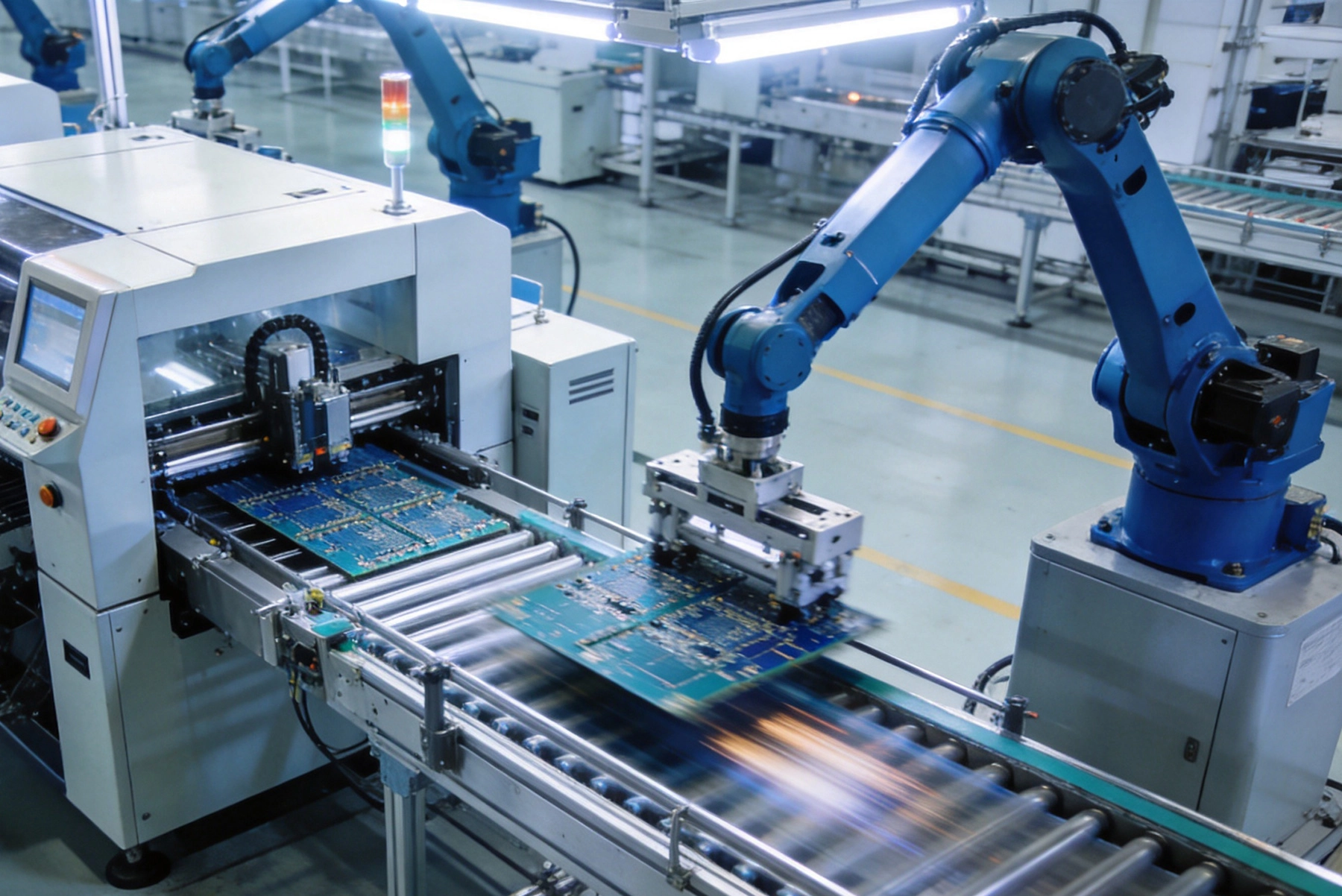
High volume electronics production demands manufacturing capabilities that manual assembly simply cannot deliver. When production runs reach thousands or millions of units, the difference between automated and manual processes becomes stark. Automated assembly lines provide the consistency, speed, and quality that high volume Turnkey Pcba requires, transforming production economics and enabling competitive pricing without sacrificing product quality.
This guide explores why automation is essential for high volume Electronics Manufacturing, what automated systems actually provide, and how to evaluate manufacturing partners based on their automation investments.
Automation in Electronics Manufacturing is fundamentally an economic decision. While initial investments are substantial, the unit economics of automated production favor high volume scenarios where costs can be amortized across large production quantities.
Manual assembly requires operators for each process step, from component placement to inspection. Automated lines reduce this requirement dramatically:
In regions where labor costs are rising, automation provides a pathway to maintaining competitiveness while preserving manufacturing capability.
Human operators, no matter how skilled, introduce variability. Automated systems deliver consistent results across millions of placements:
The consistency of automation directly translates to lower cost through reduced rework, fewer field failures, and decreased warranty exposure.
Modern pick-and-place systems achieve placement rates exceeding 100,000 components per hour. This throughput enables:
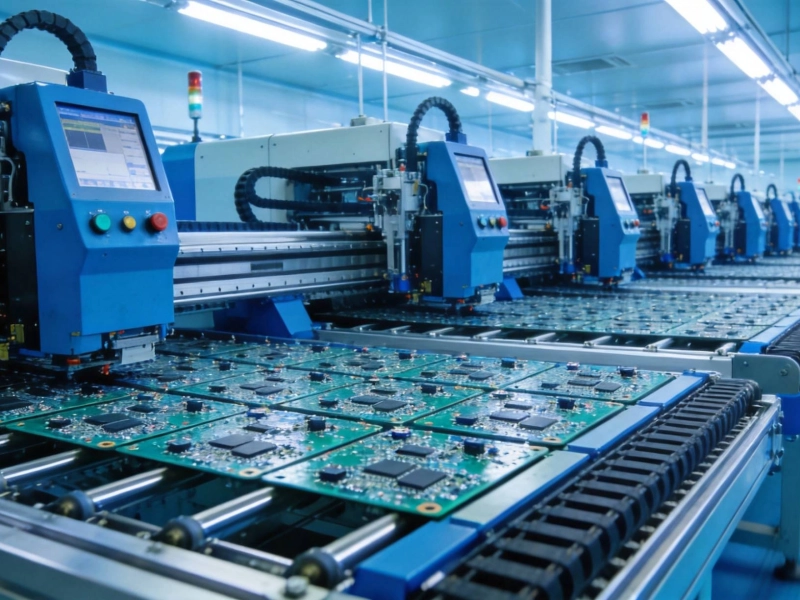
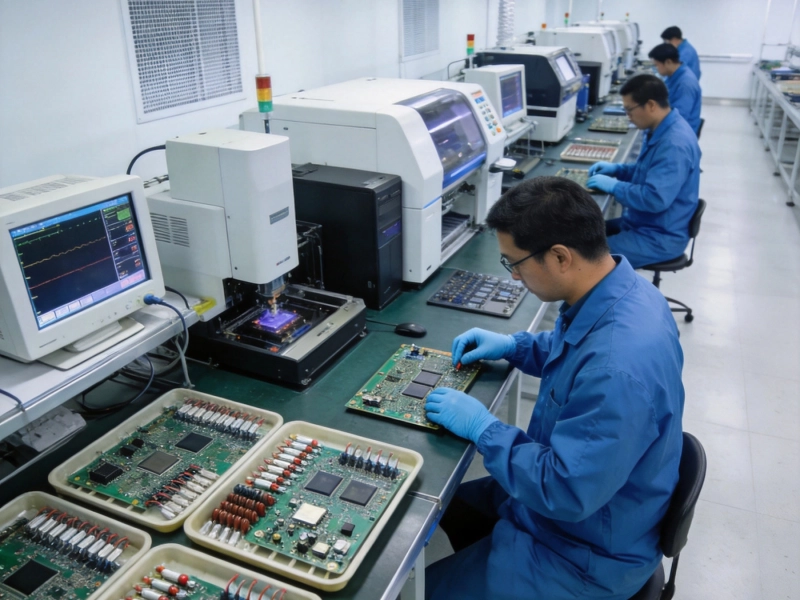
Automated PCBA lines consist of multiple integrated systems, each contributing to overall capability and throughput.
The pick-and-place machine forms the heart of any SMT line, responsible for accurate component placement:
High-speed mounters optimize for standard components, while flexible mounters handle challenging packages at lower speeds. Most production lines include both types.
Accurate Solder Paste deposition sets the stage for quality assembly:
Advanced printers with closed-loop feedback adjust paste deposition in real-time, improving yield for challenging paste formulations.
Reflow ovens transform paste-printed boards into completed assemblies:
Modern ovens provide detailed thermal profiling data, enabling precise process control and documentation.
Inspection automation maintains quality at production speeds:
These systems operate at line speed, catching defects before they become costly rework or field failures.
Turnkey Pcba services particularly benefit from automation investments. The comprehensive scope of turnkey production creates requirements that automated systems uniquely fulfill.
Turnkey production encompasses design through delivery. Automation enables:
Manual processes struggle to maintain the documentation rigor that regulated industries require.
Turnkey services involve managing hundreds or thousands of unique components. Automated lines work with:
High Volume Production magnifies the impact of quality issues. Automation provides:
When selecting a high volume turnkey PCBA partner, assessing their automation capabilities helps predict the experience you will receive.
Request specific information about their production equipment:
Equipment age matters. Lines installed within the last five years reflect current technology and capability expectations.
Evaluate the completeness of their automated lines:
Modern automated lines generate extensive process data:
High volume automation optimizes for throughput and consistency. This optimization can create challenges for flexibility requirements.
Automated lines require time to change over between products:
For mixed production environments with frequent changeovers, evaluate the changeover time and its impact on effective capacity.
High volume equipment can struggle with low quantity orders:
Some manufacturers maintain separate flexible lines for prototyping and low volume production, using high volume automation only for appropriate order sizes.
Automation enables quality approaches impractical for manual assembly. Understanding these capabilities helps set appropriate quality expectations.
Automated systems generate data supporting statistical control:
Full traceability supports regulatory compliance and quality investigation:
Automated data collection enables systematic improvement:
Selecting a turnkey PCBA partner with appropriate automation requires matching their capabilities to your requirements.
Ensure the manufacturer's capacity aligns with your volume needs:
Verify their automation handles your technical requirements:
High volume turnkey relationships are long-term partnerships:
Automated assembly lines provide essential capabilities for high volume turnkey PCBA:
When evaluating high volume PCBA partners, automation investment reflects their commitment to competitive manufacturing. Assess their equipment, capacity, and process control capabilities to ensure your production requirements will be met reliably.
Minimum volumes vary by manufacturer and product complexity. Some automated lines can economically run orders as small as 50-100 units, while others prefer 1,000+ units. Discuss your volume requirements with potential partners to identify the appropriate manufacturing approach.
Automation typically reduces per-unit cost for volumes where equipment utilization is high. Fixed setup costs are spread across more units, and improved yield reduces rework costs. However, very low volumes may have higher unit costs on automated lines due to setup time and minimum batch requirements.
Most automated lines include solder paste inspection (SPI), Automated Optical Inspection (AOI), and X-ray inspection for hidden joints. The specific inspection content varies by manufacturer and may be priced as standard or optional services.
Automated lines have maximum board size specifications determined by conveyor width and machine clearances. Most standard lines handle boards from approximately 50mm up to 400-500mm. For larger boards, specialized equipment may be required.
Modern high-speed placement lines achieve 50,000-150,000 placements per hour depending on component type and placement requirements. Actual throughput depends on component mix, board complexity, and inspection requirements. Request detailed cycle time estimates from manufacturers.
Request facility tours to observe equipment operation. Ask for references from similar volume production. Request capability studies and process documentation samples. Verify their equipment matches what they claim through equipment lists and on-site verification.
Why Low Volume Turnkey PCBA is the Perfect Solution for StartupsMay/26/2026
The Role of Low Volume Turnkey PCBA in Market ValidationSeptember/08/2026
How to Verify Material Quality in Turnkey PCB ManufacturingJuly/30/2026
Overcoming the High Cost Challenges of Low Volume Turnkey PCBAJune/11/2026
Cost Reduction Techniques for High Volume Turnkey PCBA OrdersAugust/03/2026
Low Volume Turnkey PCBA: Flexibility for Niche and Specialized MarketsJuly/09/2026
How to Find Manufacturers Specializing in Low Volume Turnkey PCBAJuly/31/2026
Best Turnkey PCB Assembly for Aerospace, Defense & Avionics: MIL-STD ComplianceJuly/22/2026