Open Nav

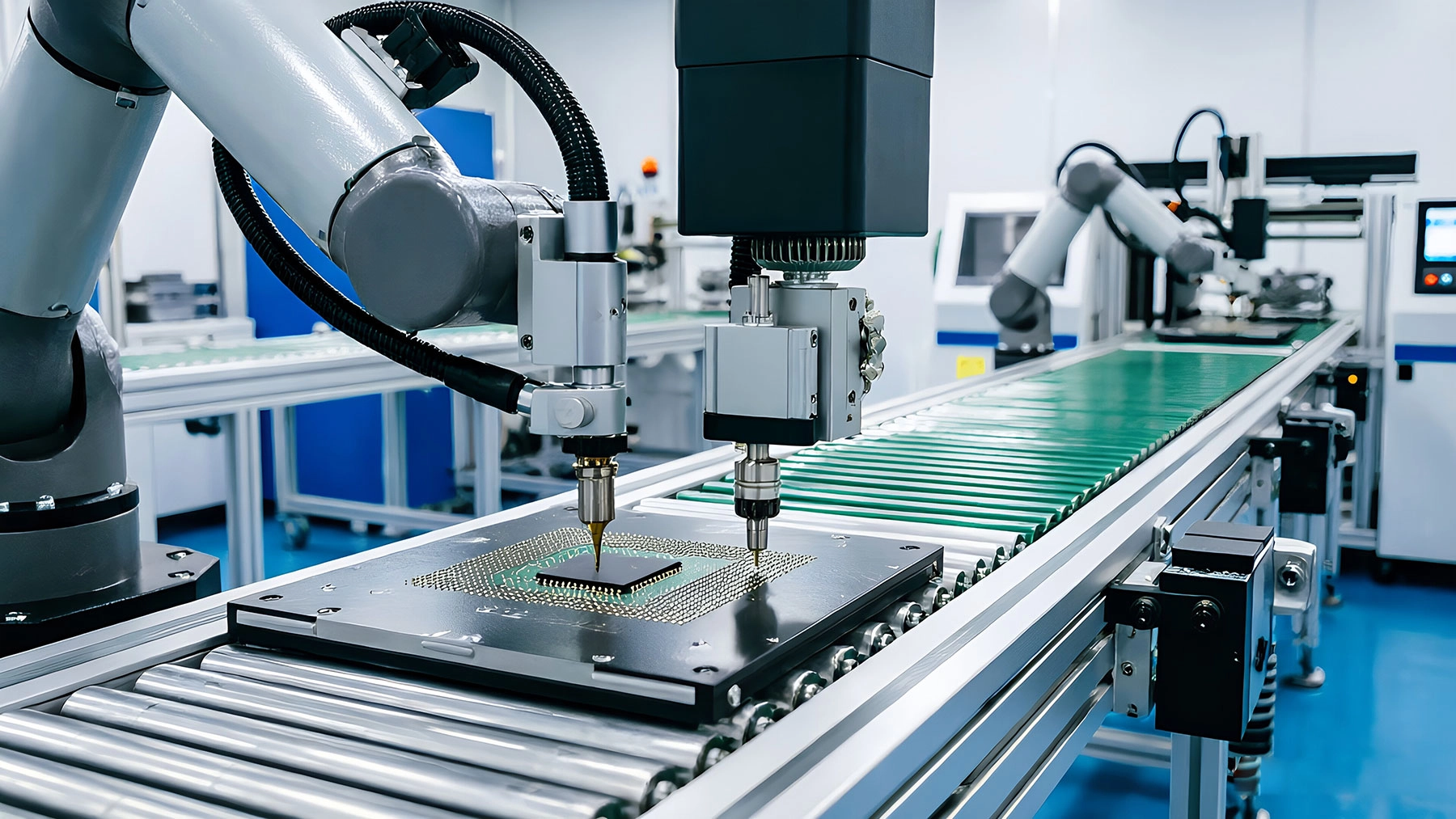
If you have ever stared at a 01005 resistor under a microscope and wondered how on earth it gets placed accurately at high speeds, you are not alone. The electronics industry is shrinking fast, and turnkey Smt Assembly is constantly adapting to handle these microscopic marvels. When we talk about 01005 components (a mere 0.4mm x 0.2mm) and micro BGAs, we are entering the "Mount Everest" of Surface Mount Technology. The tolerance for error is practically zero. In a turnkey environment, where one company manages everything from sourcing to final testing, mastering these tiny parts requires a flawless blend of top-tier equipment, strict process control, and rigorous inspection.
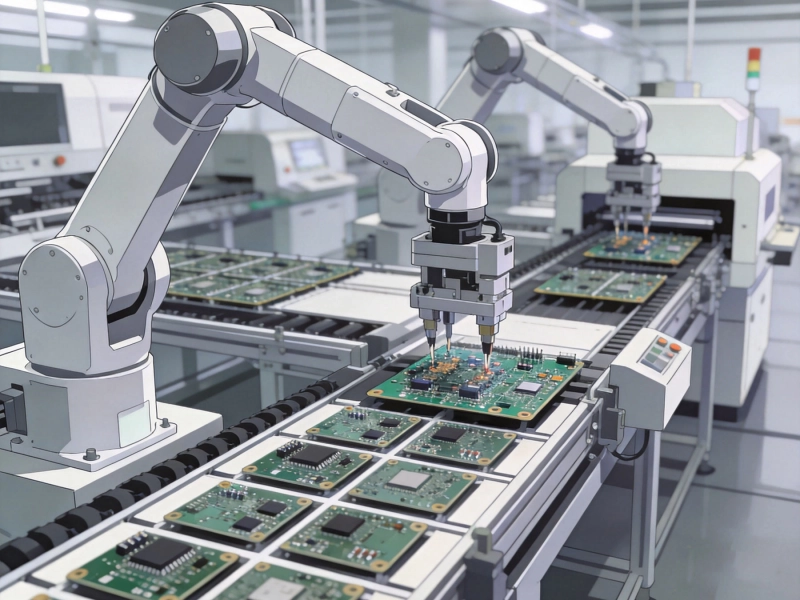
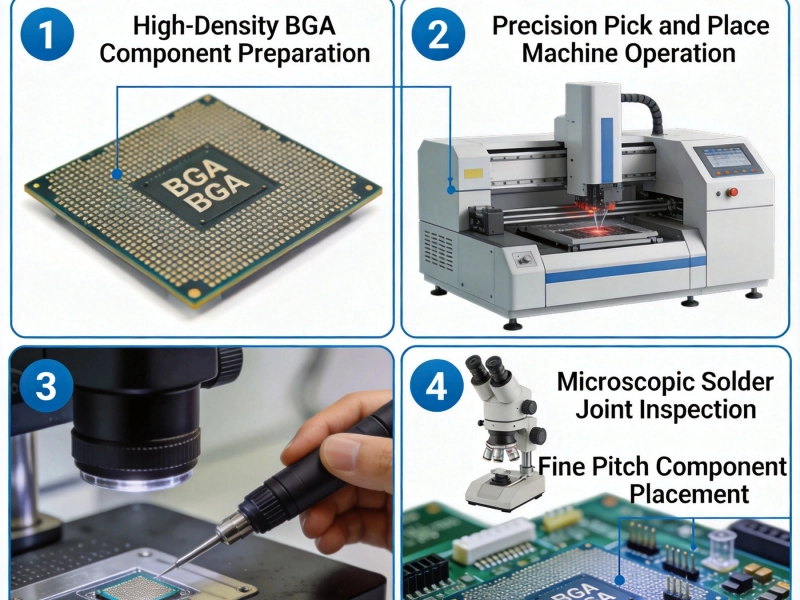
A 01005 component is thinner than a human hair. Because of its incredibly small mass, the surface tension of molten solder is no longer enough to pull it into perfect alignment during reflow. This makes the component highly susceptible to tombstoning (standing up on one end) or shifting off the pad. In a turnkey SMT setup, overcoming this starts with the pick-and-place machine. We need equipment with high-resolution vision systems (at least 5-megapixel cameras) and linear motor drives to achieve a placement accuracy of ±25 microns. The machine must use specialized micro-nozzles and a highly stable vacuum system to ensure the part isn't dropped or blown off-center during the high-speed placement process.
Placement is only half the battle; the Solder Paste Printing step actually dictates the success rate for 01005s. If the paste volume is off by even a fraction, you will get open circuits or solder bridges. Turnkey manufacturers must use ultra-fine Type 4 or Type 5 Solder Paste, which has smaller metal particles designed specifically for tiny apertures. The Stencil Design is equally critical. We typically use laser-cut stencils with electro-polished walls to ensure the paste releases cleanly. The aperture size is usually reduced by about 5% compared to the pad size to prevent excess solder from squeezing out and causing shorts. Maintaining a strict printing speed of around 20mm/s and keeping the stencil clean are non-negotiable rules.
While 01005s are tiny, micro BGAs bring a different set of headaches, especially when they are stacked in a Package-on-Package (PoP) configuration. The main enemy here is the "head-in-pillow" defect, where the BGA solder ball and the paste on the PCB melt but fail to merge into a single joint. To prevent this in Turnkey Assembly, we rely heavily on nitrogen-assisted Reflow Soldering. By keeping the oxygen level inside the oven below 1000 ppm, we drastically reduce oxidation and improve solder wetting. Furthermore, the reflow profile must be carefully managed with a slow, steady ramp-up rate to prevent thermal shock and ensure the PCB and the BGA heat up uniformly.
When components are this small, human visual inspection is completely obsolete. Turnkey Smt Assembly relies on a multi-layered automated inspection strategy. First, 3D SPI (Solder Paste Inspection) checks the paste volume and alignment before any parts are placed. After reflow, high-resolution AOI (Automated Optical Inspection) scans the board to catch tombstoning, missing parts, or bridging. For micro BGAs, AOI isn't enough because the joints are hidden underneath the chip. This is where 3D X-Ray inspection becomes mandatory. X-Ray allows us to see through the package and measure the void percentage inside the solder joints, ensuring the electrical and mechanical connections are rock solid.
Handling 01005s and micro BGAs is expensive and technically demanding. This is exactly why turnkey SMT assembly is so valuable. Instead of juggling multiple vendors for PCB fabrication, Component Sourcing, and assembly, a turnkey provider integrates these steps. They can source the exact fine-pitch components, manage their moisture sensitivity levels (MSL) in climate-controlled storage, and run them through a highly calibrated production line. This seamless integration reduces handling errors, speeds up Time-to-market, and ultimately guarantees that your high-density, next-generation electronics actually work as intended.
Q: Can 01005 components be reworked if placed incorrectly?
A: Manual rework is virtually impossible due to the size. It requires highly specialized, automated micro-rework stations with localized heating and microscopic vision systems.
Q: Why is nitrogen used in the reflow oven for micro BGAs?
A: Nitrogen displaces oxygen, preventing oxidation on the tiny solder balls and pads. This improves wetting, reduces solder balling, and significantly lowers the defect rate for hidden joints.
Q: What is the most common defect with 01005 components?
A: Tombstoning is the most frequent issue, usually caused by uneven solder paste deposition, uneven heating during reflow, or slight placement offsets.
The Impact of Solder Paste Technology on Turnkey SMT Assembly YieldsJuly/29/2026
Turnkey SMT Assembly for Mixed Technology Boards (SMT + Through-Hole)September/04/2026

Best Turnkey PCB Assembly Services: Balancing Cost, Quality, and SpeedJuly/01/2026
Quality Control Standards in Turnkey SMT Assembly (IPC-A-610 Explained)July/07/2026

Turnkey PCB Assembly Insights: 2026 Industry Trends and Market AnalysisMay/26/2026
Turnkey PCB Assembly Insights: The Shift Towards High-Mix Low-Volume ProductionJuly/02/2026
Advanced Turnkey SMT Assembly Techniques for High-Density InterconnectsMay/26/2026
Why Transparency is the Key Feature of the Best Turnkey PCB Assembly ProvidersJuly/24/2026