
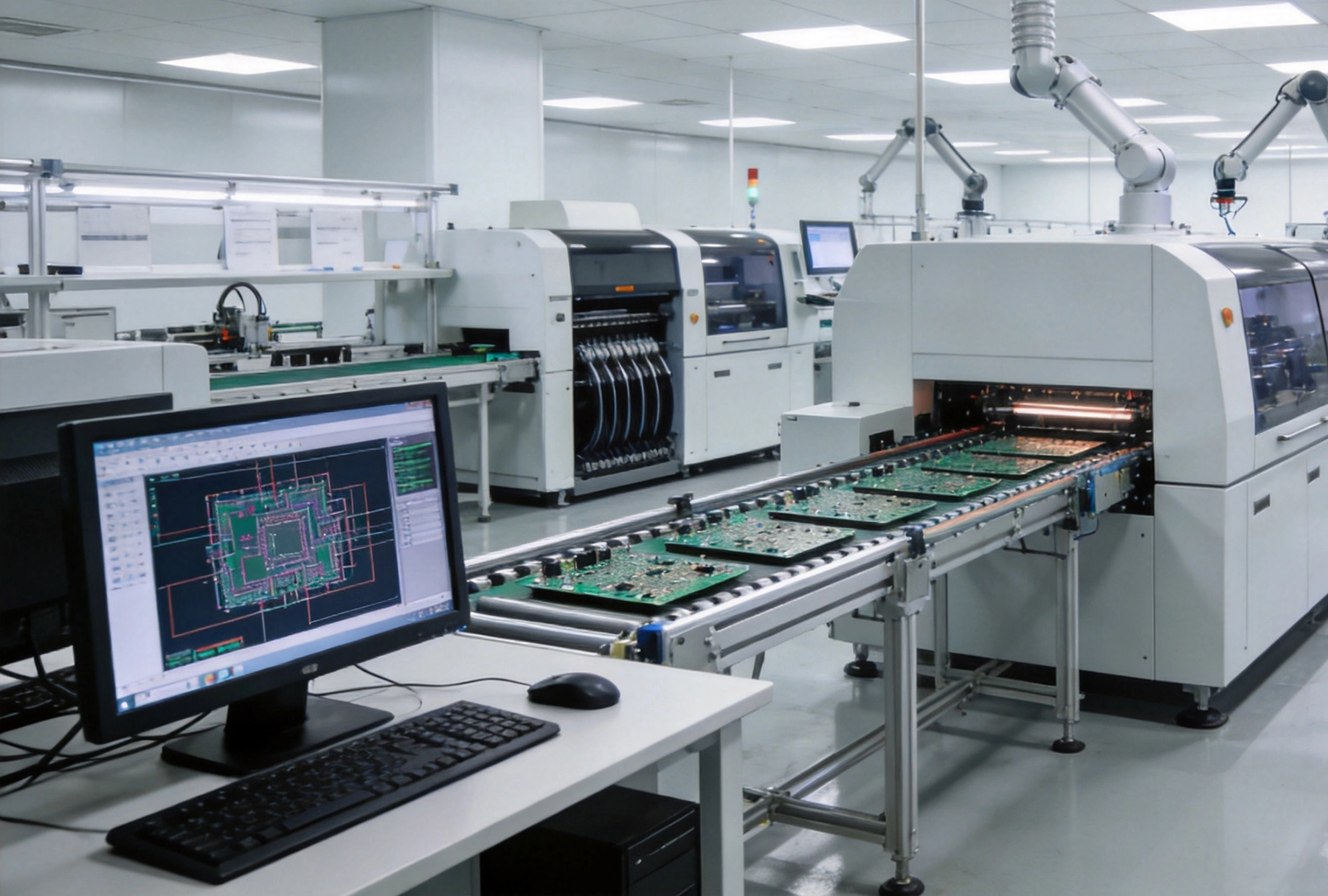
Bringing an electronic product from concept to market-ready volume production represents one of the most challenging journeys in product development. The path winds through design iterations, prototype testing, manufacturing process development, Component Sourcing, and production scaling—each stage presenting opportunities for delays, cost overruns, and quality issues. Turnkey Pcb Solutions offer a structured approach that connects these disparate stages, providing continuity that accelerates Time-to-market while managing complexity and risk.
The concept behind turnkey solutions is straightforward: instead of coordinating multiple vendors for fabrication, assembly, and components, a single partner manages the entire process from design files through finished assemblies. This consolidation eliminates interface gaps where errors commonly occur, reduces administrative overhead, and creates accountability that fragmented supplier relationships cannot match. Understanding what turnkey solutions offer—and how to select and engage with turnkey providers effectively—helps product teams navigate the design-to-production transition more successfully.
Turnkey Pcb Solutions encompass the complete range of services required to transform design files into finished electronic assemblies. The scope extends beyond simple fabrication and assembly to include Design For Manufacturing review, component procurement, quality verification, and logistics coordination.
Bare board fabrication forms the foundation, converting design files into manufactured PCBs meeting specified material, dimensional, and quality requirements. Modern fabrication encompasses everything from simple two-layer boards through complex multilayer HDI designs with blind and buried vias. The fabrication capability determines what designs can be realized and constrains what designers can specify.
Component procurement represents often the most challenging aspect of electronics production. Sourcing involves identifying qualified suppliers, verifying authenticity, managing lead times, and handling the logistics of getting thousands of different components to assembly locations. Turnkey providers leverage relationships with distributors and manufacturers to secure components that individual buyers cannot access, particularly during shortage conditions.
Assembly services mount components to fabricated boards using appropriate processes—Surface Mount Technology for fine-pitch components, through-hole insertion where required, and specialized processes for specific component types. Assembly quality depends on equipment capability, process control, and operator skill. Experienced turnkey providers maintain assembly capabilities matched to the complexity levels their customers require.
Turnkey solutions provide value beyond aggregating vendor services under one administrative roof. The integrated approach enables continuous optimization across stages that siloed suppliers cannot achieve. Design recommendations from fabrication experience inform Dfm feedback before manufacturing begins. Assembly insights regarding component handling inform packaging decisions. This cross-functional expertise improves outcomes throughout the production process.
Single-point accountability simplifies problem resolution when issues arise. Instead of determining whether problems originate with fabrication, components, or assembly—and which vendor bears responsibility—turnkey customers work with one partner who owns resolution regardless of root cause. This accountability accelerates problem-solving and reduces finger-pointing that delays recovery from production issues.
The most valuable turnkey service contribution often comes early: Design For Manufacturing review before production begins. Dfm feedback identifies potential problems that could cause manufacturing difficulty, yield loss, or quality issues, enabling design corrections while changes remain inexpensive.
Fabrication DFM examines design features against manufacturing capability limits. Trace width and spacing must accommodate fabrication tolerances while maintaining electrical requirements. Annular ring dimensions must support reliable plating and tolerate drill registration variation. Solder mask dams must maintain coverage without becoming so small they lift during processing. These seemingly minor details affect fabrication yield significantly.
Material specifications deserve review attention. Standard materials offer lowest cost and most reliable availability. Specialty materials may be unnecessary for the application's actual requirements. Specifying "standard FR4" without identifying specific performance requirements creates ambiguity that turnkey providers must resolve to ensure consistent fabrication.
Assembly DFM examines component placement, footprint accuracy, and accessibility for mounting equipment. Fine-pitch components require appropriate pad geometry and spacing. QFN and BGA packages need escape routing that doesn't violate minimum line spacing rules. Through-hole component placement must consider wave solder processing when applicable.
Footprint verification against manufacturer specifications prevents the common problem of components that don't fit documented pads. Slight variations in manufacturer specifications create fit issues that DFM review catches before assembly. This review prevents problems that would otherwise surface only when assemblies fail to function after mounting.
Turnkey providers experienced with test requirements can advise on test point placement, probing accessibility, and ICT fixture design. Including test considerations early—before final layout—enables optimal test point placement that balances test coverage with routing constraints. Retrofitting test points into completed layouts often proves difficult or impossible.
Visual inspection accessibility affects defect detection rates. Components and solder joints that manufacturing personnel cannot see clearly may harbor defects that escape detection. DFM review identifies inspection visibility concerns, enabling layout adjustments that improve producibility and quality.
Component procurement often determines production success more than fabrication or assembly capability. Components represent the majority of assembly cost and the most significant Supply Chain complexity.
Established turnkey providers maintain relationships with authorized distributors and component manufacturers across the component spectrum. These relationships provide access to allocation during shortage conditions, authentication verification, and technical support that unauthorized sources cannot match. The value of authorized supply chains extends beyond mere component availability to include quality assurance and counterfeit prevention.
Distributor networks enable component aggregation across thousands of manufacturers. Instead of managing separate relationships with each component supplier—which would require enormous administrative overhead—turnkey customers access this aggregated network through single procurement relationships. This efficiency enables procurement of small quantities across many manufacturers that would be impractical to source independently.
Components don't remain available indefinitely. Manufacturer end-of-life notices, fab consolidation, and technology transitions create obsolescence risks that affect long-term production continuity. Turnkey providers with lifecycle management expertise can advise on component selection that minimizes obsolescence exposure and plan transitions when obsolescence becomes unavoidable.
For products with extended expected lifetimes—industrial equipment, automotive systems, medical devices—lifecycle planning deserves serious attention during initial design. Selecting components with stable roadmaps, understanding manufacturer diversification strategies, and building contingency plans for obsolescence scenarios protects production continuity over product lifetimes that may span decades.
Counterfeit components represent a real Supply Chain risk. Unauthorized sources may provide components that appear authentic but contain inferior performance, modified specifications, or outright fraud. Established turnkey providers implement authentication procedures—certificate of conformance verification, visual inspection, and testing—that mitigate counterfeit risks from unauthorized sources.
Quality assurance extends beyond authentication to include incoming inspection, handling procedures, and storage conditions. Components degraded by improper storage—excessive moisture, temperature extremes, or electrostatic discharge—fail prematurely despite passing initial testing. Turnkey providers with robust QA systems protect against these failure modes.
Transitioning from prototype quantities to volume production presents challenges distinct from initial production. Turnkey solutions address scaling through established processes and capacity planning.
Initial production runs validate that designs translate to manufacturable products. Prototype quantities may use expedited processing that doesn't scale economically to volume production. The transition to pilot quantities identifies whether processes optimized for prototypes require modification for production viability.
Turnkey providers experienced with scaling help identify process adjustments required for economic production. Assembly parameters optimized for prototype quantities may require modification for volume runs. Component packaging designed for prototype handling may need revision for production automation. These refinements proceed more smoothly when experienced guidance identifies requirements early.
Volume production introduces logistics complexity that prototype quantities avoid. Component quantities increase, requiring coordinated delivery schedules. Processing time extends, requiring capacity planning to meet delivery commitments. Quality systems must scale to maintain consistency across larger production runs.
Turnkey providers with volume production experience plan capacity proactively. Understanding production lead times enables component delivery coordination. Manufacturing capacity planning ensures that production can absorb order volumes without excessive overtime or subcontracting that compromises quality consistency.
Volume production enables data collection that identifies improvement opportunities. Yield analysis reveals defect patterns that process adjustments can address. First-pass yield improvement reduces cost and cycle time. Turnkey providers committed to continuous improvement leverage production data to refine processes across runs.
Feedback from production should inform design evolution. Manufacturing lessons learned often suggest design modifications that improve producibility without compromising performance. Turnkey relationships that include this feedback loop enable design refinement that improves subsequent production iterations.
Quality assurance in turnkey production extends beyond final inspection to encompass systematic processes throughout manufacturing.
Incoming verification confirms that materials and components meet specifications before entering production. Bare boards undergo dimensional verification, electrical testing, and visual inspection. Components receive incoming inspection that verifies authenticity, condition, and specification compliance. This verification prevents defective materials from causing problems in subsequent processing.
The extent of incoming verification balances thoroughness against cost and schedule impact. Full incoming verification adds cost and time but maximizes defect prevention. Risk-based verification focuses inspection resources on highest-risk materials while relying on supplier quality systems for lower-risk items.
Manufacturing processes include in-process controls that detect problems before completion. Solder Paste Printing inspection identifies insufficient or excessive paste before component placement. Automated Optical Inspection after placement catches component placement errors before reflow. X-ray inspection of hidden joints—BGAs, QFNs, through-hole joints in multilayer boards—verifies connections invisible to optical inspection.
Statistical process control monitors process parameters to identify drift before out-of-spec production occurs. Monitoring Solder Paste printer alignment, reflow oven temperature profiles, and placement accuracy provides early warning of process shifts. Turnkey providers with robust SPC systems maintain consistent quality across production runs.
Finished assemblies undergo testing that confirms correct functionality. In-circuit testing verifies individual component presence and value. Functional testing confirms that assemblies perform according to specifications. Burn-in testing screens for early-life failures by operating assemblies under stress conditions.
Test coverage must balance thoroughness against test cost and time. Complete test coverage identifies all defects but may be prohibitively expensive for some products. Risk-based test strategies focus testing resources on highest-failure-probability areas while accepting some residual risk in lower-risk functions.
The right turnkey partner significantly impacts product success. Evaluation criteria should reflect actual requirements rather than generic capabilities.
Technical capability must match product requirements. A turnkey provider excelling at simple Consumer Electronics may struggle with aerospace-grade quality requirements. Similarly, a provider specializing in high-reliability medical devices may not offer competitive pricing for standard commercial products. Evaluate capability match rather than assuming that general electronics expertise addresses specific application requirements.
Capacity availability matters as much as technical capability. A provider with excellent capabilities may be booked beyond capacity, resulting in delays that offset quality advantages. Understanding current loading and production lead times reveals whether potential partners can meet schedule requirements.
Turnkey providers with relevant experience offer advantages beyond basic capability. Familiarity with similar products accelerates process development and problem resolution. Industry-specific experience—automotive, medical, aerospace—brings understanding of sector-specific requirements and expectations.
Request case studies or references from similar projects. Understanding how providers have addressed challenges in comparable applications reveals problem-solving capability that general capability descriptions don't capture. References from current customers provide insight into ongoing relationship quality.
Technical capability matters less if communication fails. Turnkey relationships require ongoing coordination throughout production. Providers who communicate proactively about status, issues, and opportunities differentiate themselves from those who respond only when prompted.
Evaluate communication quality during quotation and initial engagement. How quickly do responses arrive? How thoroughly do they address questions? How openly do they discuss limitations or concerns? These early indicators often predict ongoing relationship quality more accurately than capability presentations.
Successful turnkey relationships require active management beyond initial selection. Ongoing collaboration maximizes the value these partnerships provide.
Translating product requirements into manufacturing specifications requires clarity that prevents ambiguity-driven problems. Documents that specify not just what is required but why it matters enable turnkey providers to make appropriate tradeoffs when conflicts arise. Understanding application context helps providers prioritize requirements correctly.
Change management processes ensure that design modifications translate correctly into manufacturing updates. Uncontrolled changes cause production disruption as documentation lags physical modifications. Disciplined change processes maintain alignment between design intent and manufacturing execution.
Tracking turnkey performance enables continuous improvement and identifies relationship issues before they become critical. On-time delivery metrics reveal whether partners meet commitments. Quality metrics—yield rates, defect levels, returns—indicate production excellence. Cost trends show whether pricing remains competitive.
Providing feedback about performance—both positive recognition and improvement concerns—strengthens relationships and drives improvement. Partners who understand that performance matters are tracked are more likely to invest in meeting expectations. Feedback should be specific, timely, and constructive.
Turnkey Pcb solutions provide valuable bridges across the gap between design ambition and production reality. By integrating design for manufacturing expertise, Component Sourcing capability, assembly services, and quality assurance under single accountability, turnkey providers simplify what would otherwise require managing multiple complex supplier relationships.
The value of turnkey solutions extends beyond administrative convenience to include technical expertise that improves outcomes across production stages. DFM feedback early in design prevents problems that would otherwise delay production. Component sourcing relationships provide access and reliability that individual buyers cannot replicate. Quality systems that span fabrication through assembly create accountability that fragmented supplier relationships cannot match.
Selecting the right turnkey partner—and managing that relationship effectively—determines whether turnkey solutions deliver their potential value. Capability matching, experience verification, and communication quality evaluation help identify partners suited to specific requirements. Ongoing relationship management ensures that initial selection translates into sustained performance that meets evolving production needs.
Turnkey Pcb solutions encompass bare board fabrication, component procurement, assembly services, and quality verification. Most turnkey providers also include design for manufacturing review, test development, and logistics coordination. The scope may extend to box-build assembly, programming, and final integration depending on provider capability and customer requirements.
Evaluate providers based on capability match with your requirements, relevant experience with similar products, capacity availability to meet your schedule, and communication quality during initial engagement. Request case studies from comparable projects and references from current customers. The lowest-cost provider may not deliver best overall value if capability gaps or communication failures create problems.
Turnkey solutions provide single-point accountability for the entire production process, eliminating finger-pointing when problems span multiple suppliers. Integrated DFM feedback prevents manufacturing issues that siloed suppliers miss. Component procurement leverage provides access and reliability individual buyers cannot match. Administrative efficiency reduces coordination overhead significantly.
Established turnkey providers maintain distributor relationships that provide allocation priority during shortage conditions. Their aggregate purchasing volume across many customers creates leverage that individual buyers cannot achieve. Turnkey providers can often secure components for customers when spot market availability is exhausted.
Look for providers with ISO 9001 quality management certification as baseline capability. Automotive applications may require Iatf 16949. Medical devices may need Iso 13485. Military and aerospace applications may require AS9100 or specific MIL specifications. Verify that provider certifications match your application requirements.
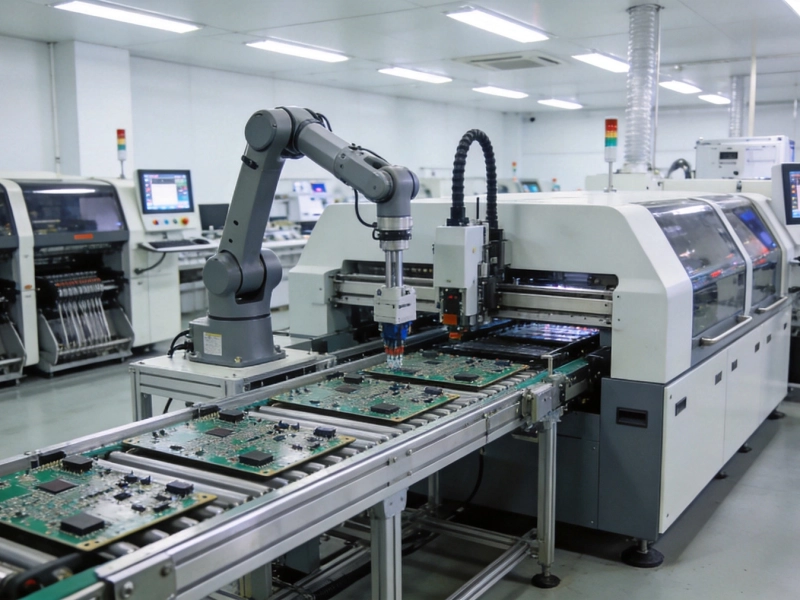
Best Turnkey PCB Assembly for Industrial & Automation: Built to LastJune/27/2026
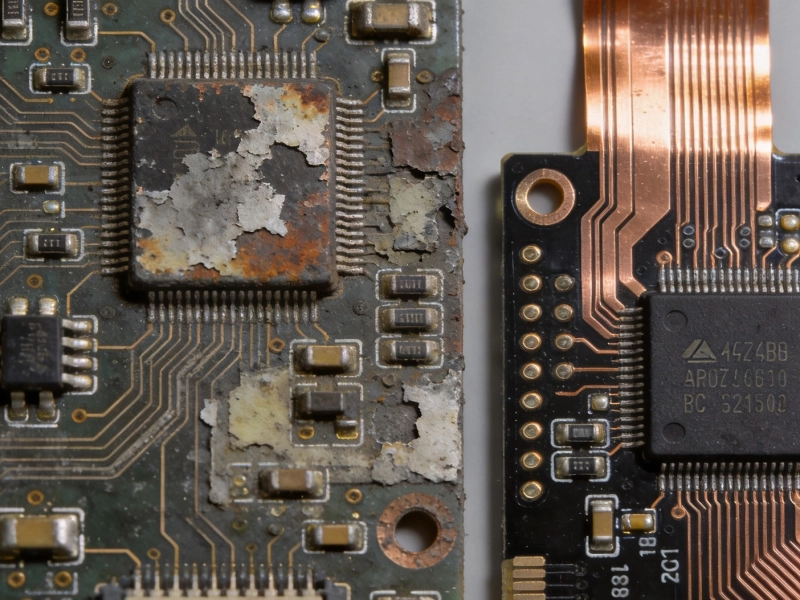
Longevity and Lifecycle Management in Industrial PCBASeptember/18/2026
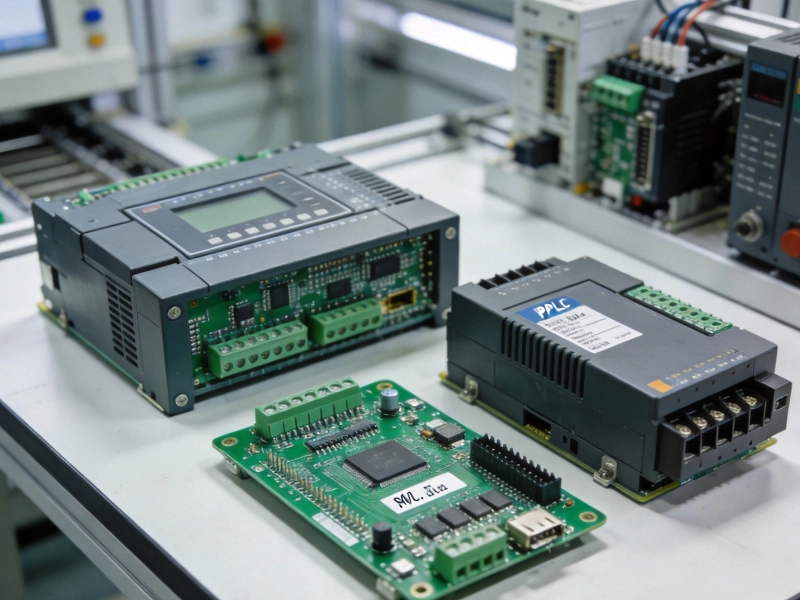
Turnkey PCB Assembly for PLCs and Motor Control DrivesAugust/11/2026
Supply Chain Resilience in High Volume Turnkey PCBA ProjectsJuly/10/2026
The Trade-offs Between Speed and Cost in Rapid Turnkey PCBAJuly/13/2026
Comprehensive Turnkey PCB Solutions for Complex Electronic SystemsJuly/14/2026
How to Find Manufacturers Specializing in Low Volume Turnkey PCBAJuly/31/2026

How to Choose the Best Turnkey PCB Assembly Partner in 2026May/26/2026