
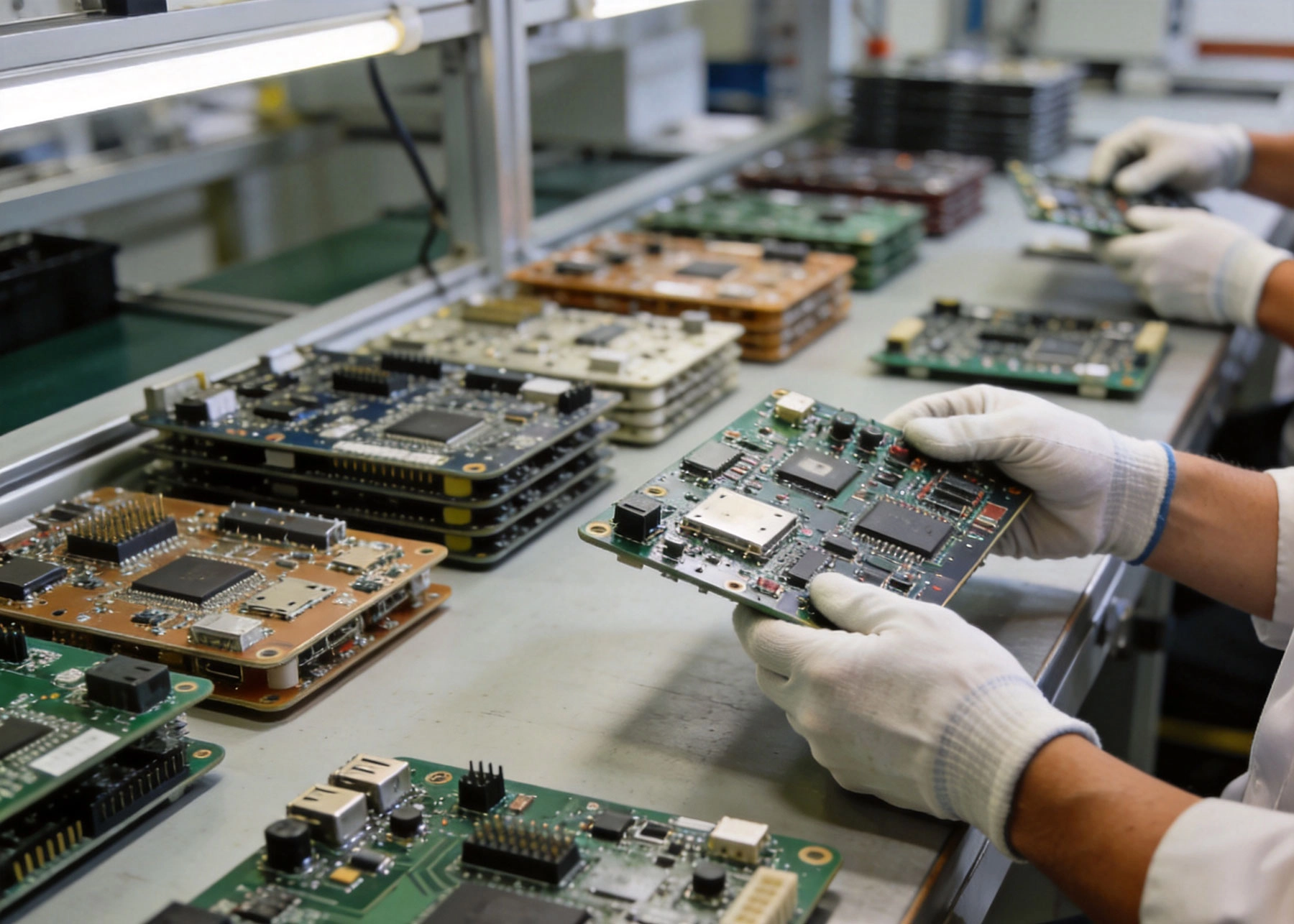
Not every electronics company needs to manufacture 10,000 boards per month. In fact, the majority of companies operating in specialized markets—medical device startups, aerospace research teams, defense contractors, industrial automation firms, and emerging technology developers—produce in quantities that would make traditional contract manufacturers wince. Runs of 5, 25, 100, or 500 boards are simply too small to attract the attention of large-scale Ems providers who optimize their operations for high-volume throughput. This is where low volume Turnkey Pcba services fill a critical gap in the market.
Turnkey Pcba means that a single provider handles the entire process: fabricating the bare PCB, sourcing all components, assembling the board, testing it, and delivering the finished product. Low volume turnkey service makes this comprehensive solution available to companies that need anywhere from a handful to a few hundred assembled boards. The result is a flexible, accessible manufacturing path that allows niche market players to bring hardware to life without the overhead of managing multiple suppliers or investing in their own assembly infrastructure.
Large Ems providers are built for efficiency, and efficiency at scale requires standardization. They maintain fixed production lines configured for specific board sizes, layer counts, and assembly profiles. Changing over to a non-standard order—perhaps a rigid-flex board with specialty RF components or a medical-grade board requiring IPC Class 3 compliance—costs them time and money that is difficult to recoup on a small order. As a result, companies in specialized markets frequently find themselves rejected by large manufacturers or quoted prices that are prohibitively expensive for their production volumes.
At the other end of the spectrum, small hobbyist prototyping services exist, but they typically lack the quality systems, traceability documentation, and testing rigor that professional markets demand. A medical device company cannot ship a board that has not been properly tested and documented, regardless of how small the production run. Similarly, aerospace firms need full material traceability and process records that hobbyist services are not equipped to provide.
Low volume turnkey PCBA services occupy the middle ground. They have the technical capability to handle complex, specialized designs, the quality systems to meet professional standards, and the operational flexibility to handle small runs without punitive pricing. This combination makes them the ideal manufacturing partner for a wide range of specialized applications.
Understanding what "turnkey" means in practice helps you evaluate whether a turnkey service is the right choice for your project and how to communicate your requirements effectively.
The turnkey provider manufactures the bare printed circuit board to your specifications. This includes the substrate material, layer count, copper weight, surface finish, and any special requirements such as blind/buried vias, controlled impedance traces, or metal-core construction. The provider manages all the steps of PCB production: CAM processing, inner layer etching, lamination, drilling, plating, solder mask, and surface finish.
In a full turnkey arrangement, the provider sources every component on your bill of materials. This includes active components like microcontrollers, passive components like resistors and capacitors, connectors, and any mechanical hardware that needs to be assembled onto the board. Experienced turnkey providers maintain relationships with major distributors and can often procure standard parts faster than an individual company could on their own. They also handle the complexity of part substitutions when a specified component goes obsolete or out of stock.
Assembly covers both Surface Mount Technology placement and any through-hole components. The provider's assembly team loads your design data into their pick-and-place equipment, applies Solder Paste through a stencil, places components, runs the board through Reflow Soldering, and handles any hand-soldering operations that automated equipment cannot perform. The assembly process also includes any post-solder steps such as cleaning, Conformal Coating, or programming if those services are requested.
Every reputable turnkey PCBA service includes some level of testing as part of the package. This typically includes flying probe electrical testing to verify connectivity and AOI (Automated Optical Inspection) to catch assembly defects such as missing components, tombstoned parts, or solder bridges. Additional testing such as ICT (In-Circuit Testing), X-ray inspection for BGA packages, or functional testing under power may be available as add-on services depending on the provider's capabilities.
Low volume turnkey PCBA serves an exceptionally broad range of industries and applications. Understanding which use cases map best to this service helps you set realistic expectations and choose the right provider for your specific needs.
Medical electronics demand rigorous quality standards and complete traceability. Devices that monitor patient vitals, deliver therapeutic treatments, or interface with the human body must meet IEC 60601 safety standards and often require documentation that proves every component came from an authorized Supply Chain. Low volume turnkey providers experienced in medical manufacturing can deliver boards that meet these stringent requirements in quantities that are appropriate for clinical trials, regulatory submissions, and small-batch production of specialized medical equipment.
Aerospace and defense projects frequently involve boards with extreme environmental requirements—wide temperature ranges, high vibration tolerance, and radiation hardening for space applications. These boards often require specialty materials such as polyimide or Rogers laminates, controlled impedance routing, and extensive documentation for configuration management. Low volume turnkey services that specialize in aerospace can accommodate these unique requirements without requiring the huge minimum order quantities that traditional defense contractors impose on their manufacturing partners.
Industrial automation applications include motor controllers, sensor interfaces, PLC (Programmable Logic Controller) modules, and communication gateways that operate in harsh environments with electrical noise, temperature extremes, and vibration. These boards often require Conformal Coating, extended temperature range components, and ruggedized connectors. Low volume turnkey PCBA provides a practical path for industrial equipment manufacturers to get specialized control boards produced in the quantities they actually need for deployment across factories and facilities.
University research labs and corporate R&D departments frequently need custom circuit boards for experiments, prototypes, and proof-of-concept demonstrations. Waiting weeks for a large manufacturer to process a small academic order is impractical when a research timeline may shift based on experimental results. Low volume turnkey services offer the responsiveness and flexibility that research environments require, with the added benefit of professional quality that gives researchers confidence in their experimental results.
Hardware startups operating in fields like wearables, robotics, electric vehicles, and clean energy technology need small quantities of boards for MVP validation, investor demonstrations, and initial product launches before committing to Mass Production. Low volume turnkey PCBA gives startup teams the ability to test their hardware in real-world conditions without locking themselves into large manufacturing commitments prematurely. As the startup scales and the product roadmap solidifies, the relationship with the turnkey provider can grow accordingly.
Managing multiple suppliers—one for PCB Fabrication, another for component procurement, a third for assembly, and a fourth for testing—is a logistical burden that consumes engineering time and introduces communication errors. A turnkey provider consolidates all of these steps under one roof and one account manager. When something goes wrong, you have one contact who is accountable for the entire process and who can quickly diagnose where in the pipeline an issue originated.
When a single provider controls all steps of the process, handoff delays between suppliers disappear. The PCB Fabrication team talks directly to the assembly team within the same facility. Component procurement is coordinated with the assembly schedule so that parts arrive when they are needed rather than sitting in a warehouse waiting for the next production window. This vertical integration compresses the overall timeline and gives you finished boards faster than you would get by coordinating separate suppliers on your own.
When you purchase components upfront and manage your own inventory, you carry the risk of parts going obsolete, getting damaged in storage, or becoming irrelevant when a design changes. Turnkey services shift this risk to the provider, who procures components against confirmed orders and typically delivers finished boards within weeks rather than months. This reduces your working capital requirements and eliminates the cost of maintaining component inventory for products that may evolve or be cancelled.
Experienced turnkey providers do more than execute manufacturing instructions. Their engineering teams review your design files for manufacturability issues, flag potential problems before production starts, and suggest optimizations that can reduce cost or improve reliability. This Dfm (Design for Manufacturability) review is one of the most valuable—and most underutilized—services that turnkey providers offer. Catching a routing error or a footprint mismatch during the review phase costs nothing to fix. Discovering it after the boards are assembled costs both time and money.
Getting the best results from a low volume turnkey service requires some preparation on your end. The better your inputs, the smoother the process will be.
Your Gerber Files should include all copper layers, solder mask layers, silkscreen layers, and the NC drill file. Each file should be clearly named and correspond to the correct layer. Incomplete or ambiguous file submissions are the most common cause of delays and miscommunication. If you are unsure whether your export settings are correct, most turnkey providers offer a free file review service that catches issues before manufacturing begins.
Your BOM should include the manufacturer part number, quantity per board, and any alternate or preferred part numbers for components that may have substitution options. Specify the exact component package type (e.g., 0402, 0603, QFN-32) so the assembly team can verify footprint compatibility. If any components are customer-provided rather than sourced by the turnkey provider, clearly indicate this and provide a separate shipping schedule to ensure parts arrive before the assembly window.
Do not leave testing requirements to assumption. If you need flying probe testing, specify it. If you require X-ray inspection for BGA components, ask for it. If your application demands IPC Class 3 compliance or AS9100 quality management certification, confirm that the provider can meet those requirements before placing the order. Documenting these requirements upfront prevents surprises during production and ensures the provider prices the order appropriately.
Some components require special handling: moisture-sensitive devices (MSD) that must be baked before assembly, electrostatic discharge (ESD) sensitive parts that require grounded handling stations, or high-value components that need separate inspection upon receipt. Communicating these requirements before production begins allows the provider to prepare the appropriate handling and storage procedures.
Low volume turnkey PCBA is inherently more expensive per board than high-volume production, and understanding why helps you evaluate quotes and make informed decisions.
The fixed setup costs of PCB fabrication, stencil preparation, and assembly machine programming are amortized across fewer boards, which increases the per-board cost for small runs. Component procurement at low volumes does not benefit from the same pricing tiers that large OEM customers receive. These are not arbitrary premiums—they reflect the real cost of providing specialized capabilities to a smaller market. The practical benefit is that you pay a reasonable price for a service that would otherwise be unavailable to you at any price.
To maximize value, focus on reducing variables that drive cost. Standard specifications for board material, surface finish, and copper weight reduce process complexity. Complete design files eliminate the back-and-forth communication that extends timelines and incurs engineering charges. A BOM with readily available, in-stock components avoids the premium pricing and lead time of hard-to-source parts. Each of these optimizations brings your per-board cost closer to the efficient baseline for your order volume.
Not all low volume turnkey services are created equal. Evaluating providers on the following criteria will help you find a partner who can reliably support your specialized needs.
Minimum order quantities vary by provider, but many low volume turnkey services accept orders starting at a single board. However, pricing becomes significantly more attractive at quantities of 5 boards and above. For the best balance of cost and practicality, orders of 5 to 100 units are the sweet spot for most low volume turnkey services.
For straightforward orders with in-stock components and standard specifications, typical lead times range from 5 to 15 business days from order confirmation to doorstep delivery. Complex boards with specialty materials, high layer counts, or components requiring procurement may take 3 to 4 weeks. Express service options, when available, can compress timelines to as few as 2 to 3 business days for urgent prototype needs.
Yes, most turnkey providers accept customer-provided components, a model often called "consignment" or "CEM-supervised" assembly. However, you should coordinate shipping timing carefully to ensure parts arrive before the assembly window. When components are customer-provided, the provider typically cannot warranty the assembly against defects caused by out-of-spec or damaged components.
Reputable low volume turnkey providers can meet IPC Class 2 and IPC Class 3 workmanship standards, AS9100 for aerospace applications, and Iso 13485 for Medical Device Manufacturing. Confirm with your provider that they have the relevant certifications and quality systems in place before placing an order with stringent compliance requirements.
On a pure unit-cost basis, turnkey PCBA typically carries a premium compared to managing separate suppliers for PCB fabrication and assembly. However, when you factor in the engineering time required to coordinate multiple vendors, the cost of Supply Chain management, the risk of production delays from miscommunications, and the hidden costs of rework from quality issues, turnkey PCBA is often the more cost-effective choice—especially for low volumes where the overhead of vendor management is proportionally larger.
Low volume turnkey PCBA exists because the market for specialized, niche, and small-batch electronics is vast and underserved by traditional manufacturing models. Companies in medical technology, aerospace, defense, industrial automation, research, and hardware innovation need the same quality and traceability that large manufacturers demand, but in quantities that make conventional production relationships impractical. Turnkey services designed specifically for this market segment bridge that gap with flexible, responsive, and professionally managed manufacturing solutions.
The key to success with low volume turnkey PCBA lies in choosing the right provider—one with the technical capability to handle your specific board requirements, the quality systems to meet your industry's standards, and the communication practices to keep you informed throughout the process. When you find that partner, the benefits compound over time as they learn your products, anticipate your needs, and become a seamless extension of your development and operations team.
Whether you are launching a medical device through regulatory approval, validating an aerospace control system design, or bringing a Hardware Startup's first product to life, low volume turnkey PCBA gives you the manufacturing flexibility to move at the pace your market demands—without the overhead and commitment of traditional high-volume production.
This article is provided for general informational purposes regarding low volume turnkey PCBA services and specialized Electronics Manufacturing. Specific capabilities, pricing, and lead times vary by provider and are subject to change. Always confirm requirements directly with your chosen manufacturing partner.
Overcoming the High Cost Challenges of Low Volume Turnkey PCBAJune/11/2026
Low Volume Turnkey PCBA: Managing MOQs and Component SourcingOctober/10/2026
The Role of Low Volume Turnkey PCBA in Market ValidationSeptember/08/2026
Cost Reduction Techniques for High Volume Turnkey PCBA OrdersAugust/03/2026
How to Find Manufacturers Specializing in Low Volume Turnkey PCBAJuly/31/2026
Why Low Volume Turnkey PCBA is the Perfect Solution for StartupsMay/26/2026
How to Verify Material Quality in Turnkey PCB ManufacturingJuly/30/2026

High Volume Turnkey PCBA: The Importance of Automated Assembly LinesSeptember/09/2026