Open Nav

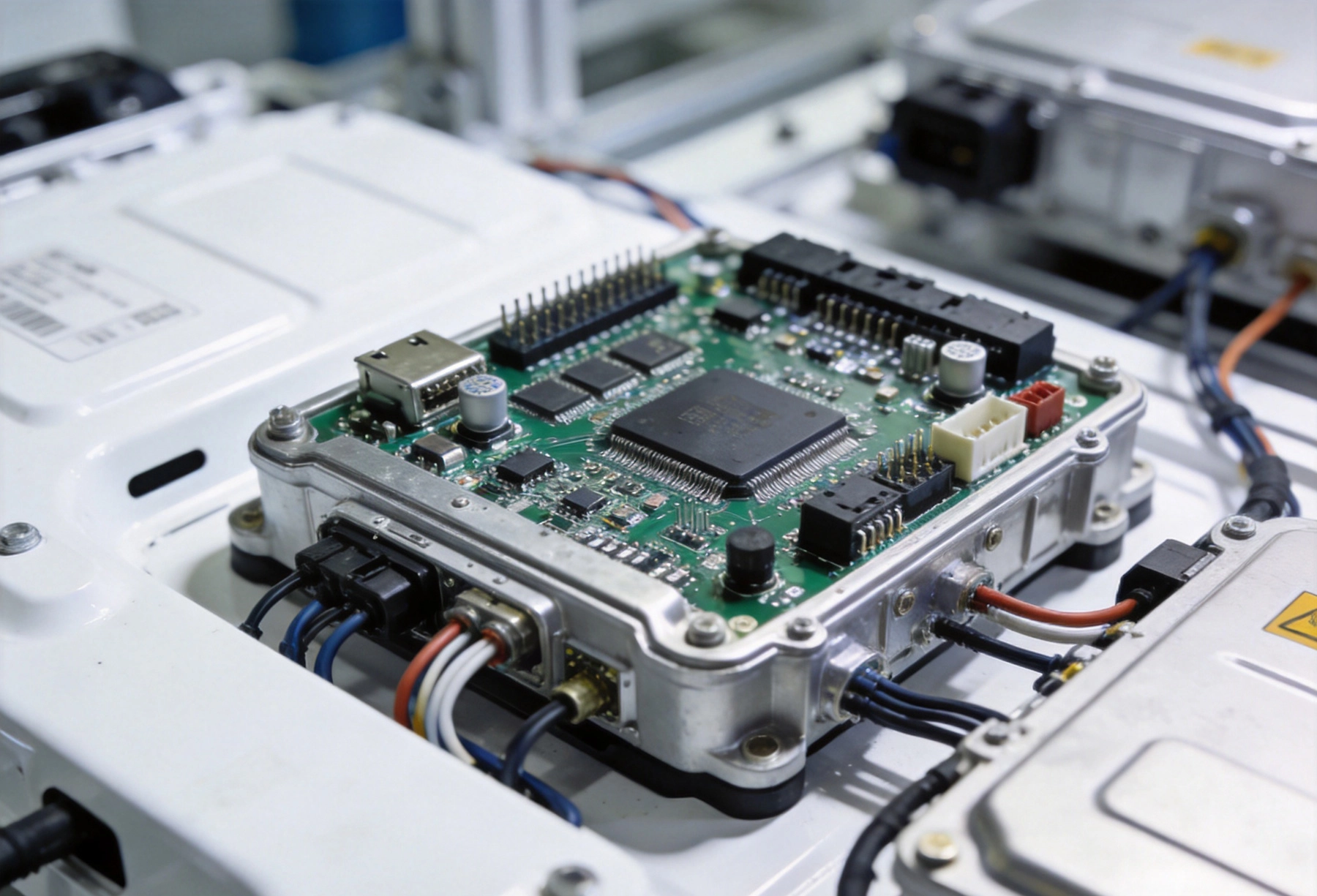
Electric vehicles represent one of the most demanding applications for Electronics Manufacturing. Every control unit in an EV—from the battery management system to the motor controller, from the vehicle control computer to the charging interface—operates under conditions that leave no room for component failure, design shortcuts, or manufacturing defects. When you are selecting a Turnkey PCB Assembly partner for EV control units, the stakes are significantly higher than for Consumer Electronics. The board that manages battery charging directly affects passenger safety. The controller that handles regenerative braking must perform flawlessly for hundreds of thousands of miles.
This guide helps engineers and procurement professionals identify what truly distinguishes excellent EV control unit assembly from standard Electronics Manufacturing, and how to evaluate turnkey partners who can deliver assemblies that meet the automotive industry's exacting standards.
Automotive Electronics operate in an environment fundamentally different from consumer or industrial applications. The requirements flow from three characteristics unique to vehicle electronics: extreme temperature ranges, sustained vibration and mechanical stress, and the absolute requirement for zero-defect reliability over a 15 to 20 year service life.
Electric vehicles add specific challenges on top of standard automotive requirements. The high-voltage systems operating at 400V to 800V create EMI and isolation challenges that do not exist in traditional 12V automotive systems. The battery management system must accurately monitor and balance cells at millivolt precision while handling hundreds of amps of charge and discharge current. Motor controllers switch kilowatts of power at frequencies that generate significant heat and electromagnetic interference.
A Turnkey Assembly partner without specific Automotive Electronics experience will struggle to anticipate and address these challenges. The best EV assembly providers have invested in automotive-quality processes, equipment, and expertise specifically for this market segment.
Automotive electronics are governed by standards that define acceptable quality levels, testing requirements, and documentation expectations. Understanding these standards helps you evaluate whether a potential assembly partner has the foundational capabilities your application requires.
The Automotive Electronics Council Q-series standards define qualification requirements for electronic components used in automotive applications. While component-level AEC-Q certification is the supplier's responsibility, the assembly process must support component qualification rather than compromise it. Key standards include:
The assembly facility does not need to hold AEC-Q certification itself, but must understand these standards well enough to avoid processes that would invalidate component qualifications. This includes appropriate thermal profiles during reflow, ESD protection throughout handling, and documentation sufficient to support end-item qualification.
Iatf 16949 is the automotive quality management system standard that supersedes ISO/TS 16949. While this certification primarily applies to volume production in the supply chains of major automakers, its principles matter for any serious automotive assembly operation. Core concepts include:
For EV control unit assembly, an Iatf 16949-based quality system provides the framework for delivering the consistency and traceability automotive customers demand.
EV control units often perform safety-critical functions that fall under ISO 26262 functional safety requirements. Depending on the ASIL (Automotive Safety Integrity Level) assigned to your control unit, the assembly process may need to support:
Not all EV control units require full ISO 26262 compliance, but understanding the safety requirements early in the assembly partner selection process prevents costly changes later.
Electric vehicles contain numerous control units, each with distinct assembly requirements. Understanding your specific application helps focus the assembly partner evaluation on relevant capabilities.
The BMS represents one of the most demanding EV control units from an assembly perspective. These boards must:
Assembly challenges include precise placement of high-density cell monitoring ICs, reliable solder joints for high-current sense resistors, and robust isolation barriers between the high-voltage battery side and the low-voltage control side.
The motor controller converts battery DC to variable-frequency AC for the traction motor. Assembly requirements include:
Motor controller assembly often requires heavy copper PCBs, specialized soldering profiles for power semiconductors, and thorough thermal validation to ensure junction temperatures remain within ratings under worst-case operating conditions.
The onboard charger manages AC-to-DC conversion when charging from external power sources. Key assembly considerations:
OBC assembly must address high-voltage safety isolation between the AC mains side and the vehicle high-voltage system, with creepage and clearance distances maintained throughout the assembly process.
The VCU integrates inputs from multiple subsystems and coordinates overall vehicle operation. Assembly requirements include:
The DC-DC converter steps high battery voltage down to 12V or 48V for vehicle accessories and low-voltage systems. Assembly demands include:
When evaluating Turnkey Assembly partners for EV control units, specific capabilities distinguish automotive-experienced providers from general-purpose electronics manufacturers.
Automotive assemblies must survive temperatures from -40°C to +125°C or higher, with thousands of temperature cycles during their service life. This requires:
Ask potential partners about their experience with thermal cycling tests and what failure modes they have encountered. A partner who has navigated these challenges has stories—and lessons—to share.
Electrostatic discharge can damage sensitive automotive ICs during assembly. Automotive-quality assembly operations implement:
Verify that the assembly facility has ESD controls in place and that they apply these controls consistently, not just when customers are visiting.
When a field failure occurs in an EV control unit, traceability enables root cause analysis and targeted recalls rather than replacing every unit. Automotive assembly requires:
Ask to see sample traceability reports from previous automotive programs. The quality of these records reflects the provider's commitment to automotive-quality operations.
BGAs, QFNs, and other bottom-terminated packages hide solder joints from visual inspection. Automotive assembly requires:
These inspection capabilities represent significant capital investment. A provider who has made this investment demonstrates commitment to quality that distinguishes them from cut-rate competitors.
The materials chosen during assembly directly affect long-term reliability in the harsh automotive environment.
Standard FR-4 with Tg around 140°C may not provide sufficient thermal margin for high-power EV applications. Recommended materials include:
Lead-free solders are mandatory in automotive applications under RoHS requirements. SAC305 (96.5% tin, 3% silver, 0.5% copper) is the most common automotive-grade lead-free alloy, but some applications may benefit from:
Conformal Coating provides a protective barrier against moisture, chemicals, and vibration that would otherwise degrade solder joints and component integrity over the vehicle service life. Common options include:
The choice depends on the specific environmental challenges the control unit will face and the reworkability requirements for service.
Thorough testing validates that EV control units meet their performance and reliability requirements before entering service.
ICT verifies that all components are present, correctly placed, and soldered without opens or shorts. Flying probe testers offer flexibility for prototypes and low volumes; bed-of-nails fixtures provide high-speed testing for production volumes.
Functional testing verifies that the assembled board performs its intended function. For EV control units, this typically involves:
Samples from production lots undergo accelerated life testing to validate reliability before full production. Common tests include:
For volume production, automotive customers typically require PPAP documentation including:
A turnkey partner experienced with PPAP can guide you through the documentation requirements and help prepare the evidence package your automotive customer requires.
With clear understanding of EV control unit requirements, evaluating assembly partners becomes a systematic process of matching your requirements to their capabilities.
Before committing to a turnkey partnership, visiting the assembly facility provides insights that questionnaires cannot capture:
EV control units face unique challenges including wider temperature ranges (-40°C to +125°C+), 15 to 20 year reliability requirements, vibration exposure from vehicle operation, high-voltage isolation in 400V to 800V systems, and safety-critical functionality requiring ISO 26262 compliance. These requirements demand automotive-quality processes, documentation, and traceability that exceed typical Consumer Electronics standards.
IATF 16949 certification demonstrates a provider has implemented an automotive-quality management system. However, certification alone does not guarantee experience with EV-specific requirements. Look for both certification and relevant experience with EV or automotive Power Electronics. A provider with strong processes but no EV experience may still be an excellent partner if they are willing to learn and invest in your requirements.
At minimum, require AOI for surface defects, X-ray inspection for bottom-terminated components, and functional testing that exercises the board's intended operation. For safety-critical applications, add temperature cycling, vibration testing, and burn-in. Discuss your specific reliability requirements with the assembly partner to determine appropriate testing levels.
Automotive applications often have 15+ year lifecycles, but components may be discontinued much sooner. The best approach is proactive obsolescence management including designing with second-source components where possible, establishing long-term supply agreements, maintaining buffer inventory, and monitoring end-of-life notifications. Discuss obsolescence management capabilities with potential assembly partners.
Lead times vary by complexity and volume. Prototype quantities (5 to 50 units) typically require 2 to 4 weeks including assembly and basic testing. Production quantities may range from 4 to 8 weeks depending on component availability and testing requirements. Complex assemblies with extensive testing may require 10 to 12 weeks for first articles. Plan accordingly for automotive development timelines.
Selecting the best Turnkey PCB Assembly partner for electric vehicle control units requires matching your application requirements against a provider's specific capabilities in automotive electronics. The stakes—passenger safety, vehicle reliability, and regulatory compliance—demand a partner with demonstrated experience in EV or automotive power Electronics Assembly.
Key evaluation criteria include automotive quality system implementation (ideally IATF 16949 based), experience with AEC-Q component requirements, functional safety awareness, X-ray and advanced inspection capabilities, traceability systems sufficient for automotive documentation requirements, and thermal management expertise for high-power applications like motor controllers and battery management systems.
Beyond technical capabilities, look for partners who demonstrate genuine interest in understanding your application and its unique challenges. The best automotive assembly providers position themselves as technical partners who contribute expertise beyond simply executing the manufacturing process.
With the right turnkey assembly partner, your EV control units receive the manufacturing quality and documentation support necessary to achieve automotive-grade reliability and support your customers through years of trouble-free service.
Ready to discuss your EV control unit assembly requirements with an experienced automotive electronics manufacturer? Connect with a turnkey partner who understands the unique demands of Electric Vehicle Electronics.

The Role of Turnkey PCB Assembly in Advanced Driver Assistance Systems (ADAS)July/17/2026
Vibration and Shock Resistance in Automotive PCB AssemblyAugust/08/2026

Best Turnkey PCB Assembly for Automotive & EV Systems: Meeting IATF 16949June/18/2026
Comprehensive Turnkey PCB Solutions for Complex Electronic SystemsJuly/14/2026
Turnkey PCB Manufacturing: Integrating Fabrication and Assembly SeamlesslyMay/26/2026
Turnkey PCB Assembly for PLCs and Motor Control DrivesAugust/11/2026

Strategies for Scaling to High Volume Turnkey PCBA ProductionMay/26/2026
Turnkey SMT Assembly for Mixed Technology Boards (SMT + Through-Hole)September/04/2026