Open Nav

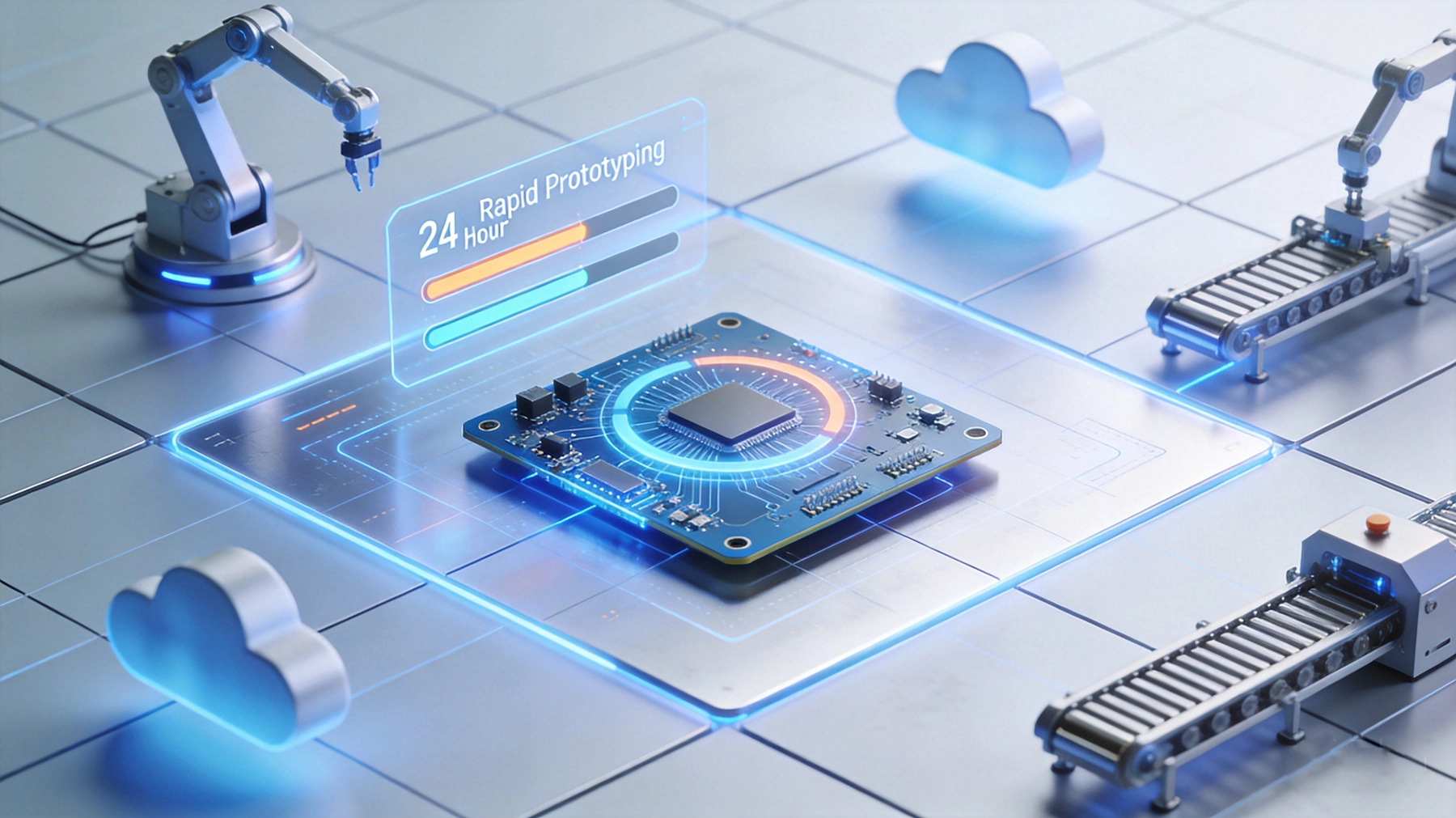
The landscape of printed circuit board assembly has undergone a profound transformation over the past decade, with digital platforms fundamentally reshaping how engineers and companies approach Rapid Prototyping and production manufacturing. What once required weeks of coordination with multiple vendors, extensive email exchanges, and manual order management can now be accomplished in a matter of hours through sophisticated cloud-based manufacturing platforms. This revolution in Electronics Manufacturing services has made 24-hour Turnkey Pcba not just a theoretical possibility but an operational reality for companies that have embraced digital transformation in their Supply Chain and manufacturing partnerships.
Traditional PCBA procurement involved lengthy processes that began with sending design files via email, waiting for vendor responses, negotiating quotes through multiple back-and-forth exchanges, and then managing separate relationships with fabrication houses, component distributors, and assembly shops. Each transition point between vendors introduced delays, communication errors, and potential quality issues. The cumulative effect meant that even urgent prototype requests might take weeks to fulfill, creating bottlenecks that delayed product development and Time-to-market for innovative electronics products.
Digital manufacturing platforms emerged as a response to these inefficiencies, creating integrated digital workflows that connect designers directly with automated manufacturing systems. These platforms leverage sophisticated software algorithms to instantly process design files, generate manufacturing data, calculate pricing, and route orders to appropriate production facilities. The elimination of manual handoffs and communication delays compressed turnaround times dramatically while simultaneously reducing errors that plague traditional multi-vendor approaches.
The transformation accelerated with advances in cloud computing, which enabled processing power and storage capabilities that previously required massive on-premise infrastructure. Cloud-based platforms could now handle thousands of simultaneous orders, scale resources dynamically based on demand, and maintain comprehensive databases of components, processes, and quality metrics. This technological foundation made real-time pricing, instant Dfm feedback, and automated order tracking not just possible but standard features of modern manufacturing platforms.
Instant quotation systems represent one of the most impactful innovations in digital PCBA platforms, eliminating the waiting period that traditionally delayed project initiation. Modern platforms analyze uploaded design files—typically Gerber files, drill files, and bill of materials documents—and extract critical manufacturing parameters including layer count, board dimensions, material specifications, and component requirements. Advanced algorithms then cross-reference these parameters against real-time inventory data, current pricing structures, and manufacturing capability databases to generate accurate quotes within seconds.
Design For Manufacturing analysis happens automatically during the quotation process, providing designers with immediate feedback on potential manufacturing issues. These automated Dfm checks identify problems such as insufficient clearances, trace width violations, missing solder mask openings, or component placement conflicts that could cause assembly defects. By surfacing these issues before orders are placed, digital platforms enable designers to correct problems proactively rather than discovering them after production begins, saving significant time and cost.
The intelligence embedded in quotation systems extends beyond simple rule-based checking to include machine learning algorithms trained on millions of historical manufacturing records. These algorithms can predict manufacturing yields, identify potential reliability concerns, and recommend design optimizations based on patterns learned from previous orders. As platforms accumulate more order data over time, their intelligent systems become increasingly accurate in identifying issues and recommending improvements that enhance product quality and manufacturing efficiency.
Component procurement has traditionally represented one of the most time-consuming aspects of Turnkey Pcba, requiring extensive research to identify available parts, verify pricing, and coordinate deliveries to match production schedules. Digital platforms have transformed this process through integrated component databases that aggregate inventory data from hundreds of distributors worldwide, providing instant visibility into component availability, pricing trends, and lead times. Designers can now verify component availability as they create bills of materials rather than discovering shortages after initiating production orders.
Automated component substitution capabilities help prevent production delays when specified parts become unavailable or subject to allocation constraints. Intelligent platforms maintain databases of equivalent components from multiple manufacturers, enabling automatic identification of suitable alternatives when primary choices are unavailable. These substitution systems consider not just functional equivalence but also footprint compatibility, electrical specifications, and availability, ensuring that substituted components will perform reliably in the target application without requiring design modifications.
Buffer stocking programs offered through digital platforms provide insurance against component shortages that could disrupt production schedules. By maintaining inventory positions for commonly used components, platforms can guarantee availability and rapid fulfillment for orders requiring these parts. This approach proves particularly valuable for high-mix manufacturing environments where individual order volumes may be too low to justify independent procurement, but aggregated demand across multiple customers enables efficient inventory positioning that benefits all participants.
Manufacturing visibility has emerged as a critical capability in digital PCBA platforms, providing customers with unprecedented insight into production progress. Real-time tracking systems capture data at each manufacturing stage—from component verification through Solder Paste Printing, component placement, Reflow Soldering, inspection, and testing. Customers access this information through web-based dashboards or mobile applications that display production status, expected completion times, and any issues that may have arisen during manufacturing.
The transparency enabled by digital tracking systems transforms the customer relationship from periodic updates to continuous awareness. Rather than waiting for email responses or telephone calls to learn production status, customers monitor progress as it happens, enabling more informed planning and faster response to unexpected developments. This visibility also builds confidence in manufacturing partners by demonstrating operational competence and commitment to transparency that distinguishes professional manufacturing services from less sophisticated alternatives.
Exception alerting capabilities notify customers immediately when production issues arise that may affect schedules or quality. These alerts include detailed information about the problem, proposed solutions, and any cost or schedule implications, enabling rapid decision-making without delaying production. Proactive communication of this nature prevents the surprises that traditionally accompanied manufacturing services, where problems might be discovered only upon product receipt rather than during production when correction options remain more flexible.
Digital platforms have elevated quality assurance from periodic inspection activities to continuous monitoring integrated throughout the manufacturing process. Automated Optical Inspection systems capture high-resolution images at each assembly stage, with Machine Vision algorithms analyzing these images to detect defects including missing components, misaligned placements, solder bridges, and insufficient solder fillets. This automated inspection capability far exceeds human inspection in consistency and coverage, identifying issues that might be missed through manual visual examination.
X-ray inspection systems provide additional quality assurance for hidden solder connections, particularly important for ball grid array packages and other components with concealed joints. Digital platforms integrate X-ray inspection data with production tracking systems, enabling correlation of inspection results with specific boards, lots, and production conditions. This data integration supports root cause analysis when quality issues arise and enables continuous improvement of manufacturing processes based on comprehensive quality metrics.
Functional testing capabilities within digital platforms verify that assembled boards perform according to specifications before shipment. In-circuit testing validates individual component presence and connectivity, while functional testing verifies board-level operation including power-up sequences, communication protocols, and application-specific performance criteria. These comprehensive testing approaches ensure that customers receive boards that not only appear correct but actually function as designed, reducing the risk of discovering problems during product integration or field deployment.
Order management through digital platforms eliminates the administrative burden that traditionally accompanied PCBA procurement. Online portals enable customers to place orders, manage design files, specify requirements, and track production status through unified interfaces that replace scattered email threads and phone calls. This consolidation of order management activities reduces administrative overhead while improving accuracy by eliminating transcription errors that occur when information transfers between systems or communication channels.
Automated documentation generation produces the compliance records, inspection reports, and certification documents required for regulated industries and quality-conscious customers. Digital platforms capture the data needed for these documents automatically during manufacturing, assembling comprehensive documentation packages without requiring manual compilation or additional processing steps. This automated documentation capability proves particularly valuable for medical, automotive, and aerospace applications where traceability and compliance documentation are mandatory requirements.
Revision control and design iteration management within digital platforms enable efficient handling of design changes and order modifications. When designers update specifications or correct issues identified during manufacturing, platforms maintain version control that ensures accurate tracking of changes and clear communication between design and manufacturing teams. This capability proves essential for iterative development processes common in product development where designs evolve through multiple prototype cycles before reaching production release.
Digital PCBA platforms benefit from powerful network effects that improve service quality as more users join the platform. Aggregated demand across platform users enables more efficient procurement through volume purchasing and better component pricing that benefits all participants. Shared manufacturing capacity means that urgent orders can be accommodated without requiring dedicated facilities, while lower-volume orders can be batched efficiently with similar work from other customers to achieve economical production runs.
Learning effects within digital platforms improve service quality as systems accumulate experience from processing more orders. Machine learning algorithms become more accurate in predicting manufacturing issues, recommending component substitutions, and optimizing production routing as they encounter more diverse order patterns and manufacturing scenarios. This continuous learning creates compounding advantages where platforms that have processed more orders deliver better service than newer competitors, regardless of the sophistication of their technology infrastructure.
Data network effects enable increasingly sophisticated analytics and optimization as platforms accumulate comprehensive datasets covering design patterns, component behavior, manufacturing processes, and quality outcomes. These datasets enable predictive capabilities that improve planning accuracy, reduce waste, and optimize inventory positioning across the manufacturing network. Platforms that have operated longer and processed more orders possess data assets that represent significant competitive advantages difficult for newer entrants to replicate.
Achieving genuine 24-hour turnkey PCBA requires more than software sophistication—it demands geographically distributed manufacturing networks that can initiate production immediately upon order receipt regardless of customer location. Digital platforms coordinate production across facilities positioned strategically around the world, routing orders to the optimal location based on customer geography, component availability, manufacturing capability, and delivery requirements. This network orchestration enables rapid fulfillment that would be impossible for single-facility operations.
Standardized processes across network facilities ensure consistent quality regardless of where production occurs within the platform network. Rigorous capability qualification, regular audits, and standardized training programs maintain manufacturing consistency that enables customers to trust output from any network location. This standardization also facilitates rapid capacity scaling—when demand increases in one region, production can shift to other facilities without requiring customers to qualify alternative vendors or accept quality variations.
Local inventory buffers at strategic network locations enable immediate production initiation for common requirements while longer-lead components are sourced from centralized distribution centers. This distributed inventory approach balances the speed advantages of local production with the cost efficiency of consolidated component procurement, achieving rapid turnaround without requiring expensive local inventory investments for every component in every location.
The economics of digital PCBA platforms differ significantly from traditional manufacturing approaches, with implications for pricing structures and value creation. While digital platforms can achieve efficiency advantages that translate to competitive pricing, the primary value creation lies in time savings, quality improvement, and administrative reduction rather than fundamental cost reductions. Understanding these dynamics helps customers evaluate platform offerings and recognize when premium pricing is justified by superior service and outcomes.
Transparent pricing models on digital platforms eliminate the uncertainty and negotiation that traditionally surrounded PCBA procurement. Customers see exact pricing based on their specific requirements without markup surprises or hidden fees that characterized older procurement approaches. This transparency builds trust while enabling more accurate project budgeting and cost analysis that supports better engineering and business decisions.
Scale economics achievable through digital platforms benefit customers through lower unit costs for production runs that can be efficiently batched with similar work. The aggregation of demand across many customers enables production runs that would be uneconomical for individual orders of similar size, translating efficiency gains into competitive pricing for all platform participants. These economics prove particularly advantageous for prototype and low-volume production where traditional approaches would be prohibitively expensive.
Design file security represents a critical concern for companies entrusting proprietary designs to digital manufacturing platforms. Professional platforms implement comprehensive security measures including encrypted file transfer, secure cloud storage with access controls, and network isolation that prevents unauthorized access to customer intellectual property. These security measures must be verified through appropriate certifications and audits before entrusting sensitive designs to any manufacturing platform.
Data privacy protections extend beyond design files to encompass all customer information shared through platform interfaces. Compliance with data protection regulations including GDPR, CCPA, and industry-specific requirements ensures that customer business information, order histories, and design data are handled appropriately. Professional platforms maintain privacy policies and technical controls that protect customer data while enabling the platform functionality required for service delivery.
Supply Chain transparency regarding Component Sourcing addresses concerns about counterfeit parts and unauthorized design disclosure. Platforms that source exclusively from authorized distributors and maintain comprehensive provenance documentation provide assurances that components are genuine and that design information has not been compromised through unauthorized disclosure. These transparency measures prove essential for applications in defense, medical, and other sensitive industries where supply chain integrity is paramount.
Despite the automation embedded in digital PCBA platforms, human expertise remains essential for achieving optimal outcomes. Engineering support teams provide assistance with design optimization, DFM issue resolution, and component selection when automated systems identify potential concerns. These experts combine manufacturing knowledge with application understanding to recommend solutions that balance manufacturability, cost, and performance requirements.
Customer success teams help companies leverage platform capabilities effectively, particularly during initial adoption when users may not be familiar with all available features and best practices. These teams accelerate time-to-value by guiding customers through platform onboarding, recommending process improvements, and identifying opportunities to leverage platform capabilities that might otherwise go unnoticed. The investment in customer success demonstrates platform commitment to customer outcomes rather than simply transaction processing.
Continuous improvement processes ensure that digital platforms evolve to meet changing customer needs and incorporate technological advances. User feedback drives feature development priorities, while operational metrics identify improvement opportunities in existing capabilities. Platforms that invest in continuous improvement maintain their competitive position while delivering increasing value to customers over time.
Artificial intelligence capabilities continue advancing rapidly, with implications for how digital platforms will evolve in coming years. AI-powered design tools will provide increasingly sophisticated recommendations for design optimization, component selection, and manufacturing approach. These capabilities will reduce the expertise barrier for complex Pcb Design while enabling even experienced engineers to achieve better outcomes with less effort.
Integration with broader product development ecosystems will make digital PCBA platforms even more central to product realization workflows. Connections to CAD tools, PLM systems, and collaborative development platforms will enable seamless information flow from initial concept through manufacturing delivery. This integration will further compress development timelines while reducing errors associated with manual data transfer between disconnected systems.
Advanced manufacturing technologies including additive electronics, embedded components, and flexible hybrid systems will expand the capabilities available through digital platforms. As these technologies mature and achieve production viability, digital platforms will incorporate them into their service offerings, providing customers with access to emerging capabilities without requiring independent technology adoption. This continuous expansion of available manufacturing options will further differentiate digital platforms from traditional manufacturing alternatives.
Digital platforms have fundamentally transformed the economics and logistics of Rapid Turnkey Pcba, enabling 24-hour fulfillment that was impossible through traditional manufacturing approaches. The combination of automated quoting, intelligent Component Sourcing, real-time tracking, integrated quality assurance, and streamlined order management creates a manufacturing experience that prioritizes customer convenience and speed-to-market. These platforms represent not merely technological innovations but fundamental restructuring of how Electronics Manufacturing services are delivered and consumed.
The advantages of digital platforms extend beyond the immediate benefits of faster turnaround and better visibility to encompass strategic transformation of product development processes. Companies leveraging digital PCBA capabilities can iterate more rapidly, respond faster to market opportunities, and reduce the organizational burden of manufacturing coordination. These advantages translate to competitive benefits that extend far beyond individual order economics to encompass overall business agility and market responsiveness.
As digital platforms continue evolving with advancing AI capabilities, deeper ecosystem integrations, and expanded manufacturing technologies, the gap between digital and traditional manufacturing approaches will widen further. Companies that embrace digital transformation in their manufacturing partnerships will enjoy increasing advantages over those clinging to legacy approaches. The 24-hour Rapid Turnkey Pcba capabilities available through digital platforms today represent just the beginning of a continuing evolution that will reshape electronics manufacturing for decades to come.

Rapid Turnkey PCBA: How to Get Your Electronics Built in Days, Not WeeksJune/15/2026
The Trade-offs Between Speed and Cost in Rapid Turnkey PCBAJuly/13/2026
Strategies for Scaling to High Volume Turnkey PCBA ProductionMay/26/2026
High Volume Turnkey PCBA: Ensuring Consistency and Yield at ScaleJune/12/2026

Rapid Turnkey PCBA Services for Emergency Engineering FixesAugust/03/2026
Heavy Copper PCBs: Assembly Challenges and SolutionsAugust/07/2026
Turnkey PCB Services vs. Consignment: Which Model Fits Your Project?July/27/2026
5 Common Mistakes to Avoid During Turnkey PCB PrototypingJuly/07/2026