

Advanced Driver Assistance Systems have transformed from luxury car novelties into safety-critical systems required by regulation on millions of vehicles worldwide. Automatic emergency braking, lane keeping assist, blind spot monitoring, and adaptive cruise control now appear on vehicles across all price segments. Behind these life-saving features sits a complex web of sensors, processors, and actuators — all built on printed circuit boards that must operate flawlessly for the vehicle's lifetime.
Building PCBs for ADAS applications demands far more than standard commercial manufacturing. These boards face extreme temperatures, constant vibration, electromagnetic interference from the vehicle's own systems, and the unforgiving requirement that they never fail in ways that endanger lives. Turnkey PCB Assembly — where a single partner handles everything from component procurement through final test — has become essential for meeting these demanding requirements. This guide explores why Turnkey Assembly matters for ADAS and how it enables the safety systems protecting drivers on roads today.
Modern ADAS implementations distribute processing across multiple electronic control units connected by high-speed networks. A typical ADAS architecture might include a forward-facing camera module, radar sensors at each corner, ultrasonic sensors for parking assist, a central domain controller that fuses sensor data, and actuator control modules that execute braking and steering interventions.
Each node in this architecture requires PCB assemblies optimized for its specific function. Camera modules demand high-speed signal processing and precise imaging with minimal noise. Radar modules work with millimeter-wave frequencies requiring controlled impedance and careful RF layout. The domain controller handles massive computational loads while managing thermal dissipation from processors running at high utilization. And all of these modules must communicate reliably over automotive-grade Ethernet or CAN-FD networks despite the electrically hostile vehicle environment.
The diversity of these requirements means ADAS PCBs aren't commodity boards — they're specialized assemblies requiring deep expertise in Automotive Electronics, tight process control, and manufacturing partners who understand the stakes of safety-critical production.
The turnkey model — where one assembly partner manages Component Sourcing, PCB Fabrication, assembly, programming, and test — offers advantages that matter enormously for ADAS applications. When something goes wrong with a safety-critical system, you don't want fingers pointing between multiple suppliers. Turnkey Assembly creates a single point of accountability for the complete board assembly.
Counterfeit components have become a genuine concern in Automotive Electronics. The semiconductor shortages of recent years drove some buyers to unauthorized channels, introducing the risk of remarked parts that pass visual inspection but fail prematurely. Turnkey assembly partners with established supply chains and component verification processes protect against these risks.
For ADAS applications, every component must come from authorized distribution channels with full traceability back to the manufacturer. This isn't just quality theater — in the event of a field failure investigation, regulators and liability proceedings require the ability to trace components to their manufacturing lots. Turnkey partners maintain this traceability as standard practice rather than scrambling to reconstruct records after problems emerge.
ADAS systems often scale from early deployment in premium vehicles to high-volume production across multiple platforms. This scaling requires manufacturing processes that remain consistent as volumes grow from hundreds to hundreds of thousands. Turnkey assembly partners structure their operations around repeatable processes that don't degrade as scale increases.
The alternative — managing multiple suppliers for different production stages — introduces variability at every handoff. Different assembly facilities have different equipment, different process controls, and different defect rates. When your safety system reliability depends on the weakest link in this chain, consolidation to a single turnkey partner reduces the variance that multi-supplier approaches inevitably introduce.
Automotive development cycles are compressing. Tier 1 suppliers face pressure to deliver ADAS functionality faster while maintaining the reliability that automotive customers demand. Turnkey assembly eliminates procurement delays that plague multi-vendor approaches, where a single out-of-stock component can delay an entire assembly.
Experienced turnkey partners maintain buffer stocks of commonly used automotive-grade components, have established relationships with distributors that prioritize their orders, and can respond to component changes faster than organizations managing their own supply chains. When a sensor manufacturer updates their component specification mid-development, a turnkey partner can often reconfigure production while an internally-managed procurement team is still negotiating lead times.
ADAS electronic modules face thermal challenges that push conventional Pcb Design approaches to their limits. Components running computer vision algorithms or radar signal processing generate significant heat, often in confined spaces behind windshields or inside door panels where natural convection is limited.
Automotive electronics must function across temperature ranges that Consumer Electronics never encounter. A forward-facing camera behind a windshield in Phoenix Arizona might see internal temperatures exceeding 85°C on a summer afternoon while simultaneously processing video in real-time. The same module must function reliably at -40°C during a Minnesota winter start. This 125°C temperature swing stresses every material in the assembly — PCB substrates, solder joints, components, and conformal coatings alike.
Turnkey assembly partners experienced with automotive work understand these requirements and select materials accordingly. High-Tg FR4 or polyimide substrates handle the temperature extremes. Solder joint compositions are specified for thermal cycling survival. And component selection focuses on automotive-grade parts with temperature ratings that exceed the worst-case application requirements by meaningful margins.
Effective Thermal Management in ADAS modules requires moving heat from hot components to heat-spreading structures or dedicated heat sinks. Thermal via arrays under processors and power devices create low-resistance thermal paths through the PCB. These vias must be designed correctly — too few and the thermal resistance stays too high, too many and they compromise mechanical integrity or signal routing.
Turnkey partners with automotive experience have thermal simulation and validation capabilities that optimize via patterns for specific processor packages and power levels. They can also specify the copper weights, dielectric materials, and metal backing options that achieve target junction temperatures within the thermal budget of the overall module design.
ADAS processors often have complex power delivery requirements with multiple voltage rails that must power up and power down in specific sequences. These power management ICs dissipate their own heat while regulating power to loads that switch dynamically based on processing demand. The thermal interaction between power regulation and main processors creates challenges that require careful co-design.
Turnkey assembly enables this co-design because the same team handles power delivery and Thermal Management. When power stage efficiency impacts thermal budget, the assembly team can evaluate trade-offs and recommend optimizations that a component-sourcing-only partner couldn't address.
Automotive electronics operate under a framework of international standards that define qualification testing, failure mechanisms, and reliability expectations. Understanding these standards helps you evaluate whether your turnkey assembly partner is equipped for ADAS production.
The Automotive Electronics Council's AEC-Q100 through AEC-Q200 specifications define qualification requirements for components used in automotive applications. AEC-Q100 covers integrated circuits, AEC-Q101 covers discrete semiconductors, and AEC-Q200 covers passive components. These specifications define stress test sequences including temperature cycling, high-temperature operating life, powered thermal cycling, and various mechanical tests that components must pass before automotive use.
For ADAS PCB assemblies, using AEC-qualified components is the baseline expectation. Turnkey partners with established automotive programs know how to source AEC-Q components and can verify component qualification status against the AEC-Q test data sheets that manufacturers publish. Non-AEC components might save cost but introduce reliability risks that safety-critical applications cannot accept.
PPAP (Production Part Approval Process) is the automotive industry's framework for validating that production processes can consistently produce parts meeting customer specifications. For ADAS PCBs, PPAP submission typically includes process capability studies, measurement system analysis, dimensional verification, and reliability test results from production-intent samples.
Turnkey assembly partners with automotive experience have PPAP processes already established. They know what documentation to prepare, how to structure process capability studies, and what test frequencies support ongoing production verification. This institutional knowledge accelerates PPAP approval and reduces the back-and-forth that can delay automotive program launches by months.
ADAS systems often fall under functional safety requirements defined by ISO 26262. This standard defines safety integrity levels (ASIL A through ASIL D) based on the severity, controllability, and exposure associated with potential failures. Lane keeping assist and automatic emergency braking typically require ASIL B or higher — meaning the system must be designed to prevent or detect failures that could cause harm.
Turnkey assembly doesn't eliminate the need for functional safety design work, but experienced partners understand the implications for manufacturing. They maintain process controls that prevent systematic failures, implement detection and containment for random hardware failures, and maintain documentation that supports safety case arguments. When your ADAS function requires ASIL B, your assembly partner must understand what that means for their processes.
ADAS architectures transmit data at rates that demand attention to Signal Integrity. Camera modules output uncompressed video at gigabit rates over serial links. Radar modules transmit raw sampling data requiring high bandwidth. And domain controllers exchange fused sensor data over automotive Ethernet running at 100Mbps or faster.
High-speed serial links require consistent controlled impedance — typically 90 ohms for differential pairs in automotive applications. Variations in trace geometry, dielectric thickness, or material properties create impedance discontinuities that degrade signal quality, reducing effective link margin and potentially causing bit errors that trigger safety interventions.
Turnkey assembly for ADAS modules must maintain tight Impedance Control across the board. This means specifying impedance requirements to the PCB Fabrication house, verifying impedance on production boards using time-domain reflectometry, and monitoring process variation that might drift impedance out of tolerance over production runs.
Routing high-speed signals alongside lower-speed control signals creates Crosstalk risks that must be managed. Electric fields from switching signals couple into adjacent traces, and at gigabit data rates, even small coupling coefficients create measurable interference. Careful layer assignment, ground plane placement, and trace spacing optimization manage this coupling.
Turnkey partners with automotive radar and camera experience understand these routing requirements and implement design rules that prevent Crosstalk issues. They can review your layout for Signal Integrity concerns before fabrication and recommend modifications that cost nothing in board area but prevent hard-to-diagnose intermittent failures in the field.
Automotive environments are electrically hostile. The vehicle's own motors, ignition systems, and power switching create electromagnetic interference that ADAS electronics must tolerate. Conversely, ADAS electronics must not emit interference that affects other vehicle systems. Meeting these dual requirements demands attention to both emissions and susceptibility.
Turnkey assembly affects EMI in ways that aren't always obvious. Grounding schemes, shield termination practices, and cable assembly techniques all influence radiated and conducted emissions. Partners with automotive EMC experience implement these practices correctly from the first production board, rather than discovering EMI problems during system-level testing when fixes are expensive.
ADAS PCB assemblies require testing that goes well beyond standard ICT (in-circuit test) and functional test. The consequences of field failures — safety interventions that don't happen, or unwanted interventions that startle drivers — demand high confidence that every shipped assembly meets its specifications.
AOI (Automated Optical Inspection) catches component placement errors, missing parts, and solder defects that might escape visual review. For fine-pitch components like BGA packages common in ADAS processors, AOI must be supplemented with X-ray inspection that can see underneath packages where solder joint quality can't be verified optically.
Turnkey assembly lines implement both inspection modalities as standard production steps. They maintain calibration programs that keep inspection equipment accurate, and they track defect rates to identify process drift before it creates field-quality problems. This inspection infrastructure represents significant investment that smaller assembly shops can't justify for low-volume production.
Boundary scan technology accesses nodes in the circuit that can't be probed physically, enabling structural testing of connections between components. For complex ADAS assemblies with processors having hundreds of pins connected through BGA packages, boundary scan provides the only practical way to verify all connections are made correctly.
Functional test goes beyond structural verification to confirm that the assembly actually performs its intended function. For an ADAS camera module, this means applying power, loading firmware, capturing test images, and verifying that image processing algorithms produce expected outputs. For radar modules, it means verifying RF performance, power consumption, and communication interface functionality.
Turnkey partners develop functional test programs tailored to each product. This test development requires understanding both the hardware and the software/firmware that runs on it — a cross-disciplinary capability that turnkey organizations cultivate because they handle the complete assembly rather than isolated components.
Accelerated life testing during production catches infant mortality failures before boards reach customers. Burn-in testing applies electrical stress at elevated temperature, activating failure mechanisms that would otherwise appear during early field deployment. ESS (Environmental Stress Screening) adds mechanical stresses like vibration to activate failures related to solder joint integrity or component attachment.
Not every ADAS application requires the same stress screening intensity. A module in a premium vehicle that will be replaced under warranty at any sign of trouble has different cost-of-failure calculus than a module in a mass-market vehicle where owners expect years of trouble-free operation. Turnkey partners work with customers to specify screening protocols that balance reliability targets against cost and schedule constraints.
The semiconductor shortages of recent years exposed how fragile global supply chains can become. For ADAS programs committed to multi-year production runs, component availability isn't just a procurement detail — it's a strategic concern that affects customer relationships and market access.
Safety-critical systems shouldn't rely on single-source components if alternatives exist. Turnkey partners with automotive experience maintain relationships with multiple distributors and work with customers to qualify second sources for critical components during development rather than scrambling during shortages.
This second-source qualification isn't trivial — components from different manufacturers might have subtly different timing, different pin assignments, or different performance characteristics at temperature extremes. Validating second sources requires engineering work that turnkey partners can coordinate and execute efficiently because they understand both the components and the assembly process.
For programs with predictable volumes, turnkey partners can establish buffer stock agreements that protect against short-term supply disruptions. These agreements commit the partner to maintaining inventory at levels that cover specified disruption scenarios, in exchange for volume commitments from the customer.
The economics of buffer stock require balancing carrying cost against supply disruption risk. Turnkey partners have the Inventory Management infrastructure and financial relationships with component distributors to make these arrangements work for both parties.
ADAS technology continues advancing, and manufacturing approaches must evolve to support new capabilities. Several trends are shaping how turnkey assembly will support ADAS in coming years.
ADAS processors are increasingly integrating multiple functions — application processors, memory, power management, and RF transceivers — into system-in-package (SiP) modules. These highly integrated packages reduce board area and simplify Supply Chain but concentrate thermal and reliability challenges in dense structures that push manufacturing limits.
Turnkey assembly for SiP-heavy designs requires advanced capabilities: fine-pitch placement for BGAs with 0.4mm or 0.5mm pitch, precise reflow profiling for packages with dissimilar thermal masses, and inspection methods that verify interconnections within the package. These capabilities require significant capital investment that turnkey partners serving automotive markets are positioned to provide.
ADAS systems increasingly incorporate neural network inference for object detection, path planning, and behavior prediction. These workloads run on specialized processors — GPUs, NPUs, or dedicated AI accelerators — that have unique thermal and power delivery requirements. Meeting the thermal budgets of these high-performance processors while maintaining automotive-grade reliability drives innovation in Thermal Interface Materials, heat sink attachment, and module packaging.
Turnkey partners with AI accelerator experience understand these thermal challenges and can advise on thermal architecture decisions that affect both performance and manufacturing cost. The coupling between processing architecture and physical implementation makes turnkey collaboration during architecture definition increasingly valuable.
Automotive E/E architectures are evolving from distributed ECU networks toward zonal architectures where domain controllers manage groups of sensors and actuators. This consolidation increases the performance and reliability requirements on central computing modules while reducing the total number of modules in the vehicle.
Zonal architectures drive demand for high-performance compute modules that push thermal management, power delivery, and memory interface design to their limits. Turnkey partners must simultaneously excel at traditional automotive manufacturing discipline while supporting the high-performance computing approaches that enable software-defined vehicle features.
Turnkey PCB Assembly has become essential for ADAS production because the requirements — safety-critical reliability, extreme environmental robustness, high-speed signal integrity, and long-term supply availability — demand capabilities that only focused, experienced partners can consistently deliver.
When evaluating turnkey assembly partners for ADAS applications, look beyond manufacturing capabilities to engineering depth. Can they contribute to thermal architecture decisions? Do they have automotive PPAP experience? Can they demonstrate functional safety process understanding? The answers to these questions differentiate partners who understand ADAS from those who see it as just another vertical market.
Supply Chain resilience matters more than it did five years ago. Partners with established distributor relationships, buffer stock capabilities, and second-source qualification processes protect your production continuity against disruptions that seemed unlikely before 2021.
Finally, look for partners investing in the future. ADAS is evolving rapidly toward more integration, more AI processing, and more demanding thermal envelopes. Your assembly partner should be building capabilities for these next-generation requirements, not just optimizing for today's mainstream applications.
ISO 9001 forms the baseline, but automotive programs typically require Iatf 16949 certification for the manufacturing facility. Beyond certification, ask about their experience with automotive PPAP submissions, their functional safety process documentation (ISO 26262), and their traceability systems for component lot tracking. Experience with AEC-Q qualification requirements and knowledge of AIAG core tools (APQP, PPAP, FMEA) indicates genuine automotive capability.
Work with your turnkey partner to identify single-source components during Design Review, then prioritize second-source qualification for these components before production launch. Establish buffer stock agreements for components with longer lead times or known supply constraints. For critical processors, consider lifetime buys coordinated with your partner, but understand the inventory risk this creates.
From design finalization to production launch, expect 6-12 months for full automotive qualification including PPAP approval. This timeline includes first-article builds, reliability testing, PPAP documentation preparation, and pilot production runs. Rush programs can compress this timeline, but cutting corners on qualification increases field failure risk.
ADAS modules typically require high-Tg materials (170°C minimum) to handle elevated operating temperatures in vehicle installations. Some applications use polyimide or specialized ceramic substrates for superior thermal performance. Your turnkey partner should understand the trade-offs between material cost, thermal performance, and manufacturing complexity to recommend optimal choices for your specific thermal environment.
ADAS assemblies often require functional testing that goes beyond standard ICT. Camera modules need image quality verification, radar modules need RF performance testing, and processor modules need firmware loading and algorithm validation. Turnkey partners with ADAS experience have developed test methodologies for these requirements and can often share test platforms across similar programs, reducing per-program NRE costs.
The evolution of ADAS from optional safety features to mandatory requirements is accelerating. Meeting this demand requires manufacturing partners who can deliver at scale without compromising the reliability that makes ADAS valuable. Turnkey Pcb Assembly — done right — provides the foundation that reliable ADAS production depends on.
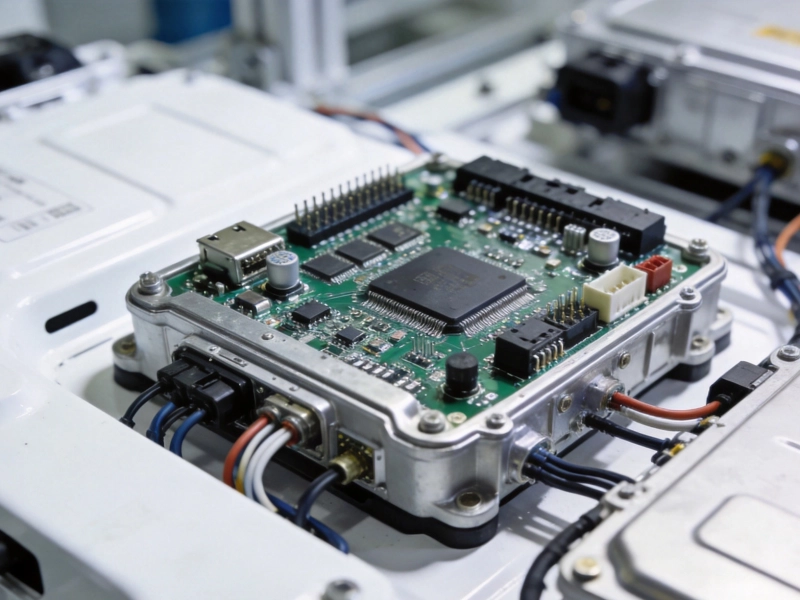
Best Turnkey PCB Assembly for Electric Vehicle Control UnitsSeptember/16/2026
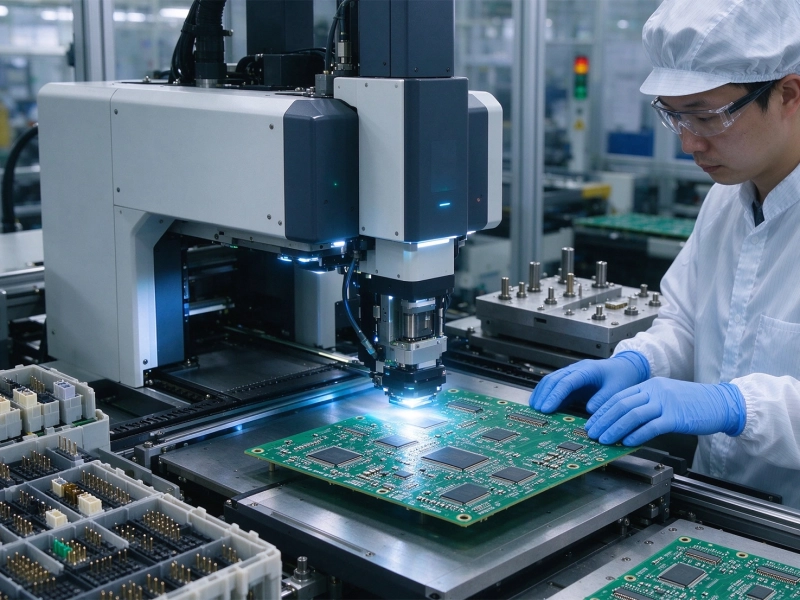
How Turnkey PCB Solutions Simplify Project Management for Engineers?October/14/2026
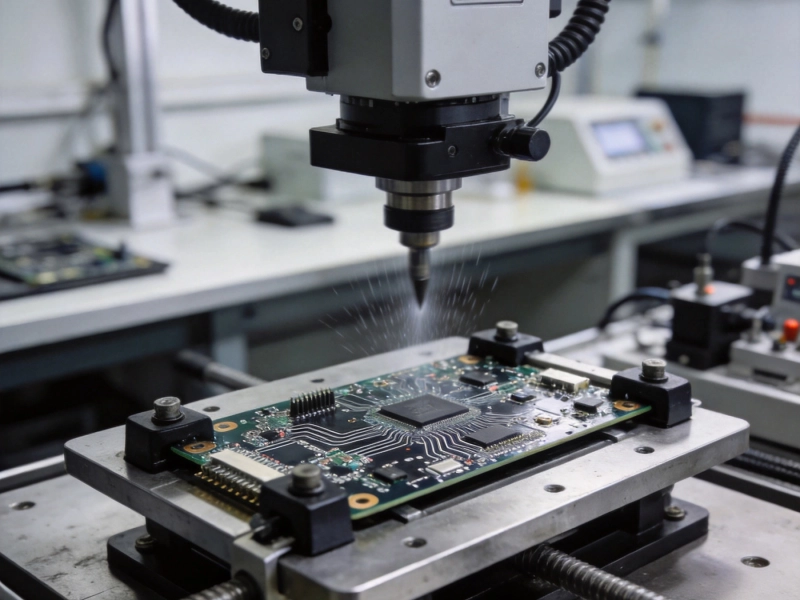
Vibration and Shock Resistance in Automotive PCB AssemblyAugust/08/2026

The Advantages of Local vs. Overseas Turnkey PCB ManufacturingOctober/09/2026
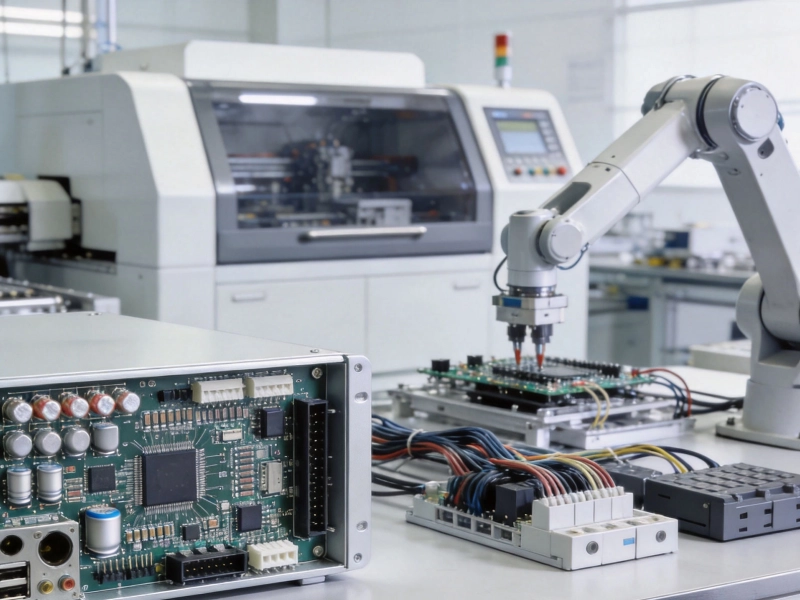
Comprehensive Turnkey PCB Solutions for Complex Electronic SystemsJuly/14/2026
Best Turnkey PCB Assembly for Automotive & EV Systems: Meeting IATF 16949June/18/2026

High Volume Turnkey PCBA: The Importance of Automated Assembly LinesSeptember/09/2026

Turnkey PCB Assembly Insights: The Shift Towards High-Mix Low-Volume ProductionJuly/02/2026