
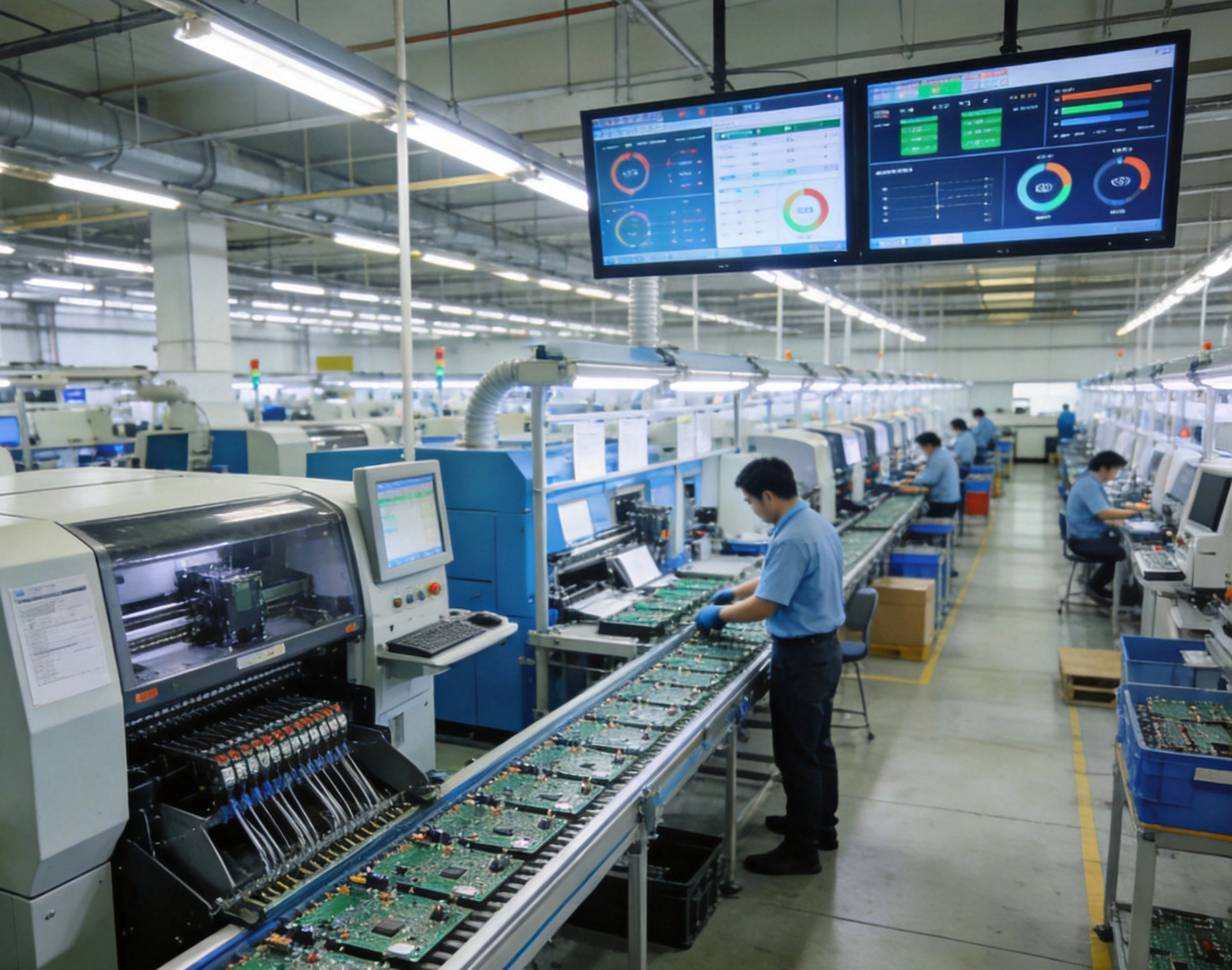
The transition from prototype development to mass production represents one of the most critical—and challenging—phases in Electronics Manufacturing. While prototypes may perform flawlessly in controlled laboratory conditions, scaling to high volume Turnkey Pcba production introduces complexities that can expose hidden vulnerabilities in designs, materials, and processes. Companies that master this transition successfully capture market opportunities and establish competitive advantages, while those that struggle may find their innovations compromised by inconsistent quality, missed delivery schedules, and escalating costs.
High volume Turnkey Pcba manufacturing requires more than simply running more boards through the same processes used for prototypes. It demands systematic approaches to maintaining consistency across thousands or millions of assemblies, optimizing yield to ensure profitability, and establishing controls that catch problems before they become costly disasters. Understanding the strategies that enable successful mass production separates companies that thrive in competitive markets from those that fall behind.
When production volumes increase from dozens of prototypes to thousands or tens of thousands of assemblies per month, the dynamics of manufacturing fundamentally change. Small defects that were acceptable in prototype runs become unacceptable at scale, both because of their absolute numbers and their impact on cost and quality reputation.
Prototype manufacturing prioritizes speed and flexibility over optimization. Engineers iterate rapidly, testing design variations and accepting some defects as the cost of learning. Production manufacturing, by contrast, demands consistency, repeatability, and systematic defect prevention. The mindset shift required—from experimentation to standardization—impacts every aspect of how assemblies are designed, built, and verified.
At prototype volumes, a two percent defect rate might mean one or two failed boards that can be rebuilt quickly. At production volumes of ten thousand units per month, that same two percent translates to two hundred defective assemblies, each requiring rework or replacement, each potentially causing customer returns or field failures. The economics of scale make defect prevention far more valuable than defect detection and correction.
Every manufacturing process exhibits some degree of variation. In High Volume Production, even small variations can compound across thousands of assemblies to create significant quality problems. The goal of professional turnkey Pcba Manufacturing is not to eliminate all variation—that is impossible—but to understand, control, and minimize variation that affects product quality and performance.
Sources of variation include differences in raw materials, environmental conditions, equipment performance over time, and human factors in process operation. Professional manufacturers implement statistical process control and continuous monitoring to identify when variation threatens quality, allowing intervention before defective products are produced.
The foundation of consistent High Volume Production is established long before manufacturing begins. Design decisions made during product development directly impact the achievable yield and quality at scale.
Design for Manufacturability (Dfm) review examines designs specifically for their suitability for volume production. This review considers factors including:
Designs that work acceptably in prototypes may fail when produced at scale because prototype manufacturing often uses different processes, equipment, and techniques than production facilities. Early Dfm review identifies these potential issues while changes remain inexpensive to implement.
Component choices significantly impact manufacturing success at volume. Considerations include:
Working with manufacturers who can provide DFM feedback during the design phase helps identify component-related risks before they become production problems.
High volume turnkey PCBA depends on consistent material supply and quality. Material-related issues rank among the leading causes of production problems at scale.
The printed circuit board serves as the foundation for all subsequent assembly operations. Board quality directly impacts everything from Solder Paste Printing to component placement to final test results. Critical parameters include:
Professional turnkey manufacturers source PCBs from qualified suppliers with demonstrated consistency, maintaining incoming inspection programs that verify critical parameters before boards enter production.
Managing component supply for high volume production requires sophisticated logistics and quality assurance:
Consumable materials require careful attention in volume production:
Consistent high volume production requires rigorous process control at every stage of assembly.
Solder Paste Printing typically accounts for the majority of assembly defects. Controlling this critical process requires:
3D solder paste inspection (SPI) systems measure paste deposition in real-time, identifying problems before subsequent assembly steps. This in-line quality control dramatically reduces downstream defects and improves overall yield.
Modern pick-and-place equipment achieves placement accuracies measured in microns, but maintaining this precision over millions of placements requires ongoing attention:
Automated Optical Inspection (AOI) following placement catches errors before reflow, allowing correction while rework remains straightforward.
Reflow soldering transforms printed circuit boards from collections of components and solder paste into functional assemblies. The thermal profile must be precisely controlled to achieve reliable solder joints without damaging components or boards:
Comprehensive inspection and testing at volume provides the assurance that assemblies meet quality requirements and identifies systematic problems requiring corrective action.
AOI systems inspect assemblies for defects including:
Advanced AOI systems combine multiple lighting techniques and high-resolution imaging to detect defects that might escape simpler inspection approaches. Programming these systems requires expertise to balance detection sensitivity against false call rates.
Components with concealed solder joints—particularly ball grid arrays (BGAs) and chip scale packages (CSPs)—require X-ray inspection to verify joint quality:
X-ray inspection becomes increasingly important as component packages become more compact and joint access more limited. Professional turnkey manufacturers invest in advanced X-ray equipment and trained operators.
Functional testing validates that assemblies perform correctly:
Managing quality at volume requires moving beyond inspection-based quality control to process-based approaches that prevent defects rather than merely detecting them.
Statistical methods quantify process capability—the ability of a process to produce consistently within specification limits—and track process performance over time:
When control charts show processes drifting toward specification limits, preventive maintenance or process adjustments can prevent out-of-spec production before it occurs.
When defects do occur, systematic analysis identifies root causes so that corrective action prevents recurrence:
Even when processes perform adequately, professional manufacturers continuously seek improvement:
Volume production requires comprehensive documentation that supports quality assurance, regulatory compliance, and continuous improvement.
Detailed records of production operations enable quality verification and problem investigation:
Traceability systems link finished assemblies to their component lots, manufacturing conditions, and inspection results:
When quality issues arise, traceability enables rapid identification of affected assemblies and investigation of contributing factors.
Selecting the right manufacturing partner is among the most consequential decisions for high volume production success.
Evaluate potential partners across critical dimensions:
Understand how potential partners measure and report quality:
Volume production relationships require effective communication:
Ramping production to volume and managing transitions during product lifecycle require special attention.
Systematic NPI processes validate that products can be manufactured successfully at volume:
Engineering changes during production require careful management:
High volume turnkey Pcba Manufacturing demands systematic approaches to quality that differ fundamentally from prototype or low-volume production. Success requires attention to design for manufacturability, material quality and consistency, rigorous process control, comprehensive inspection and testing, statistical analysis of process performance, and continuous improvement.
The strategies outlined in this guide—design optimization, material management, process control, inspection and testing, statistical methods, and documentation—combine to create the foundation for consistent, high-yield volume production. When implemented comprehensively and maintained rigorously, these approaches enable manufacturers to achieve the quality levels that modern electronics markets demand.
Selecting the right manufacturing partner is critical, but understanding these principles enables informed evaluation and effective collaboration. Companies that master high volume turnkey PCBA production position themselves to compete successfully in demanding markets where consistency, quality, and reliability determine success.
The investment required to establish world-class volume manufacturing capabilities is substantial, but the returns—in product quality, production efficiency, and customer satisfaction—justify that investment many times over for companies committed to long-term success in Electronics Manufacturing.
Tags: high volume PCBA, turnkey PCBA manufacturing, mass production consistency, PCBA yield optimization, electronics manufacturing quality, SMT production scaling, manufacturing defect prevention

Rapid Turnkey PCBA: How to Get Your Electronics Built in Days, Not WeeksJune/15/2026
Strategies for Scaling to High Volume Turnkey PCBA ProductionMay/26/2026
The Trade-offs Between Speed and Cost in Rapid Turnkey PCBAJuly/13/2026
Advanced Turnkey SMT Assembly Techniques for High-Density InterconnectsMay/26/2026
Key Insights on DFM (Design for Manufacturing) in Turnkey ProjectsJuly/26/2026
Cleanroom Manufacturing Standards for Implantable Medical PCBAJuly/21/2026
A Step-by-Step Walkthrough of the Turnkey PCB Manufacturing ProcessJune/09/2026

Turnkey PCB Services vs. Consignment: Which Model Fits Your Project?July/03/2026