Open Nav

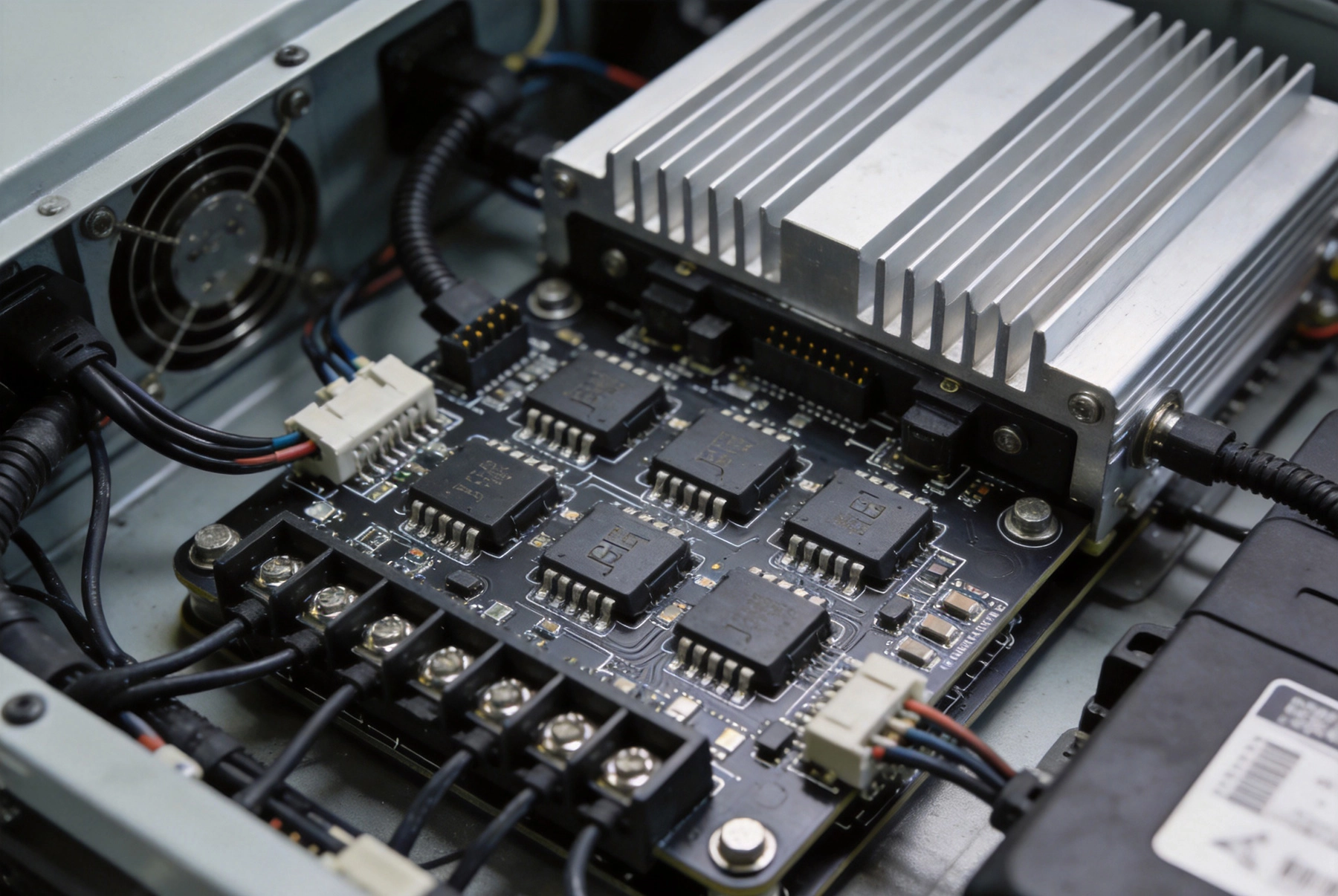
Electric vehicles represent one of the most significant transportation shifts in decades, and the infrastructure supporting them faces demanding requirements that separate EV electronics from consumer applications. EV charging stations must deliver high power reliably in outdoor environments, often operating unattended for years. Power inverters in vehicles convert DC battery power to AC drive currents with efficiencies exceeding 95%. Both applications push Pcb Assembly capabilities to extremes—Thermal Management challenges, high-current routing, isolation requirements, and reliability expectations that far exceed typical commercial electronics.
Finding the right Turnkey PCB Assembly partner for these applications requires understanding how demanding environments and reliability expectations shape manufacturing requirements. The best partners for EV charging and inverter assembly bring specialized capabilities that go beyond standard Smt Assembly—expertise in high-Power Electronics, thermal design, and the documentation practices that automotive and infrastructure industries demand.
EV charging stations operate at power levels that dwarf typical electronics. Level 2 residential chargers deliver 7-22 kW; Level 3 DC fast chargers provide 50-350 kW or more. At these power levels, even small resistive losses generate substantial heat. A system with 97% efficiency running at 100 kW dissipates 3 kW as heat—heat that must be managed through careful thermal design.
Power inverters face similar challenges, converting battery DC to motor AC with continuous power flows that may exceed 100 kW in vehicle applications. The assembly must handle high currents without excessive voltage drop, manage thermal cycling from load variations, and survive vibration and shock from vehicle operation.
These power levels create assembly requirements that cascade through material selection, layout design, and manufacturing processes. Heavy copper circuits replace standard trace widths. Thermal Management becomes a primary design constraint. Component selection prioritizes packages that can handle required current and thermal demands.
EV charging stations operate outdoors, exposed to temperature extremes, humidity, rain, and UV radiation. Assembly must withstand these conditions without degradation for years of unattended operation. Requirements like IP65 or IP67 ingress protection affect connector selection, Conformal Coating decisions, and overall assembly approach.
Thermal cycling from daily temperature swings creates stress on solder joints and component terminations. Automotive applications face vibration from vehicle operation plus thermal cycling from power dissipation. These combined stresses demand assemblies with robust mechanical integrity and proven reliability under cyclic loading.
UV exposure affects plastics and conformal coatings used in outdoor applications. Materials must be specified for UV resistance if exposed to sunlight. Some components may require shielding rather than UV-rated materials, depending on exposure conditions.
High-power circuits require conductors that can handle required current without excessive heating. Standard 1 oz copper (35 microns) may be inadequate for circuits carrying tens of amps. EV applications commonly use 2 oz, 3 oz, or heavier copper to reduce resistive heating and improve thermal performance.
Heavy copper PCB Fabrication differs from standard multilayer processing. Thicker copper requires longer etching times, different resist processes, and careful attention to uniformity. Not all manufacturers handle heavy copper well—plating thickness variations and undercut issues affect production yields. Selecting partners with demonstrated heavy copper experience improves first-pass success.
Heavy copper assembly presents additional challenges. Larger thermal mass affects reflow profiling; components may need higher peak temperatures or longer soak times to achieve reliable solder joints. Placement equipment must handle heavier boards without vibration or misalignment. These factors influence manufacturing partner selection.
Thermal management in EV Power Electronics goes beyond standard heat sinking. Liquid cooling channels, direct substrate cooling, and advanced Thermal Interface Materials appear in many designs. Assembly must integrate these thermal features without compromising reliability or manufacturability.
Thermal vias under power components provide heat conduction through the PCB stackup. High via density and copper filling maximize thermal transfer. Some designs use metal-core substrates or IMS (Insulated Metal Substrate) boards that provide thermal paths through aluminum or copper base materials.
Interface material selection and application affect thermal resistance at component-to-heatsink interfaces. Thermal pads, phase-change materials, and thermal greases each have application requirements. Assembly processes must ensure consistent interface material application for uniform thermal performance.
Power semiconductors—IGBTs, MOSFETs, SiC (Silicon Carbide), and GaN devices—require specialized assembly attention. These components dissipate significant heat through their packages, requiring excellent thermal coupling to heatsinks or thermal planes. Standard surface mount assembly may not achieve required thermal performance.
Press-fit technology inserts heavy terminals through plated holes, providing mechanical strength and excellent thermal paths. Press-fit assemblies handle higher currents than surface mount terminations while providing superior thermal dissipation. This technology suits high-power inverter applications where reliability under thermal cycling matters.
Power module assembly for inverters often involves specialized processes like ultrasonic welding for bus bar connections, torque specification for bolted joints, and thermal interface application under controlled pressure. These processes go beyond standard Smt Assembly, requiring equipment and expertise that specialized power electronics manufacturers develop.
EV charging equipment destined for public infrastructure faces increasing automotive-industry influence, even if not formally automotive qualified. Quality management systems that trace to Iatf 16949 principles—documented process control, supplier management, change control procedures—provide frameworks for consistent reliability.
Even when full automotive certification isn't required, adopting automotive-quality practices improves EV application reliability. Traceability from raw materials through assembly to finished boards enables targeted containment when issues emerge. Lot tracking for components, materials, and processes creates the foundation for reliability improvement.
PPAP (Production Part Approval Process) documentation practices transfer from automotive to EV applications. These documentation requirements—Process Flow Diagrams, PFMEAs, Control Plans, Measurement System Analysis—impose rigor that improves consistency even when formal PPAP isn't required.
EV charging and inverter applications involve high voltages that create safety concerns. AC input circuits in charging stations may operate at 400-800 VDC link voltages; inverter outputs drive motors at similar potentials. Isolation between high-voltage and low-voltage circuits must be maintained under all fault conditions.
Creepage and clearance distances—specified in standards like UL 1741 for inverters and relevant EV charging standards—affect PCB layout, coating decisions, and potting requirements. Designs must maintain specified isolation distances under all conditions including contamination, condensation, and manufacturing variation.
Isolation testing validates design compliance. Hipot (high-potential) testing applies voltage stress to verify isolation integrity. This testing may be performed during manufacturing or as incoming inspection on completed assemblies. Understanding test voltages and procedures helps specify appropriate manufacturing requirements.
EV power electronics undergo environmental testing that validates reliability under accelerated aging. Temperature cycling, humidity exposure, vibration, and combined stress profiles simulate service conditions and identify design or manufacturing weaknesses before field deployment.
Accelerated lifetime testing extrapolates field reliability from accelerated stress results. THB (Temperature-Humidity-Bias) testing, thermal cycling, and power cycling provide different failure mechanisms that inform reliability predictions. These tests require instrumentation and facilities that specialized manufacturers provide.
Design for Reliability practices—DFR—apply lessons from field failure analysis and testing back to design improvement. Partners who understand DFR principles can contribute reliability guidance during development, not just manufacture what is designed.
Turnkey Assembly includes Component Sourcing, which benefits EV applications where power components require specialized procurement. SiC MOSFETs, IGBT modules, film capacitors, and current sensors often come from limited sources with extended lead times. Turnkey partners with established component relationships provide access that individual procurers cannot match.
Component obsolescence management matters for products with multi-year development cycles. EV applications may spend 3-5 years in development before production, then need continued manufacturing for 10-15 years. Turnkey partners who maintain long-term component availability help navigate the transitions between component generations.
Alternate component qualification—qualifying second sources for critical components—provides supply security. Turnkey partners with multiple source relationships can expedite alternate qualification when primary sources face shortages or discontinuations.
EV power electronics combine multiple assembly technologies: SMT for control circuits, press-fit or through-hole for power components, bus bar assembly, thermal interface application, Conformal Coating, and final integration. Coordinating these processes across multiple vendors creates management burden and quality risk.
Turnkey Assembly provides single-point responsibility for the entire process. One partner manages interactions between assembly steps, eliminating finger-pointing when issues emerge. This simplification benefits projects where internal engineering resources are limited.
Documentation consolidation under turnkey services reduces the burden of maintaining multiple vendor records. Test reports, inspection records, and process data arrive in consolidated formats rather than requiring integration from disparate sources.
Experienced turnkey partners contribute engineering expertise that improves designs beyond manufacturing capability. Thermal management recommendations, component selection guidance, and Dfm feedback help optimize designs for producibility and reliability.
Design reviews during development identify potential manufacturing issues before tooling commitments. Catching problems during design costs far less than discovering them during production or field service. Turnkey partners who engage early provide value beyond manufacturing capability.
Failure analysis capability helps when issues emerge during development or production. Partners who can investigate failures, identify root causes, and recommend corrections accelerate problem resolution. This capability requires investment in equipment and expertise that not all manufacturers provide.
General SMT assembly capability doesn't guarantee power electronics competence. Evaluate potential partners for relevant application experience—industrial drives, renewable energy inverters, battery management systems, or other high-power applications provide relevant background.
Ask for case studies or references from similar applications. Specific examples of addressing thermal, isolation, or reliability challenges demonstrate competence more convincingly than general claims. Volume experience in related fields suggests established processes and trained personnel.
Equipment capabilities indicate manufacturing limits. Ask about copper weight handling, maximum board size, press-fit equipment, coating capabilities, and testing equipment. Capabilities that match your requirements enable efficient manufacturing without compromise.
ISO 9001 certification represents baseline quality system capability. More specialized certifications—ISO 14001 for environmental management, Iatf 16949 for automotive quality—indicate higher system maturity. These certifications require documented processes, regular audits, and continuous improvement that translate to consistent manufacturing.
Industry-specific certifications may be required for EV applications. UL certification for North American markets, CE marking capability for European compliance, and relevant EV charging standards compliance demonstrate regulatory awareness.
On-site audits verify that published capabilities match actual practice. Visiting potential partners allows inspection of equipment condition, facility organization, and personnel competence. Many organizations include supplier audits as standard procurement practice for critical applications.
Prototype and low-volume capability differs from high-volume production capacity. Evaluate whether partners can scale from initial prototypes through production ramp to full volume without requiring vendor changes that consume development resources.
Manufacturing capacity affects delivery reliability. Partners with multiple production lines, adequate floor space, and trained personnel reserves handle volume fluctuations without quality degradation. Partners operating near capacity may struggle with rush orders or volume increases.
Geographic location influences logistics cost and complexity. Domestic or regional manufacturing simplifies communication, reduces shipping time and cost, and simplifies resolution when issues emerge. International manufacturing offers cost advantages but introduces complexity that may outweigh savings for some applications.
Unit price comparison for turnkey assembly often misses significant cost factors. First-pass yield differences—percentage of boards that pass inspection without rework—multiply across volume to affect effective cost. Partners with higher yields may quote higher unit prices while delivering lower total cost.
Reliability costs from field failures may exceed initial assembly savings many times over. Warranty replacements, customer support burden, and reputation damage affect companies whose products fail in service. Partners with proven reliability records provide insurance against these hidden costs.
Development and qualification costs factor into total program economics. Partners who contribute engineering value, reduce iteration cycles, and accelerate Time-to-market provide value beyond manufacturing. These contributions may justify higher unit costs when total program economics improve.
Cost optimization requires understanding which capabilities are essential versus optional for your application. Not every EV application requires automotive-grade quality systems; not every design needs SiC semiconductors. Matching partner capabilities to actual requirements avoids overpaying for unnecessary sophistication.
Volume projections affect cost models differently for different partners. High-volume specialists may offer lower unit costs but longer lead times or less flexibility. Lower-volume partners may provide more support but higher unit costs. Matching partner profile to volume characteristics optimizes economics.
Long-term partnership value exceeds transactional price competition. Partners who invest in relationships, contribute to product improvement, and provide consistent support over multiple product generations deliver value that per-unit price comparisons miss.
Thermal interface between power semiconductors and heatsinks significantly affects junction temperatures. Inconsistent interface material application—insufficient coverage, voids, contamination—creates thermal resistance variations that reduce reliability and efficiency.
Automated thermal interface application provides consistency that manual processes cannot match. Screening, dispensing, and pre-formed pad application each have characteristics suited to different production volumes and geometries. Partners with multiple interface application options can select approaches appropriate to your design.
Thermal interface material selection involves performance, cost, and manufacturability tradeoffs. Thermal greases offer high performance but may migrate under vibration. Phase-change materials simplify application but require controlled temperature for activation. Thermal pads provide consistent thickness but may require specific compression control.
EV power electronics often use bus bars—heavy copper conductors that route high current between components. Bus bar assembly involves welding, brazing, or bolted connections that go beyond standard Pcb Assembly. These operations require specialized equipment and processes.
Bus bar design affects assembly approach. Rigid bus bars require precise positioning and robust fastening. Flexible bus bars (braided copper) accommodate movement but require termination techniques that maintain electrical and thermal performance.
Bus bar-to-PCB connections present interface challenges. The transition from rigid bus bar to PCB must handle current transfer without excessive resistance or thermal buildup. Press-fit terminals, welding, and soldered connections each suit different current levels and environmental requirements.
Conformal coating protects assemblies from moisture, contamination, and environmental exposure. EV charging stations face outdoor environments where coating extends service life dramatically. Coating selection and application affect both protection quality and manufacturing cost.
Acrylic, urethane, silicone, and parylene coatings each offer different protection characteristics. Acrylic coatings are easy to apply and rework; silicone coatings withstand high temperatures; parylene provides excellent uniformity but requires specialized application equipment. Understanding these tradeoffs helps specify appropriate coating.
Masking requirements for conformal coating add process steps and cost. Connectors, heat sinks, and adjustment components may require masking before coating. Design for coating—minimizing masking requirements—reduces manufacturing cost and improves process efficiency.
Silicon Carbide (SiC) and Gallium Nitride (GaN) semiconductors are displacing traditional silicon in EV applications. These wide bandgap devices offer efficiency and thermal advantages but require assembly attention. Higher operating temperatures, different thermal expansion characteristics, and specific gate drive requirements affect assembly processes.
Assembly partners experienced with SiC and GaN provide valuable expertise for designs using these technologies. Understanding device-specific requirements—thermal interface, gate drive, protection circuits—prevents issues that might emerge from treating wide bandgap devices like standard MOSFETs.
EV power electronics are trending toward higher power density—more functionality in smaller packages. Integration of drive electronics with power modules, combined charging and inverter functions, and modular architectures that scale power by adding units all reflect this drive toward efficiency.
Higher power density increases thermal and isolation challenges. Assembly must achieve excellent thermal management while maintaining safety isolation in increasingly compact spaces. Partners who understand these tradeoffs help optimize designs for the density targets that next-generation applications demand.
Environmental sustainability affects EV application manufacturing increasingly. Reduced energy consumption, material efficiency, and end-of-life recyclability become design and manufacturing considerations alongside cost and reliability.
Manufacturing processes that reduce material waste—lead-free compatible processes, efficient coating application, minimized rework—benefit both economics and environmental impact. Partners who invest in sustainable practices demonstrate long-term thinking that aligns with EV industry environmental goals.
EV charging applications typically use 2-4 oz copper for main power circuits, with some designs requiring heavier weights for highest-current paths. Control circuits may use standard 1 oz copper. The specific requirement depends on current levels, acceptable temperature rise, and board size constraints.
Outdoor reliability combines design and manufacturing practices: appropriate environmental ratings (IP65+), conformal coating, UV-resistant materials, thermal cycling tolerance, and quality systems that ensure consistent manufacturing. Testing to relevant environmental standards validates design compliance before deployment.
Baseline certifications include ISO 9001 for quality management. Automotive applications may require IATF 16949. Relevant safety certifications—UL, CE—verify compliance with applicable standards. Specific application requirements determine which certifications are essential versus preferred.
Specialized turnkey partners with power electronics experience handle SiC module integration including press-fit or solder die attach, ultrasonic wire bonding, thermal interface application, and bus bar integration. Verifying specific capability with potential partners ensures they can handle your module type and thermal requirements.
EV inverter thermal management typically combines PCB thermal vias with direct cooling—liquid cooling channels in substrate or direct-to-coolant thermal spreading. Selection depends on power level, efficiency targets, and packaging constraints. Engineering analysis during development identifies optimal thermal architecture for specific applications.
EV charging stations and inverters present PCB assembly challenges that demand specialized capabilities beyond standard SMT services. High power levels, thermal management requirements, isolation safety, and reliability expectations shape every aspect of manufacturing from design through test. Turnkey assembly partners who understand these requirements provide value that extends beyond manufacturing capacity.
Selecting the right assembly partner requires evaluating capability, experience, quality systems, and capacity against your specific requirements. The best partners for EV power electronics bring demonstrated competence in related applications, investment in necessary equipment and processes, and commitment to reliability that prevents field failures.
The transition to electric mobility creates opportunity for manufacturers who invest in EV-specific capabilities. Partners who have made these investments—developing expertise in power Electronics Assembly, building quality systems, and accumulating relevant experience—position themselves to serve a growing market with demanding requirements. Choosing such partners provides the manufacturing foundation that reliable EV products require.

Thermal Management Techniques in Power Electronics PCB AssemblyJuly/16/2026
Heavy Copper PCBs: Assembly Challenges and SolutionsAugust/07/2026
Custom Turnkey PCB Solutions for Harsh Environment ApplicationsSeptember/11/2026
Best Turnkey PCB Assembly for Energy & Power Electronics: Handling High VoltageJune/17/2026

The Optimal Balance of Cost, Quality, and Speed in One-Stop PCB Assembly ServiceJune/02/2026
Key Insights on DFM (Design for Manufacturing) in Turnkey ProjectsJuly/26/2026
The Trade-offs Between Speed and Cost in Rapid Turnkey PCBAJuly/13/2026
Turnkey PCB Assembly Insights: The Shift Towards High-Mix Low-Volume ProductionJuly/02/2026