
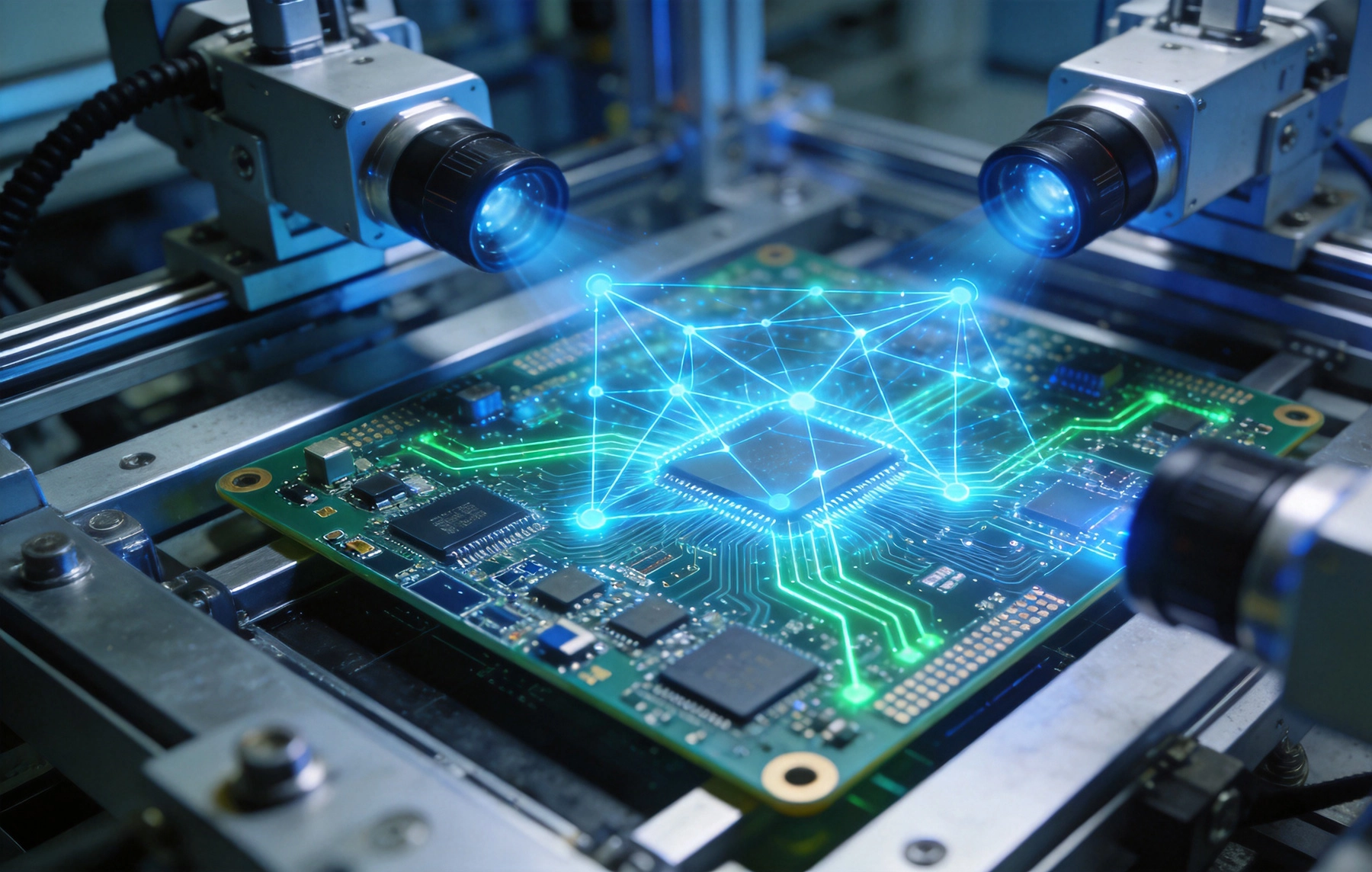
Artificial intelligence is revolutionizing quality control in Turnkey PCB Assembly, transforming how manufacturers detect defects, predict failures, and optimize processes. Traditional inspection methods relying on human operators and rule-based automated systems struggle to keep pace with increasing board complexity and miniaturization demands. AI-powered solutions now achieve defect detection rates exceeding 99.9%, dramatically reducing escape rates while eliminating false positives that slow production throughput. This article explores how machine learning, computer vision, and predictive analytics reshape quality control in Electronics Manufacturing.
PCB inspection has evolved through several phases, each addressing limitations of previous approaches. Manual visual inspection dominated early Electronics Manufacturing, with trained operators examining boards under magnification for defects. This approach proved labor-intensive, inconsistent, and unable to scale with production volumes. Human inspectors fatigue over extended shifts, leading to variable detection rates that compromise quality consistency.
Automated Optical Inspection (AOI) systems emerged as manufacturing volumes increased, applying predefined rules to identify defects based on statistical modeling of acceptable variations. AOI systems detect many defect types including solder bridging, missing components, and tombstoning, but struggle with complex defects that deviate from programmed patterns. False positive rates remain high, requiring human operators to review flagged items and slow production flow.
X-ray inspection added capabilities for hidden joint verification, particularly important for ball grid array (BGA) packages where solder joints remain invisible to optical systems. While effective for specific defect categories, X-ray systems generate vast image datasets requiring expert interpretation. The technology remained underutilized, with operators unable to review every image comprehensively. AI now unlocks the potential of these inspection technologies through automated image analysis at production speeds.
Machine learning algorithms analyze PCB inspection images to identify defects with accuracy exceeding human operators and traditional automated systems. Convolutional neural networks (CNNs) trained on millions of annotated PCB images learn to distinguish between acceptable manufacturing variations and genuine defects requiring intervention. These networks identify subtle patterns invisible to human perception, detecting issues before they impact product reliability.
Training data quality determines AI inspection performance. Turnkey Pcb manufacturers accumulate large datasets from years of production, including both defective boards and confirmed good assemblies. Expert inspectors annotate defect images, creating training sets that capture the full spectrum of manufacturing challenges. Transfer learning techniques enable AI models to apply knowledge from previous production runs to new product introductions, reducing training time and data requirements.
Real-time inference requires optimized models capable of processing inspection images within production cycle times. Modern AI systems analyze full board images in milliseconds, enabling 100% inspection coverage without bottlenecking production lines. Edge computing deployments place AI processing close to inspection stations, reducing latency and eliminating data transmission delays that would limit throughput.
Computer vision systems equipped with high-resolution cameras capture detailed images of assembled PCBs for AI analysis. Multi-angle lighting setups reveal defects invisible under single-direction illumination, with bright field lighting highlighting solder irregularities and dark field illumination exposing surface contamination. Machine learning algorithms analyze these images to classify defect types and severity, routing assemblies for rework or rejection based on configurable criteria.
Solder joint inspection benefits particularly from AI-powered analysis. Traditional AOI applies rule-based criteria for joint quality assessment, flagging any deviation from expected appearance. These systems generate high false positive rates because acceptable solder joints display natural variation based on reflow profile, component lead finish, and pad metallurgy. AI models learn the range of acceptable joint appearances, focusing operator attention on genuine defects rather than normal variations.
Component placement verification ensures correct parts populate each board position. AI systems verify not only presence but also orientation, polarity, and alignment for components ranging from large connectors to 01005 passive devices. Character recognition algorithms confirm part numbers match bill of materials specifications, catching substitution errors that would cause field failures. This comprehensive verification reduces escape rates while maintaining inspection throughput.
Consider a turnkey manufacturer producing Automotive Electronics where solder joint reliability critically impacts safety systems. AI inspection systems trained on thousands of solder joint images learn to distinguish between acceptable variations in barrel fillet formation and genuine defects such as cracks, voids, or insufficient solder. The system classifies joints into quality categories, automatically routing assemblies with critical defects to rework stations while accepting assemblies with minor imperfections within specification.
When the manufacturer introduces a new component with non-standard lead geometry, AI systems adapt through incremental learning. Initial production runs may flag some joints for human review, with expert decisions retraining the model. Within several production cycles, the AI achieves performance matching historical products, leveraging transferable feature recognition rather than requiring complete retraining from scratch.
Beyond defect detection, AI enables predictive quality control that prevents defects before they occur. By analyzing production data patterns, machine learning models identify conditions that precede quality degradation. When these conditions appear in current production, operators receive alerts enabling preventive intervention.
Process parameter correlation analysis reveals relationships between manufacturing conditions and quality outcomes. AI models examine thousands of parameters including paste printer settings, placement machine accuracy, reflow profile characteristics, and environmental conditions. These models identify subtle correlations invisible to human analysis, predicting quality outcomes before inspection reveals defects.
Predictive maintenance applications extend AI capabilities beyond product inspection to equipment health monitoring. Vibration sensors on placement machines, temperature monitors on reflow ovens, and vision systems inspecting Solder Paste Printing all generate data streams analyzed by machine learning models. These systems predict equipment failures before they cause quality issues, scheduling maintenance during planned downtime rather than responding to emergency breakdowns.
Escape rate—the percentage of defective assemblies reaching customers—represents a critical quality metric. Traditional inspection methods achieve escape rates of 0.5-2%, with costs from field failures potentially exceeding $10,000 per escape including warranty claims, customer compensation, and brand damage. AI inspection systems reduce escape rates to below 0.1%, delivering substantial cost savings while improving customer satisfaction.
False positive reduction provides equally important benefits. When inspection systems incorrectly flag good assemblies for review, production throughput suffers and operator workload increases. Traditional AOI systems generate false positive rates of 10-30%, requiring extensive operator review capacity. AI systems reduce false positives to below 2%, enabling operator resources to focus on genuine quality issues.
The combined effect transforms quality economics. Turnkey manufacturers implementing AI inspection report 30-50% reductions in quality-related labor costs alongside improved escape rates. These savings fund investments in additional capability while improving customer satisfaction through more consistent product quality. The competitive advantage drives rapid adoption across the industry.
AI quality control integrates seamlessly into Turnkey Manufacturing workflows, enhancing existing processes rather than requiring wholesale redesign. Inspection stations positioned at critical process steps capture data at each production stage, with AI analysis providing immediate feedback enabling rapid correction. This real-time visibility transforms quality from endpoint verification into process control.
First article inspection benefits particularly from AI integration. New product introductions historically require extensive operator oversight to validate processes before production scale-up. AI systems accelerate this validation by analyzing first article inspection results with learned knowledge from similar products, identifying potential issues earlier in the qualification cycle. This acceleration reduces Time-to-market while maintaining quality standards.
Statistical process control (SPC) evolves through AI enhancement. Traditional SPC monitors critical parameters against control limits, alerting operators when measurements exceed boundaries. AI-powered SPC additionally identifies subtle process drifts that remain within control limits but trend toward degradation. This predictive capability enables intervention before specification violations occur, preventing defects rather than detecting them after production.
Effective AI quality control requires robust data infrastructure connecting inspection systems, process equipment, and analysis platforms. High-speed networks transfer inspection images to processing systems without introducing latency into production flows. Storage systems retain historical inspection data for model training and continuous improvement while meeting retention requirements for quality documentation.
Data standardization enables AI models to learn from accumulated production history. Inspection results tagged with consistent metadata including product type, production date, equipment identification, and operator information create training datasets capturing production context. Turnkey manufacturers investing in data infrastructure gain AI capabilities that improve continuously as production volumes increase.
Security considerations protect sensitive quality data while enabling AI analysis. Network segmentation isolates inspection systems from corporate networks while enabling data transfer to centralized analysis platforms. Access controls ensure quality data remains available for AI training without exposing proprietary product information to unauthorized parties. These security measures prove particularly important for manufacturers serving sensitive markets including medical and automotive customers.
AI transforms rather than replaces human quality professionals. Operators focus on value-adding activities including root cause analysis, process optimization, and continuous improvement while AI handles routine inspection tasks. This collaboration leverages human expertise where it provides greatest value while applying AI capabilities where they excel.
Training requirements shift as AI adoption increases. Quality operators need new competencies including AI system management, anomaly investigation, and model performance monitoring. Turnkey manufacturers invest in training programs that prepare workforces for AI-enhanced quality operations, developing skills that complement automated inspection capabilities.
Career paths evolve to reflect AI integration. Quality engineers increasingly focus on data science competencies including statistical analysis, machine learning model development, and predictive algorithm optimization. These roles command premium compensation reflecting their strategic importance to manufacturing competitiveness. Forward-thinking manufacturers develop internal training programs that grow these capabilities from existing quality staff.
Emerging technologies promise further advances in AI-powered quality control. Generative AI models create synthetic training data that accelerates model development for new product types. By generating simulated defect images based on physical models, these systems reduce the real-image data requirements that previously limited AI adoption for low-volume products.
Federated learning approaches enable AI model improvement across multiple manufacturing facilities without sharing proprietary production data. Models trained locally at each facility contribute learning to centralized models that distribute improved capabilities back to all participants. This collaborative approach accelerates AI improvement while protecting competitive information.
Digital twin integration connects AI quality control with virtual manufacturing models. By correlating real-time inspection data with digital twin predictions, manufacturers validate process models and identify discrepancies requiring investigation. This integration enables closed-loop optimization where AI quality insights automatically adjust virtual models used for process planning and simulation.
Turnkey Manufacturing partners vary significantly in AI quality control maturity. Evaluation criteria should include current AI system deployment, model training approaches, and demonstrated performance metrics. Request specific data on escape rates, false positive rates, and inspection throughput to enable meaningful comparisons between potential partners.
Data infrastructure assessment reveals manufacturing readiness for AI quality control. Partners with robust data collection, storage, and analysis capabilities demonstrate commitment to AI adoption beyond marketing claims. Evaluate network infrastructure, database systems, and analytics platforms during Supplier Qualification to ensure capabilities match quality requirements.
Training and support provisions indicate long-term partnership viability. Manufacturers investing in AI quality control should provide training for customer engineering teams on AI system interpretation and anomaly investigation. Ongoing model updates and performance monitoring services ensure AI capabilities remain current as products and processes evolve.
AI transforms quality control in Turnkey PCB Assembly, delivering inspection accuracy, predictive capabilities, and operational efficiency that traditional approaches cannot match. Machine learning algorithms analyze inspection images to detect defects with escape rates below 0.1% while reducing false positives that impede production flow. Predictive analytics prevent defects before they occur, shifting quality from detection to prevention.
Turnkey manufacturing partners investing in AI quality control provide competitive advantages to their customers. Improved quality reduces field failure costs while faster inspection maintains production throughput. The combination of better quality and lower cost strengthens customer competitiveness in markets demanding both reliability and value.
As AI technologies continue advancing, quality control capabilities will expand further. Manufacturers establishing AI quality control foundations today position themselves to leverage future innovations including generative training data, federated learning, and digital twin integration. The investment in AI quality control represents a strategic commitment to Manufacturing Excellence that will define competitive success in electronics manufacturing for years to come.
Miniaturization Challenges in Turnkey PCB Assembly for WearablesJuly/15/2026

High Volume Turnkey PCBA: The Importance of Automated Assembly LinesSeptember/09/2026
Cost Reduction Techniques for High Volume Turnkey PCBA OrdersAugust/03/2026
Optimizing Reflow Profiles for Flawless Turnkey SMT AssemblySeptember/30/2026
Best Turnkey PCB Assembly for Industrial & Automation: Built to LastJune/27/2026

The Advantages of Local vs. Overseas Turnkey PCB ManufacturingOctober/09/2026
High Volume Turnkey PCBA: Ensuring Consistency and Yield at ScaleJune/12/2026
What Are Turnkey PCB Services?May/26/2026