
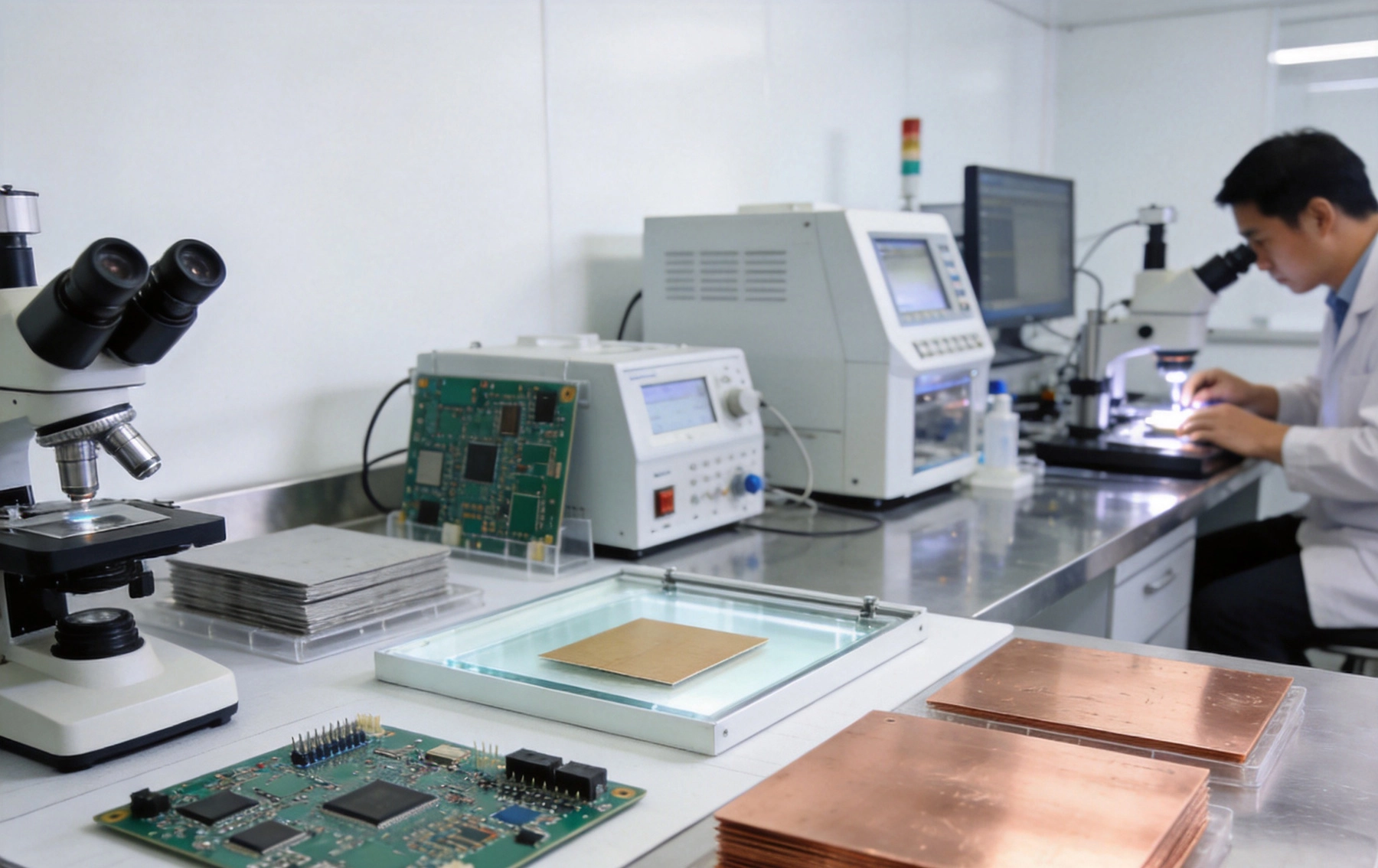
When you outsource Pcb Manufacturing to a turnkey provider, you are trusting them to source and use materials that meet your specifications. The base laminate, copper foil, solder mask, and surface finish all directly impact the performance, reliability, and longevity of your finished boards. Substandard materials can cause failures ranging from Signal Integrity problems to catastrophic delamination under thermal stress.
Verifying material quality is not just about trusting your manufacturer. It requires a systematic approach to qualification, documentation review, and ongoing verification. This guide covers the practical steps you can take to ensure that the materials going into your Turnkey Pcb projects meet the standards your application demands.
PCB materials are not commodities where one supplier product is interchangeable with another. The dielectric constant of the substrate affects signal propagation speed. The glass transition temperature determines how the board behaves under thermal stress. Copper peel strength impacts reliability through thermal cycles. Solder mask chemistry affects assembly yield and long-term insulation resistance.
Using the wrong material, or a counterfeit material, can invalidate your design assumptions. A high-frequency design validated on genuine Rogers RO4350B will perform differently if the manufacturer substitutes a lower-grade material with similar nominal properties but inferior real-world characteristics. The difference might not show up in basic electrical testing but will manifest as degraded performance or field failures.
The foundation of every PCB is the base laminate, typically fiberglass-reinforced epoxy resin for standard applications. Common grades include FR-4, which actually encompasses a range of materials meeting NEMA LI 1-1998 standards, and high-performance variants like high Tg FR-4, polyimide, and PTFE-based materials for RF applications.
Key parameters to verify include dielectric constant, which should match your impedance calculations, and loss tangent, which affects high-frequency signal attenuation. The glass transition temperature, Tg, indicates where the resin softens and mechanical properties degrade. For lead-free assembly, Tg of 150 degrees Celsius or higher is typically required. The decomposition temperature, Td, indicates thermal stability and should exceed your maximum assembly temperature by a comfortable margin.
Copper comes in different grades and treatments. Electrodeposited copper is standard for most applications, while rolled annealed copper offers better flexibility for flex circuits. The copper must bond reliably to the substrate through a combination of mechanical anchoring and chemical bonding. Low-profile copper, with reduced surface roughness, is preferred for high-frequency applications where skin effect losses matter.
Copper weight, measured in ounces per square foot, determines current carrying capacity and must be verified against specifications. A board specified with 2 ounce copper that ships with 1 ounce copper will have half the current capacity and different thermal performance than designed.
Solder mask protects traces from oxidation and prevents solder bridging. Liquid photoimageable solder mask is standard, with specific formulations for different applications. The mask must withstand assembly temperatures without degradation and provide adequate insulation resistance for the operating environment.
Surface finishes like ENIG, HASL, OSP, and immersion silver each have specific chemistry requirements. For ENIG, the gold thickness and nickel porosity affect solderability and wire bondability. For immersion silver, the organic anti-tarnish coating must be present to prevent silver migration and tarnishing during storage.
Before placing an order, request material datasheets and certificates of conformance from your turnkey supplier. Reputable manufacturers readily provide these documents. The datasheet should come from the material manufacturer, not just the PCB fabricator, and should list the specific grade and revision of material.
Certificates of conformance, or C of C, document that the materials used in your specific order meet the specified requirements. For critical applications, request lot-specific certifications that trace the material back to the original manufacturer and production batch. This traceability is essential if you need to investigate a material-related failure.
Establish an approved vendor list for base materials and specify it in your purchase orders. For standard FR-4, approved suppliers might include Isola, Nelco, Panasonic, and Ventec. For high-frequency materials, Rogers, Taconic, and Arlon are common choices. By restricting materials to specific manufacturers and grades, you reduce the risk of substitution with inferior products.
Be specific in your specifications. Do not just specify FR-4. Specify the exact grade, such as Isola FR408HR or Nelco N4000-13EP, with the specific Tg and Dk values your design requires. The more specific you are, the less room there is for interpretation or substitution.
For high-volume or critical applications, consider auditing your turnkey supplier's material handling and storage practices. Look for climate-controlled storage for moisture-sensitive materials, first-in-first-out inventory management to prevent use of expired materials, and segregation of different material grades to prevent mix-ups.
Ask about incoming material inspection procedures. Does the supplier verify that received materials match purchase orders? Do they check certificates of conformance from their material vendors? Do they perform any incoming testing, such as dielectric constant verification for RF materials?
When boards arrive, start with visual inspection. The solder mask color and texture should be consistent with the specified material. Different mask formulations have characteristic appearances. Experience helps here. Comparing incoming boards against known good samples from approved material lots can reveal inconsistencies.
Mechanical inspection includes checking board thickness with calibrated micrometers. Thickness variations can indicate incorrect laminate layers or material substitution. For multilayer boards, cross-sectional analysis reveals the internal layer structure and can verify that the correct prepreg and core materials were used.
For high-frequency applications, verifying dielectric constant is essential. One method is to include test coupons on your PCB panels with transmission lines of known geometry. By measuring the actual impedance of these test structures with a vector network analyzer, you can back-calculate the effective dielectric constant and compare it to specifications.
Another approach uses resonant cavity methods or split-post dielectric resonator techniques to directly measure Dk on sample coupons. These methods require specialized equipment but provide accurate characterization of the substrate material.
Differential scanning calorimetry, or DSC, can verify the glass transition temperature of the base laminate. A small sample of material is heated while measuring heat flow. The Tg appears as a shift in the baseline corresponding to the change in heat capacity as the resin transitions from glassy to rubbery state.
Thermogravimetric analysis, or TGA, measures weight loss versus temperature and can verify decomposition temperature. This is particularly important for materials claimed to be suitable for lead-free assembly temperatures.
Cross-sectional analysis is the definitive method for verifying copper thickness. A sample is mounted in epoxy, polished to expose the copper cross-section, and examined under a microscope. Automated image analysis can measure copper thickness at multiple points and verify it meets specifications.
For foil verification, eddy current probes provide non-destructive thickness measurement on finished boards. These instruments measure the electrical conductivity and can distinguish between different copper weights without sectioning the board.
The IPC provides standards that specify material requirements and test methods. IPC-4101 covers base laminate materials, specifying requirements for different grades of FR-4 and other substrates. IPC-4103 covers high-frequency materials. IPC-SM-840 addresses solder mask qualification and performance.
Request that your turnkey supplier certify compliance with applicable Ipc Standards. IPC-6012 for rigid boards and IPC-6013 for flexible boards include material requirements as part of the overall qualification. A supplier certified to these standards has demonstrated that their processes, including material handling, meet industry-accepted quality levels.
Underwriters Laboratories recognizes specific laminate materials for flammability and electrical properties. A material with a UL 94 V-0 flame rating has been tested and certified to self-extinguish within specified time limits. For applications requiring UL certification of the finished board, using UL-recognized materials is mandatory.
Verify that the specific material grade used in your boards appears on the current UL recognized materials list. Materials are periodically updated and obsolete grades lose their recognition. Your turnkey supplier should be able to provide the UL file number for the materials they use.
For products sold in the European Union and many other markets, materials must comply with RoHS restrictions on hazardous substances and REACH requirements for chemical registration. Request compliance declarations from your turnkey supplier, and for high-risk applications, consider third-party testing for restricted substances.
Be aware that Rohs Compliance is not just about lead-free solder. The base laminate, solder mask, and surface finish must all meet substance restrictions. Some older laminate formulations used brominated flame retardants that may not meet current RoHS requirements.
Certain observations should trigger immediate investigation of material quality. Unexpected board warpage after assembly might indicate incorrect Tg or moisture absorption in the base laminate. Delamination under thermal stress suggests either material quality issues or improper storage and handling.
Discoloration of solder mask during assembly could indicate use of lower-grade mask not rated for lead-free temperatures. Poor solderability might trace back to surface finish chemistry problems or counterfeit materials. Signal performance that differs significantly from simulation could indicate incorrect dielectric constant.
If you suspect material issues, engage your turnkey supplier immediately. Request documentation on the specific materials used in the affected lot. Consider independent testing of sample boards to verify material properties. In extreme cases, you might need to quarantine affected inventory pending resolution.
A comprehensive material verification program combines documentation review, supplier qualification, and periodic testing. Start by clearly specifying materials in your procurement documents. Require certificates of conformance with every shipment. Audit your suppliers periodically to verify their material handling practices.
Implement incoming inspection procedures appropriate to your risk tolerance and application requirements. For standard commercial products, visual inspection and dimensional verification might suffice. For aerospace, medical, or high-reliability applications, destructive testing of sample coupons from each lot might be warranted.
Maintain records of material certifications and test results. If a field failure occurs, this documentation becomes invaluable for root cause analysis. Knowing exactly what materials were used in a failed board, traced back to the original manufacturer lot, can determine whether a material defect contributed to the failure.
Effective material verification requires collaboration with your turnkey supplier. Treat them as a partner rather than an adversary. Share your material requirements clearly and explain why specific properties matter for your application. A supplier who understands your needs is better positioned to meet them.
Discuss material alternatives openly. Sometimes a specified material is unavailable or has long lead times. Your supplier might propose alternatives with equivalent or superior properties. Evaluate these proposals based on data, not just assurances. Request datasheets and, for critical applications, perform your own verification testing.
Establish clear communication channels for material issues. If you discover a potential material problem, your supplier should respond quickly with documentation and corrective actions. The best turnkey relationships involve mutual trust built on transparency and consistent performance.
Material quality verification in turnkey Pcb Manufacturing is not a one-time event but an ongoing process. It starts with clear specifications and supplier qualification, continues with documentation review and incoming inspection, and extends through the life of your product with record keeping and traceability.
The tools and techniques described here give you practical methods to verify that the materials in your turnkey PCBs meet your requirements. From simple visual inspection to sophisticated thermal analysis, each verification step adds confidence in your Supply Chain. In an industry where material quality directly impacts product reliability, that confidence is worth the effort.
Request certificates of conformance with lot traceability to the material manufacturer. For critical applications, include test coupons on your panels and perform impedance testing to verify dielectric constant. Cross-sectional analysis can also reveal the internal layer structure and material characteristics.
Dielectric constant is the most critical parameter as it directly affects signal propagation speed and impedance. Even small variations in Dk can cause significant performance changes in high-frequency designs. Verify Dk through electrical testing of known-geometry test structures.
For critical applications, specify exact materials by manufacturer and grade. If allowing equivalents, require advance approval of any substitutions with full documentation of equivalent properties. Do not accept verbal assurances that a substitute is equivalent. Demand test data.
Visual inspection checks for proper coverage and absence of defects. Thermal stress testing verifies that the mask withstands assembly temperatures without degradation. Insulation resistance testing confirms electrical properties. For critical applications, adhesion testing per IPC-TM-650 methods confirms the mask bonds properly to the substrate.
Maintain certificates of conformance, material datasheets, and lot numbers for each production batch. Keep incoming inspection records and any verification test results. For critical applications, retain sample boards or coupons from each lot for future reference if issues arise.

Overcoming the High Cost Challenges of Low Volume Turnkey PCBAJune/11/2026

High Volume Turnkey PCBA: The Importance of Automated Assembly LinesSeptember/09/2026
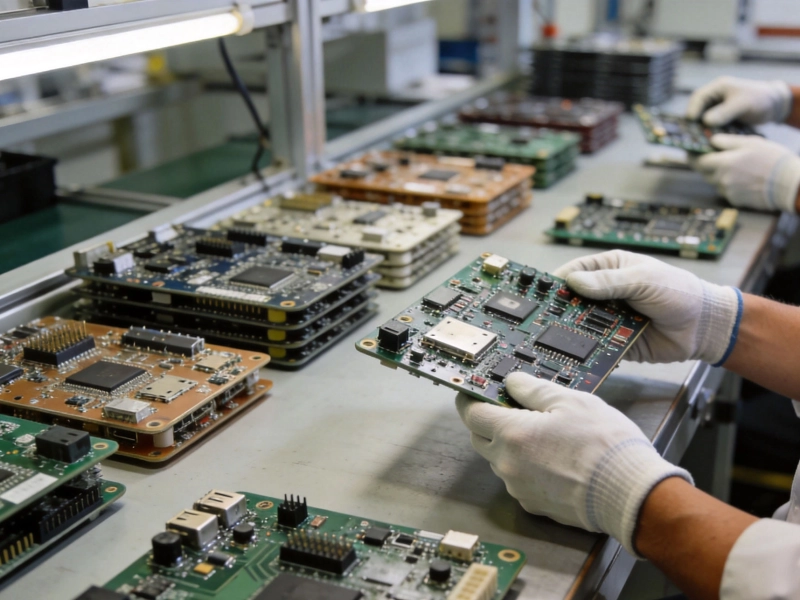
Low Volume Turnkey PCBA: Flexibility for Niche and Specialized MarketsJuly/09/2026
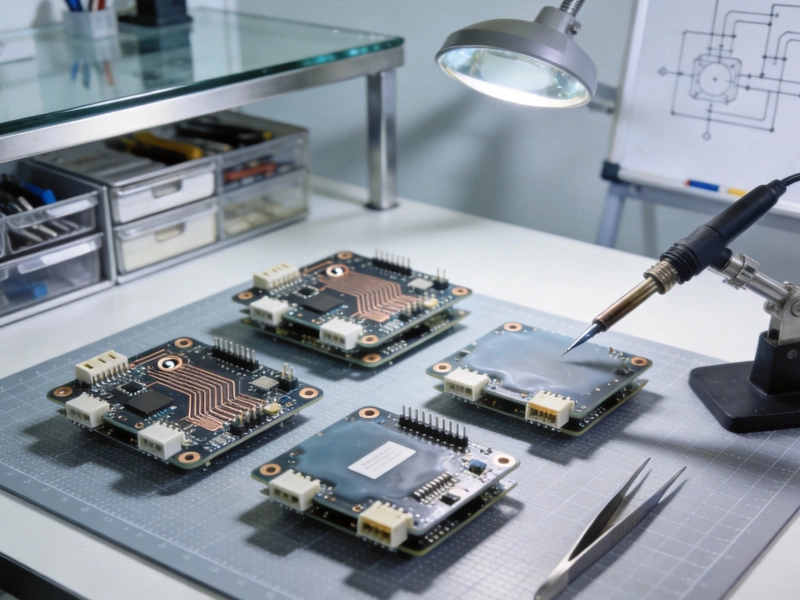
The Role of Low Volume Turnkey PCBA in Market ValidationSeptember/08/2026

Cost Reduction Techniques for High Volume Turnkey PCBA OrdersAugust/03/2026

How to Find Manufacturers Specializing in Low Volume Turnkey PCBAJuly/31/2026
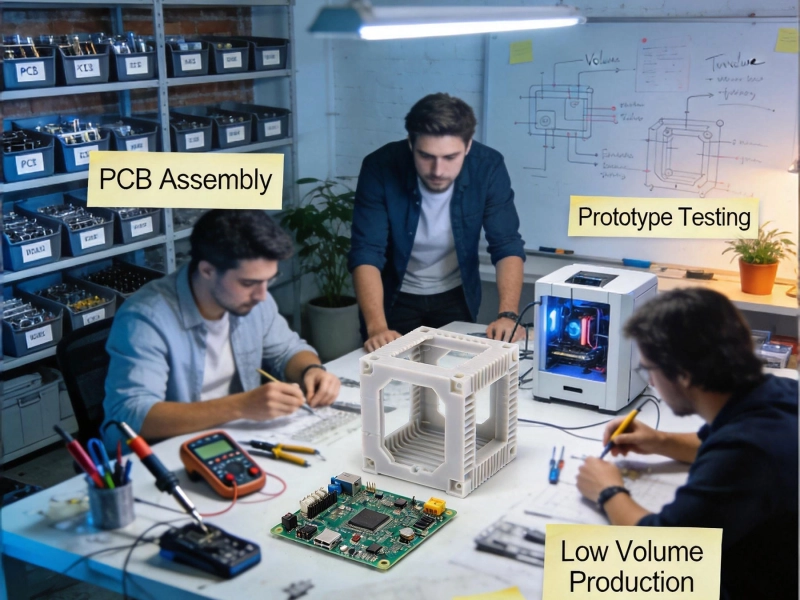
Why Low Volume Turnkey PCBA is the Perfect Solution for StartupsMay/26/2026

Rapid Turnkey PCBA Services for Emergency Engineering FixesAugust/03/2026