Open Nav


Data centers power the digital economy, housing servers that process billions of transactions daily. Server motherboards represent some of the most demanding Pcb Assembly applications, requiring exceptional reliability, complex multilayer designs, and high-speed Signal Integrity. Turnkey Assembly services that handle everything from Component Sourcing through final test provide compelling advantages for data center electronics manufacturers seeking consistent quality and Supply Chain efficiency.
Server motherboards differ significantly from standard Consumer Electronics, imposing unique challenges that demand specialized assembly capabilities. These differences affect every aspect of the manufacturing process.
Layer count in server motherboards typically ranges from 12 to 28 layers, far exceeding consumer board complexity. This stacking requirement demands precise lamination control, impedance management across multiple planes, and rigorous electrical testing to verify layer-to-layer registration.
Power delivery networks distribute hundreds of amperes across server boards, requiring heavy copper layers, Thermal Management considerations, and careful attention to voltage regulation module (VRM) placement. Assembly must preserve these power integrity characteristics throughout manufacturing.
Memory interfaces including DDR4, DDR5, and emerging LPDDR standards populate server boards with high-density connectors and modules. These interfaces demand precise signal timing and Impedance Control that assembly processes must not compromise.
High-speed connectors for PCIe, CXL, and networking interfaces operate at frequencies exceeding 25Gbps. Manufacturing variations can degrade Signal Integrity, making process control critical for maintaining performance specifications.
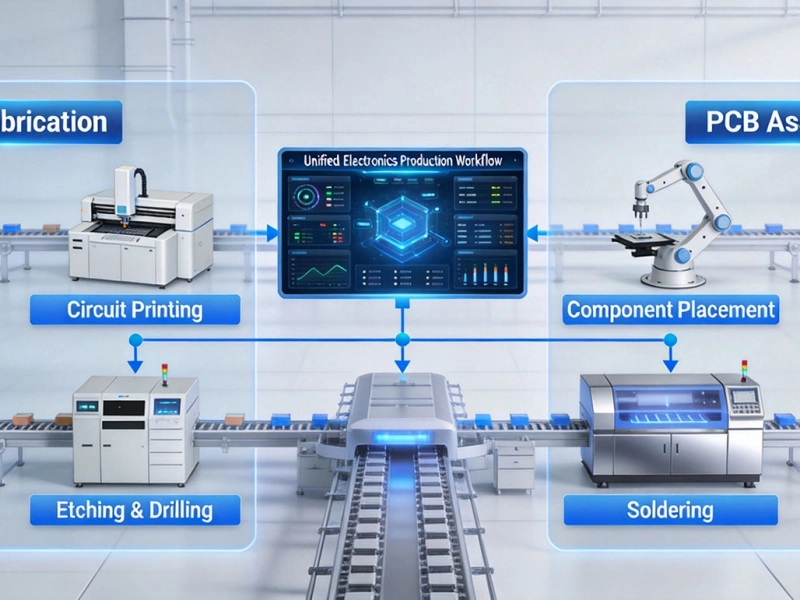
Turnkey Assembly consolidates component procurement, PCB Fabrication, assembly, and testing under a single provider, streamlining supply chains and ensuring accountability. For data center applications, these advantages translate into meaningful business and technical benefits.
Single point of responsibility simplifies communication and escalates issue resolution when problems arise. Rather than coordinating between separate fabrication, assembly, and test providers, manufacturers work with one partner accountable for the complete process.
Component Sourcing expertise becomes particularly valuable as server boards incorporate specialized processors, memory, and networking ASICS with long lead times. Turnkey providers maintain supplier relationships and inventory programs that individual buyers cannot match.
Quality consistency improves when one provider controls fabrication, assembly, and test processes. Variations between providers disappear, and process optimization benefits the entire board rather than isolated steps.
Time-to-market acceleration results from streamlined handoffs and parallel process optimization. Turnkey providers understand dependencies between steps and can expedite development while maintaining quality standards.
Not all turnkey providers possess the capabilities required for demanding server applications. Evaluating technical capabilities helps ensure boards receive appropriate manufacturing attention.
Fine-pitch component placement demands precision equipment capable of handling the smallest packages with high accuracy. Server boards incorporate 0.4mm pitch BGA devices, fine-pitch QFPs, and increasingly miniaturized passive components.
Placement accuracy specifications below 50 microns ensure components land within acceptable tolerances for high-density designs. Modern high-speed placers achieve this accuracy while maintaining throughput compatible with production volumes.
Component range coverage from 01005 passives through large BGAs with thousands of balls demonstrates equipment versatility. Providers should demonstrate capability for the specific component packages your designs incorporate.
Flux deposition systems including jetting and advanced stencil printing achieve consistent paste release for fine-pitch devices. These capabilities prove essential for reliable assembly of high-density server boards.
Server board quality requirements exceed standard commercial electronics, demanding comprehensive inspection coverage and rigorous electrical verification.
X-ray inspection for BGA and hidden joint verification becomes mandatory for boards with extensive BGA content. Automated X-ray inspection (AXI) provides production-compatible inspection rates for high-volume applications.
In-circuit testing (ICT) or flying probe verification confirms component-level correctness before functional test. Dense server boards often require creative test point access strategies and boundary scan utilization.
High-speed functional test validates board operation including memory interfaces, PCIe connectivity, and power-on sequences. Custom test fixtures and software development add to test program investment but provide essential quality verification.
Server boards generate substantial heat that assembly processes must accommodate. Thermal Management considerations affect component placement, Thermal Interface Materials, and testing under load conditions.
Thermal paste application for processor and memory thermal solutions requires controlled dispensing and consistent coverage. Variation in thermal interface thickness directly affects junction temperatures and long-term reliability.
Heat sink attachment quality influences thermal resistance between components and cooling solutions. Clip force consistency and thermal pad compression require process control to ensure thermal performance across production volumes.
Server applications demand materials meeting stringent reliability requirements, and Supply Chain management affects both cost and availability of specialized components.
High-Tg laminates with glass transition temperatures exceeding 170°C provide thermal stability during assembly and operation. Standard FR-4 materials may not survive the thermal profiles required for lead-free assembly of complex multilayer boards.
Low-loss materials for high-speed signal layers reduce insertion loss at data rates exceeding 10Gbps. Rogers, Panasonic, and Isola offer specialized materials optimized for server applications, though these materials demand different processing parameters than standard FR-4.
Build-up dielectrics for sequential lamination in HDI designs require careful process control to achieve consistent dielectric thickness and registration. These materials often dictate specialized assembly approaches.
Server motherboards incorporate high-value components with extended lead times and allocation constraints. Turnkey providers with established distribution relationships can access inventory unavailable through spot purchasing.
Processor procurement for Intel Xeon, AMD EPYC, and ARM-based server CPUs involves allocation programs and long lead times. Providers with allocation access help smooth production schedules despite component constraints.
Memory module sourcing for DDR4 and DDR5 RDIMMs requires compatibility verification with specific processor platforms. Turnkey providers understand these compatibility requirements and can recommend validated configurations.
Networking ASICs from Broadcom, Marvell, and Intel involve lengthy qualification cycles. Providers with existing qualifications can accelerate new product introductions.
Data center applications demand quality levels exceeding commercial electronics, requiring appropriate standards compliance and documentation practices.
IPC-A-610 Class 3 workmanship standards apply to server board assembly, requiring tighter tolerances and more stringent acceptance criteria than Consumer Electronics. Visual inspection requirements, solder joint criteria, and component placement tolerances all tighten under Class 3 requirements.
J-STD-001 soldering requirements establish baseline process controls for solder connections, including training requirements for operators and inspectors. Class 3 requirements within this standard demand specialized processes for high-reliability applications.
ISO 9001:2015 quality management system certification demonstrates provider commitment to systematic quality improvement. More specialized providers pursue additional certifications relevant to specific market segments.
Enterprise customers often require extensive documentation supporting component traceability, process records, and quality verification.
Material certificates documenting PCB laminate properties, copper weight, and surface finish specifications demonstrate compliance with design requirements.
Assembly travelers tracking process steps, equipment used, operators involved, and inspection results provide complete manufacturing history for each board.
Test data records capturing electrical test results, burn-in data, and functional test outcomes enable failure analysis and reliability tracking.
Successful server board manufacturing requires collaboration between designers and assembly providers, starting early in the development cycle to optimize for producibility.
Early engagement with turnkey providers during schematic and layout phases identifies potential manufacturing issues before board fabrication. This proactive approach prevents costly respins due to manufacturability problems.
Design rule verification against provider capabilities ensures boards meet fabrication and assembly constraints. Rules for minimum trace widths, spacing, via sizes, and component clearances vary between providers.
Test point addition during layout improves access for in-circuit and flying probe testing. Adding test points costs little during layout but enables comprehensive electrical verification after assembly.
Panel utilization affects piece part pricing, with optimized arrays reducing per-board costs. However, array design must accommodate handling, depanelization, and any post-assembly processes.
Fiducial placement for Automated Optical Inspection requires careful consideration during array design. Multiple fiducials per array and fiducial types must match inspection system requirements.
Server board programs typically progress through distinct phases, each with different requirements and partnership models.
First article assembly validates designs before committing to production volumes. Prototype builds typically accept longer lead times and higher piece prices in exchange for design verification.
Design refinement based on prototype findings might require multiple build iterations. Turnkey providers experienced with complex boards can guide optimization based on manufacturing feedback.
Qualification testing validates board reliability under environmental stress, including thermal cycling, voltage margining, and extended burn-in. Assembly providers should support qualification builds with documented processes.
Volume ramp planning coordinates component procurement, capacity booking, and quality system deployment. Turnkey providers with dedicated account management help navigate scaling challenges.
Ongoing cost reduction opportunities might emerge as production volumes increase. Design optimizations, component alternatives, and process improvements all contribute to margin improvement.
Change management for component substitutions, material updates, or process changes requires coordination between providers and customers. Clear change control processes prevent unauthorized modifications.
Selecting the right turnkey partner for server board applications requires comprehensive evaluation beyond capabilities for simpler board types.
What is your experience with server and data center applications? Look for providers with documented track records assembling similar boards, including layer counts, component densities, and test requirements.
What quality certifications do you maintain? Beyond basic ISO 9001, ask about IPC certification levels, AS9100 for aerospace customers, or other relevant standards. Request copies of current certificates.
How do you manage component obsolescence? Server product lifecycles extend years, requiring component lifecycle monitoring and proactive communication about discontinuation risks.
What is your failure analysis capability? When issues arise, quick root cause identification prevents extended production disruptions. Providers should offer failure analysis services including cross-sectioning and acoustic imaging.
Equipment maintenance practices affect process capability and consistency. Ask about preventive maintenance schedules, calibration programs, and capability studies for critical equipment.
Environmental controls in assembly areas influence cleanliness and humidity management. Temperature and humidity variation can affect sensitive components and process consistency.
Security and access controls protect proprietary designs and ensure component authenticity. Enterprise customers often require documented security practices for intellectual property protection.
Server board assembly costs reflect the complexity and quality requirements of demanding applications. Understanding cost drivers helps evaluate quotes and identify optimization opportunities.
Board complexity including layer count, minimum feature sizes, and special materials drives fabrication costs. These factors affect both processing time and yield, translating into piece price variations.
Component mix influences assembly time and test requirements. High component counts, fine-pitch devices, and specialized packages all affect processing costs.
Test coverage requirements determine total test investment. 100% ICT plus functional test costs more than sampling approaches but provides greater defect detection confidence.
Volume commitments affect pricing through economies of scale and component purchasing leverage. Higher volumes justify process optimization investments that lower per-unit costs.
Defect costs extend beyond rework expenses to include customer returns, warranty claims, and reputation damage. Higher quality investment often pays through reduced failure costs.
Supply chain costs including component procurement, inventory carrying, and obsolescence risk factor into turnkey value. Providers managing these complexities efficiently can offer competitive total cost of ownership.
Time-to-revenue value affects product economics. Manufacturing delays postpone market entry, potentially costing more than price variations between providers.
Server motherboard assembly demands exceptional capabilities spanning advanced equipment, rigorous quality systems, specialized materials expertise, and comprehensive test coverage. Turnkey Assembly Services that integrate these capabilities under single management provide compelling advantages for data center electronics manufacturers.
Evaluating turnkey partners requires assessing technical capabilities against specific application requirements, quality standards compliance, and Supply Chain Management expertise. Server applications merit thorough due diligence to ensure manufacturing partners meet demanding expectations.
Early engagement between designers and assembly providers optimizes designs for producibility while avoiding costly revisions. This collaboration, combined with clear quality requirements and documentation expectations, establishes foundations for successful long-term partnerships.
Investment in quality-appropriate Turnkey Assembly Services protects against field failures that prove far more costly than manufacturing defects. For data center applications where reliability directly affects business outcomes, selecting manufacturing partners carefully represents a strategic decision warranting thorough evaluation.
Server motherboards typically range from 12 to 28 layers depending on complexity and performance requirements. Entry-level servers might use 12-16 layers, while high-performance enterprise servers often require 24 or more layers to accommodate complex power distribution, high-speed signal routing, and grounding requirements.
Reputable turnkey providers monitor component lifecycle status and proactively communicate upcoming discontinuances. They maintain relationships with authorized distributors for lifetime buys, suggest equivalent alternatives, and coordinate with customers on proactive inventory builds before components become unavailable.
Server boards typically require comprehensive test including Automated Optical Inspection, X-ray inspection for BGAs, in-circuit or flying probe testing, and functional testing including memory interface verification and power-on sequencing. The specific test program depends on board complexity and reliability requirements.
Many turnkey providers offer accelerated prototype services with shorter lead times for first articles while maintaining production lines for volume builds. This flexibility allows design validation before committing to production volumes, though prototype pricing typically exceeds production rates.
Lead times vary based on component availability and provider capacity. Prototype builds might require 2-4 weeks, while production volumes range from 4-8 weeks for standard configurations to 12-16 weeks for complex boards with long-lead components. Turnkey providers with component inventory programs can often reduce lead times significantly.

Handling HDI and High-Frequency Materials in 5G PCB AssemblySeptember/17/2026
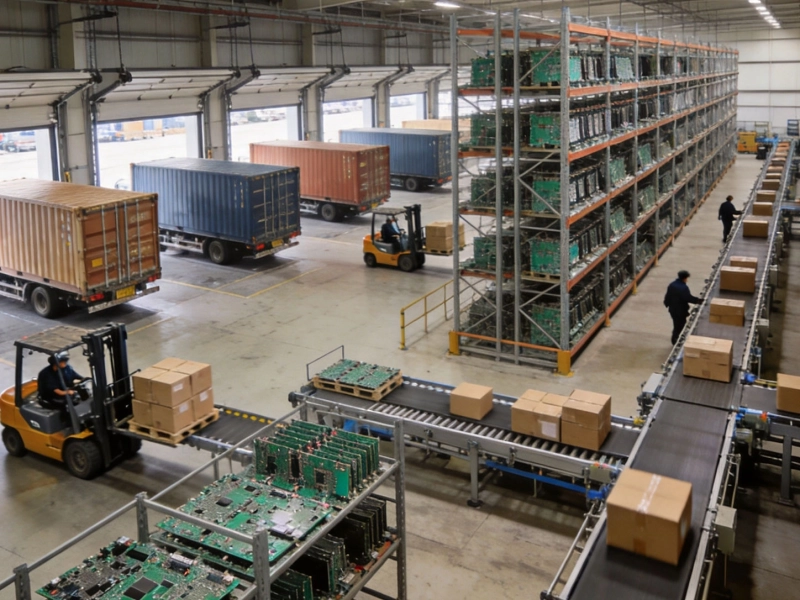
Supply Chain Resilience in High Volume Turnkey PCBA ProjectsJuly/10/2026
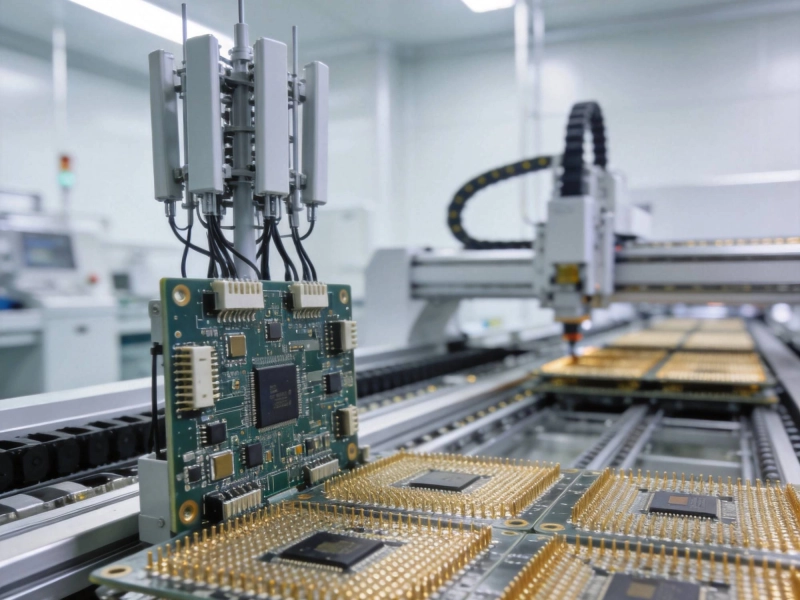
Best Turnkey PCB Assembly for Telecom 5G Infrastructure and Base StationsJune/26/2026

Signal Integrity Challenges in High-Speed Computing PCB AssemblyJuly/18/2026
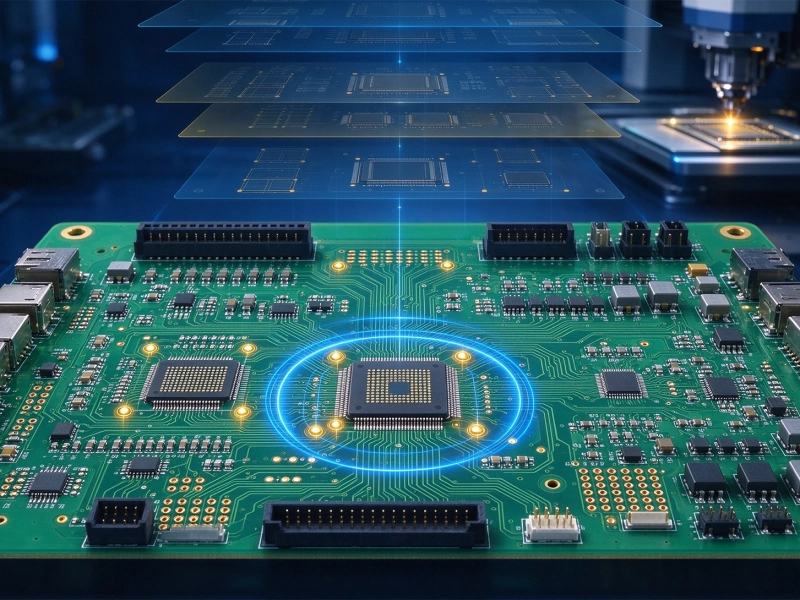
Preparing Your Design Files for Rapid Turnkey PCBA SuccessOctober/13/2026
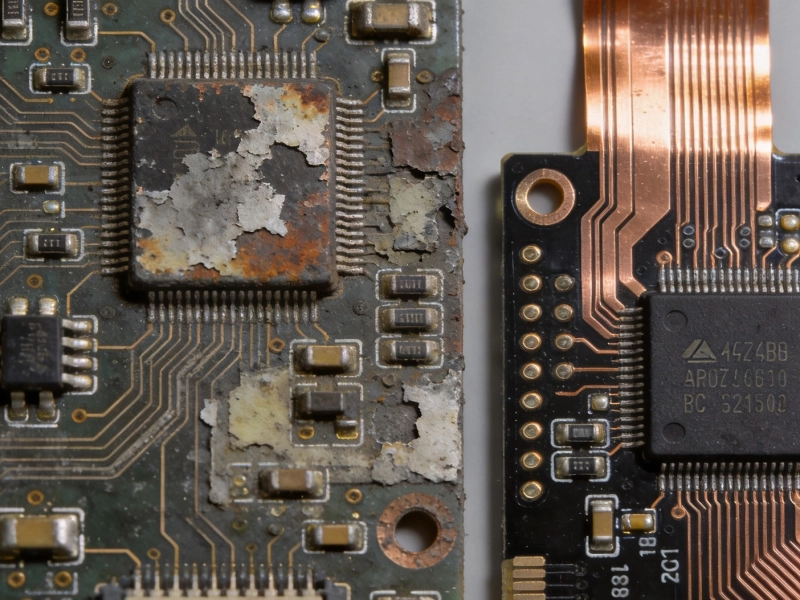
Longevity and Lifecycle Management in Industrial PCBASeptember/18/2026
Turnkey PCB Manufacturing: Integrating Fabrication and Assembly SeamlesslyMay/26/2026

Rapid Turnkey PCBA: How to Get Your Electronics Built in Days, Not WeeksJune/15/2026