
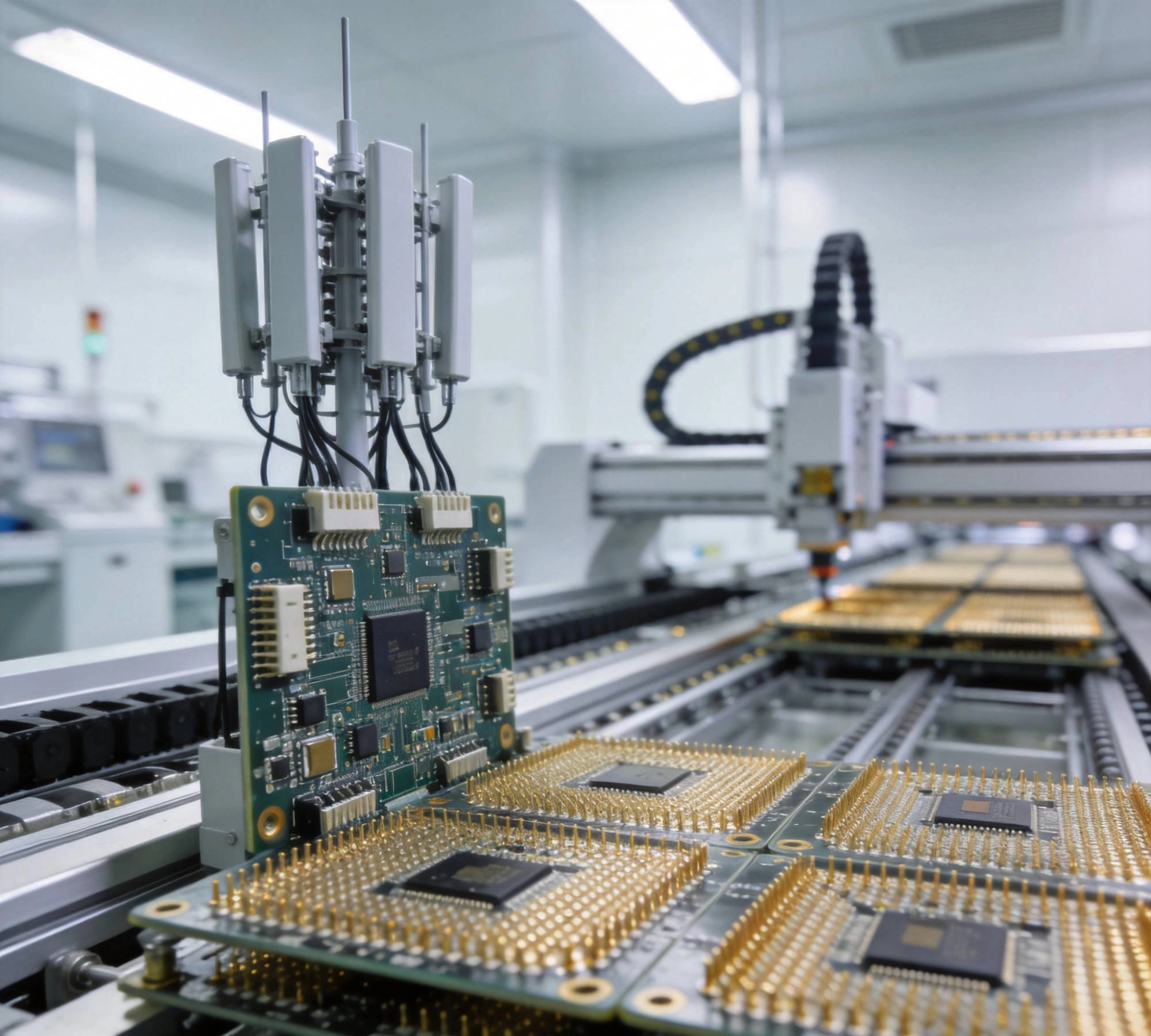
The global deployment of 5G networks has created massive demand for electronic assemblies that meet telecommunications infrastructure requirements. Base stations, small cells, massive MIMO antenna systems, and network core equipment all depend on high-reliability PCB assemblies manufactured to exacting standards. For companies developing 5G telecom equipment, selecting the right Turnkey PCB Assembly partner directly impacts product performance, Time-to-market, and total cost of ownership.
Turnkey PCB Assembly combines Design For Manufacturing review, PCB Fabrication, component procurement, assembly, and testing into a single service engagement. This approach streamlines Supply Chain management and reduces the coordination burden on equipment manufacturers. When evaluating turnkey partners for telecom 5G applications, understanding the specific requirements of network infrastructure equipment helps procurement teams and engineers identify suppliers capable of meeting demanding technical and quality requirements.

Telecommunications infrastructure operates under conditions that differ significantly from Consumer Electronics. Network equipment must function reliably across wide temperature ranges, often in outdoor enclosures with limited environmental protection. Base stations installed in remote locations require maintenance intervals measured in years rather than months, making first-year field failure rates critically important for total cost of ownership calculations.
5G technology amplifies these challenges through higher operating frequencies, increased power density, and more complex signal routing requirements. The shift to mmWave spectrum for enhanced mobile broadband enables dramatically higher data rates but requires Rf Pcb assemblies with controlled impedance tolerances and low signal loss characteristics. Massive MIMO antenna systems with 64 or 128 transceiver elements demand dense multi-layer assemblies with sophisticated Thermal Management.
Beyond electrical performance, telecom equipment must comply with industry standards including NEBS (Network Equipment Building System) requirements for North American carriers and ETSI standards for European deployments. These standards specify environmental testing, electromagnetic compatibility, and safety requirements that influence both Pcb Design and assembly process choices.
Modern 5G base station equipment utilizes advanced component packages including BGA (ball grid array), QFN (quad flat no-lead), and fine-pitch QFP (quad flat package) devices with pitches below 0.4 mm. Turnkey Assembly partners must demonstrate proficiency in placing these components with acceptable placement accuracy, typically measured as Cpk (process capability index) above 1.33 for critical components.
Solder Paste Printing represents the most critical process step for high-density assemblies, with Stencil Design and printing parameters directly determining solder joint quality. Partners should employ laser-cut stencils with aperture adjustments for paste transfer optimization and utilize Automated Optical Inspection (AOI) following paste printing to identify defects before component placement.
For BGA and QFN packages, X-ray inspection capability becomes essential for verifying hidden solder joint integrity. Turnkey providers serving telecom customers should maintain X-ray equipment capable of detecting voiding, bridging, and insufficient solder conditions that could cause field failures. Post-assembly burn-in or thermal cycling stress testing provides additional confidence for high-reliability applications.
Telecom equipment production volumes often require large component orders distributed across multiple production runs, making component shelf life management and traceability essential. Turnkey Assembly partners must maintain controlled storage environments for moisture-sensitive devices and implement first-in-first-out (FIFO) inventory practices.
Component counterfeiting remains an industry concern, particularly for active components from established semiconductor suppliers. Partners should verify components through visual inspection, dimensional verification, and when available, supplier audit programs. Documentation practices should maintain lot traceability from incoming components through finished assemblies, enabling failure analysis and recall response when issues emerge.
For telecom applications where multiple sourcing provides Supply Chain resilience, assembly processes must accommodate components from alternate suppliers with potentially different thermal profiles or board mount characteristics. Flexibility in reflow oven programming and process windows helps accommodate these variations without compromising quality.
Base station transceivers operating at sub-6 GHz frequencies and the emerging mmWave bands require PCB materials optimized for RF performance. Standard FR-4 substrates exhibit excessive dielectric loss at frequencies above 3 GHz, making high-frequency laminates necessary for optimal performance. Turnkey partners with experience in telecom applications should offer material recommendations based on specific frequency, power, and environmental requirements.
Common high-frequency material options for telecom applications include hydrocarbon ceramic laminates offering Dk values between 3.0 and 10.2 with loss tangents below 0.004, and PTFE-based materials for the most demanding mmWave applications. Material selection trade-offs include cost, thermal stability, moisture absorption, and manufacturing compatibility with standard PCB processes.
For high-speed digital interfaces within base station equipment, Signal Integrity requirements drive Impedance Control specifications. Differential pair impedance of 100 ohms ±10% is common for high-speed serial links, requiring controlled dielectric thickness and trace geometry. Turnkey partners should provide impedance testing services to verify manufactured boards meet specified tolerances.
Power amplifiers and RF front-end components in base station equipment generate significant heat that must be managed to maintain junction temperatures within safe operating limits. Pcb Assembly design integrates thermal vias, metal backing plates, and press-fit heat spreaders to achieve required thermal performance.
Turnkey assembly partners must coordinate Thermal Management hardware installation with the SMT process flow. Thermal Interface Materials (TIM) require careful application to avoid air gaps that reduce heat transfer efficiency. Press-fit hardware insertion must occur at appropriate process steps, typically before final Smt Assembly, requiring careful process sequencing.
High-power base station equipment may incorporate coin or metal-core PCB constructions where metal backing plates bond directly to PCB substrates. These hybrid assemblies require specialized manufacturing capabilities and quality verification procedures that not all turnkey providers possess.
Telecom equipment Quality Assurance extends beyond standard IPC Class 2 or Class 3 requirements to include application-specific testing protocols. Turnkey partners serving telecom customers should demonstrate familiarity with industry-standard test methods including:
Visual inspection standards for telecom applications typically exceed general industry requirements, with specific criteria for solder joint appearance, flux residue coverage, and component alignment. Turnkey partners should maintain inspection standards documentation and provide training to inspection personnel on telecom-specific requirements.
Telecom equipment manufacturers require comprehensive documentation packages including assembly drawings, bill of materials with manufacturer part numbers, process specifications, and inspection results. Turnkey partners should provide electronic documentation suitable for long-term records retention and regulatory submissions.
For equipment destined for deployment in regulated markets, assembly partners must support conflict minerals reporting, REACH/Rohs Compliance documentation, and other regulatory requirements. Supply chain transparency enables telecom equipment manufacturers to provide their customers with complete material declarations and compliance certifications.
Process change notification procedures ensure that telecom customers receive advance warning of any manufacturing modifications that could affect product performance or reliability. Turnkey partners with mature quality management systems formalize change notification as part of their standard customer communication practices.
Telecom equipment production often involves long lead-time components including custom-tuned RF components, specialized connectors, and application-specific integrated circuits (ASICs) from semiconductor suppliers. Turnkey assembly partners with established supplier relationships can often secure better lead times and pricing through aggregated procurement across multiple customers.
Buffer stock strategies protect against supply disruptions for critical components while managing inventory carrying costs. Turnkey partners may offer consignment arrangements where customer-owned components stored at the assembly facility enable rapid response to production requirements. Alternatively, turnkey procurement with safety stock programs provides guaranteed availability for standard components while minimizing customer Inventory Management burden.
Component obsolescence planning identifies end-of-life components and facilitates redesign or lifetime buy decisions before supply terminates. Turnkey partners with strong engineering capabilities can support redesign activities, including schematic updates, layout modifications, and requalification testing to address obsolescence proactively.
Telecom equipment demand often follows deployment cycles that create significant volume variations between initial network builds and subsequent expansion phases. Turnkey assembly partners should accommodate both prototype and low-volume production runs for new product introduction alongside high-volume production for mature products.
Manufacturing flexibility enables customers to start with prototype quantities for field trials before committing to full-scale production. Partners offering NPI (new product introduction) services with dedicated engineering support help customers optimize designs for manufacturing before transitioning to production volumes. This staged approach reduces risk and enables design iterations based on early field feedback.
Evaluating turnkey Pcb Assembly costs requires looking beyond unit piece prices to understand total cost of ownership implications. Field failure costs, including repair, logistics, and customer impact, often exceed the original assembly cost by significant factors for telecom infrastructure equipment. Quality investments that reduce field failure rates frequently provide better economic returns than pursuing lowest-quote assembly pricing.
Supply chain risk costs factor into total Cost Analysis for components subject to allocation, shortage, or counterfeiting concerns. Turnkey partners with robust procurement practices and supplier diversification reduce exposure to supply disruptions that could delay customer shipments or require expensive expedited sourcing.
Design For Manufacturing optimization during product development can reduce assembly costs significantly compared to manufacturing problematic designs with tight process windows. Partners offering Dfm review services help identify and address potential manufacturing issues before production release, avoiding costly production escapes and rework.
Telecom equipment manufacturers serving global markets must consider logistics, tariffs, and Supply Chain Resilience when selecting turnkey assembly partners. Regional manufacturing footprints enable optimized logistics for different deployment regions while providing redundancy against regional supply disruptions.
China-based Turnkey Pcb Assembly services offer competitive pricing and manufacturing capabilities that serve global telecom equipment demand effectively. Modern facilities with advanced equipment, experienced engineering teams, and established quality systems can deliver assemblies meeting the same standards as domestic manufacturing at significantly lower cost positions.
Finding the best turnkey PCB Assembly Service for telecom 5G infrastructure requires evaluating technical capabilities, quality systems, Supply Chain Management, and commercial terms against specific application requirements. Partners with demonstrated experience in telecom applications understand the demanding performance and reliability expectations that network equipment manufacturers face.
Key evaluation criteria include high-density assembly capabilities for advanced component packages, RF and high-speed digital expertise for 5G frequency ranges, comprehensive Quality Assurance with appropriate testing and inspection, and Supply Chain Management that ensures component availability while managing cost and risk.
Successful partnerships develop over multiple product generations as turnkey partners learn product requirements and manufacturing nuances. Starting with lower-risk assemblies enables mutual confidence building before transitioning critical high-reliability products to Turnkey Manufacturing relationships.
Minimum order quantities vary by turnkey provider and product complexity. Many services accept prototype quantities of 5-25 pieces while maintaining cost-effective pricing for production volumes above 100 units. High-mix Low-volume operations typically command premium pricing compared to dedicated high-volume production runs.
Reputable turnkey partners proactively monitor component lifecycle status and notify customers of impending obsolescence. Options include redesign to Alternative Components, lifetime buys before production terminates, and in some cases, buffer stock procurement to cover anticipated future demand. Engineering support for redesign activities varies by provider.
ISO 9001 certification provides baseline quality management system requirements. For telecom applications, additional certifications including ISO 14001 (environmental management), AS9100/ISO 9100 (aerospace quality, often relevant for demanding applications), and specific customer requirements may apply. IPC certification for assembly personnel demonstrates process capability for solder joint quality.
Lead times vary based on component availability and assembly complexity. Standard turnkey assemblies with stock components typically require 2-4 weeks from order to shipment. Complex assemblies with long-lead-time components may extend to 8-12 weeks. Expedited service options often available at premium pricing for time-critical requirements.
Most turnkey assembly providers offer NPI services specifically designed for prototype and new product introduction phases. These services typically include Dfm review, expedited material procurement, close engineering coordination, and flexible quantities suitable for design verification testing before committing to production volumes.

Handling HDI and High-Frequency Materials in 5G PCB AssemblySeptember/17/2026

Best Turnkey PCB Assembly for Data Centers and Server MotherboardsAugust/10/2026

Signal Integrity Challenges in High-Speed Computing PCB AssemblyJuly/18/2026

Supply Chain Resilience in High Volume Turnkey PCBA ProjectsJuly/10/2026

Turnkey PCB Prototyping: Best Practices for First-Article InspectionJuly/28/2026

The Ultimate Guide to Turnkey PCB Prototyping for Hardware EngineersMay/26/2026
Ruggedized PCB Assembly for Harsh Industrial EnvironmentsJuly/20/2026
5 Common Mistakes to Avoid During Turnkey PCB PrototypingJuly/07/2026