
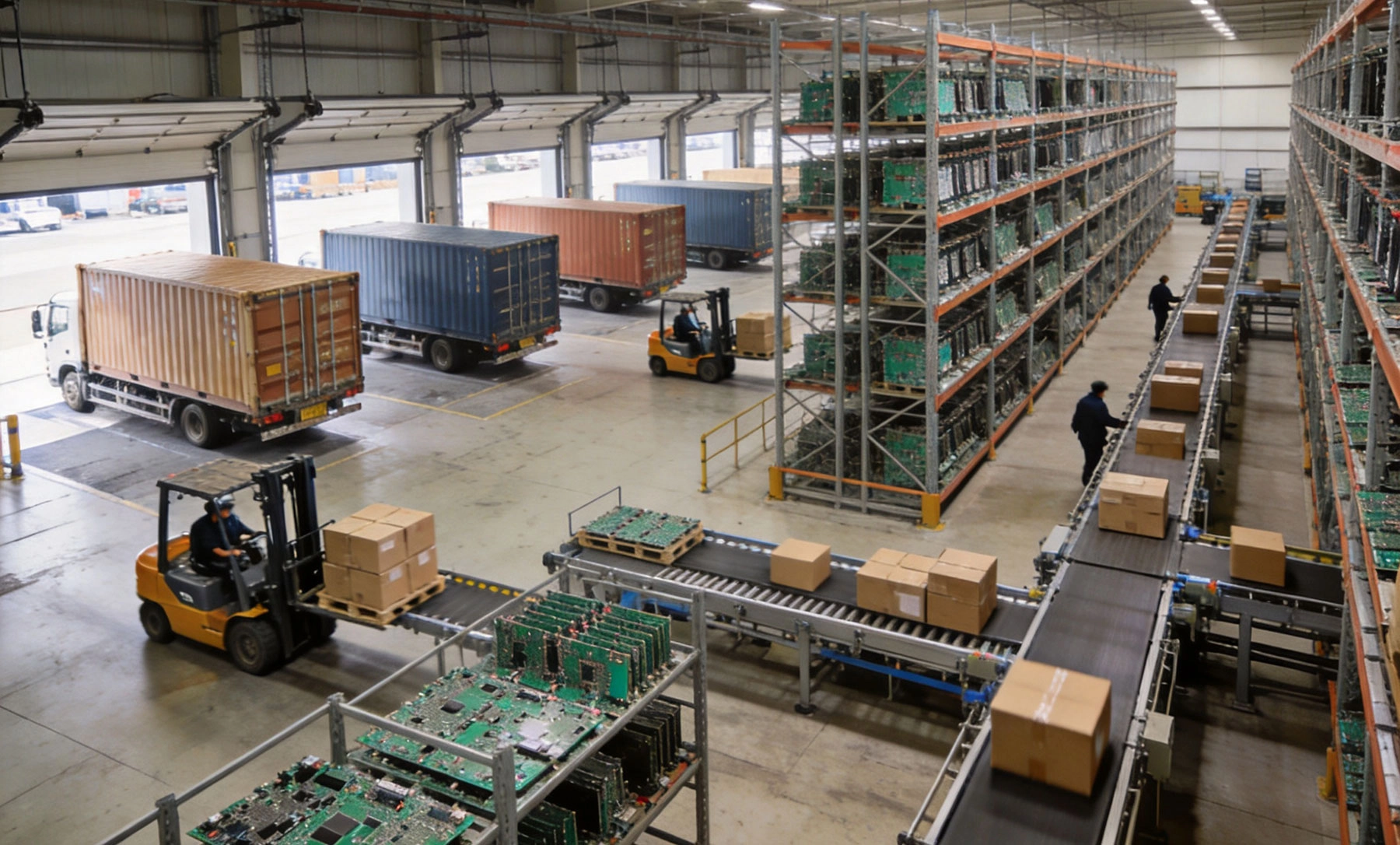
High volume turnkey printed circuit board assembly (PCBA) projects represent the pinnacle of Electronics Manufacturing complexity, requiring seamless coordination across global supply chains, precise scheduling, and exceptional quality control. These projects demand delivery of thousands to millions of assembled boards, often with tight tolerances, stringent quality requirements, and unforgiving production schedules. In this environment, Supply Chain resilience is not merely a competitive advantage—it's a survival requirement. A single component shortage, shipping delay, or quality issue can disrupt production, delay product launches, and result in substantial financial losses. Building and maintaining Supply Chain resilience has become one of the most critical capabilities for Turnkey Pcba providers serving high-volume markets including Consumer Electronics, automotive systems, and industrial equipment.
High volume Turnkey Pcba projects present distinct supply chain challenges that differ substantially from prototype or low-volume production. Understanding these challenges is essential for developing effective resilience strategies.
The sheer scale of high-volume projects magnifies every supply chain decision. A component shortage that might cause a minor delay in a prototype run can halt production for weeks when manufacturing requires millions of units. The bill of materials (BOM) for complex electronic products may contain thousands of unique components, each with its own sourcing requirements, lead times, and potential supply constraints.
Scale also creates quality management challenges. Detecting a quality issue after assembling 10,000 boards is far more problematic than discovering it after 10. Supply Chain Resilience in high-volume projects must address not just availability but also consistent quality across massive production runs.
High-volume products typically serve competitive markets where Time-to-market advantages translate directly into market share and profitability. Product Launch delays of even a few weeks can result in lost opportunities that cannot be recovered. This pressure compresses development timelines, reduces time for thorough supply chain validation, and increases the importance of getting supply right from the first production run.
Supply Chain Resilience in this context means not just preventing disruptions but enabling rapid recovery when disruptions occur. The ability to respond quickly to supply issues is as important as preventing those issues in the first place.
High-volume products operate on razor-thin margins where component and assembly costs directly impact profitability. This creates tension between resilience and cost optimization. Holding excess inventory improves resilience but ties up capital and increases carrying costs. Diversifying suppliers increases flexibility but reduces the volume discounts achievable with single-source arrangements.
Successful resilience strategies find the optimal balance between cost and flexibility, recognizing that the cheapest option is not the most cost-effective when supply disruptions stop production and delay revenue.
Modern supply chains are global, with components sourced from multiple continents and assemblies potentially occurring in multiple locations. This geographic diversity creates resilience by avoiding dependence on any single region but also introduces complexity in coordinating logistics, managing quality consistency across locations, and navigating different regulatory environments.
Global distribution also exposes supply chains to region-specific risks including natural disasters, political instability, trade restrictions, and pandemics. Resilience strategies must account for these geopolitical risks while leveraging the benefits of global sourcing.
Building resilient supply chains requires adherence to several fundamental principles that guide decision-making across procurement, Inventory Management, and supplier relationships.
The foundation of resilience is avoiding single points of failure. This means qualifying multiple suppliers for critical components, maintaining inventory buffers for long-lead-time items, and developing alternative manufacturing locations. Redundancy does not mean duplicating everything—that would be cost-prohibitive—but focusing redundancy where it provides the most risk mitigation benefit.
Critical components are those with long lead times, single-source availability, or high technical complexity. These warrant particular attention in redundancy planning. Standard components with multiple suppliers and short lead times may not require the same level of redundancy investment.
You cannot manage what you cannot see. Supply chain resilience requires visibility into upstream supplier operations, transportation logistics, and demand signals from downstream customers. This visibility enables proactive problem identification rather than reactive crisis management.
Visibility extends beyond knowing whether orders are on schedule. It includes understanding supplier capacity constraints, quality trends, and financial health. It involves monitoring global events that might affect transportation routes or regional manufacturing capabilities.
Resilient supply chains can adapt quickly to changing conditions. This agility comes from flexible manufacturing processes that can accommodate component substitutions, logistics arrangements that can be rapidly rerouted, and procurement processes that can shift between suppliers when needed.
Flexibility requires upfront investment in capabilities that may not seem cost-effective under normal conditions. The ability to substitute components requires engineering investment to qualify alternatives. Flexible logistics requires relationships with multiple carriers. These investments pay their dividends when disruptions occur.
Supply chain resilience is increasingly recognized as a collaborative responsibility rather than a competitive advantage. Manufacturers, suppliers, and logistics providers work together to build end-to-end resilience. This collaboration involves information sharing, joint risk assessment, and coordinated response planning.
Partnerships with suppliers extend beyond transactional relationships to strategic alliances. These partnerships create mutual interest in preventing disruptions and enable collaborative problem-solving when issues arise.
Strategic inventory buffers provide immediate protection against supply disruptions. However, not all inventory buffers are equally valuable. Strategic inventory focuses on components with long lead times, single-source availability, or critical functionality where shortages would immediately halt production.
Buffer capacity also applies to manufacturing capacity. Having production capacity that can be ramped up or redirected when primary capacity is constrained provides flexibility in responding to demand fluctuations or supply issues.
Effective resilience begins with systematic risk assessment followed by targeted mitigation strategies. Understanding where risks are greatest enables focused investment in resilience measures.
Risk mapping identifies vulnerabilities throughout the supply chain. This process examines each component in the BOM for supply concentration, lead time sensitivity, quality risk, and geographic exposure. Components are categorized by risk level, enabling prioritization of mitigation efforts.
Risk mapping should be a living process updated regularly as suppliers change, market conditions evolve, and new risks emerge. Historical disruption data provides valuable input for refining risk models.
Supplier evaluation goes beyond cost and quality to include resilience factors. Key considerations include financial stability, geographic risk exposure, capacity utilization, and concentration of customer base. A supplier dependent on a single large customer may struggle if that customer reduces orders. A supplier located in an area prone to natural disasters represents geographic risk.
Supplier evaluation should include assessment of the supplier's own supply chain resilience. A supplier with robust resilience practices reduces downstream risk. Conversely, a supplier with脆弱的供应链可能成为系统中的薄弱环节。
Geographic concentration creates supply chain vulnerability. Natural disasters, political events, or trade restrictions in a single region can disrupt multiple suppliers simultaneously. Geographic diversification spreads this risk across multiple regions.
Diversification strategies include qualifying suppliers in different continents, maintaining manufacturing capacity in multiple locations, and establishing transportation routes that can be rerouted around disruptions. The optimal level of diversification balances resilience against the cost of managing more complex global operations.
Components progress through lifecycle stages from introduction through maturity to end-of-life. Each stage presents different supply chain risks. Newly introduced components may have limited supplier availability. Mature components may face obsolescence as technology advances. End-of-life components become unavailable as manufacturers discontinue production.
Managing lifecycle risks involves strategic sourcing decisions. Selecting components in the mature stage when possible reduces obsolescence risk. Planning component replacements before end-of-life notices are issued prevents last-minute scrambling. Maintaining design alternatives that use different component families provides flexibility.
Inventory represents one of the most direct levers for improving supply chain resilience, but it must be managed strategically to balance protection against cost.
Not all components warrant the same inventory strategy. Components should be classified by risk factors including lead time, supplier availability, cost, and criticality. High-risk components—those with long lead times, limited suppliers, or critical functionality—justify higher inventory levels.
ABC analysis combined with risk scoring provides a framework for inventory decisions. High-value, low-risk components may be managed with just-in-time principles. Low-value, high-risk components may warrant substantial safety stock.
Safety stock provides buffer against demand variability and supply uncertainty. Determining optimal safety stock levels requires analyzing historical demand patterns, supply lead time variability, and the cost of stockouts versus inventory holding costs.
Advanced safety stock calculations use statistical models incorporating demand and supply variance. These models can be refined with real-time data to maintain optimal protection levels as conditions change.
Components with lead times exceeding 12-16 weeks represent significant risk. A supply disruption for these components can halt production for months. Buffer inventory equivalent to several months of demand provides protection against extended disruptions.
The cost of holding buffer inventory for long-lead-time components is often justified by the cost of production downtime. However, these components also require careful lifecycle management to avoid being stuck with obsolete inventory when component lifecycles end.
Forward buying—purchasing components in advance of need at favorable prices—can provide both cost savings and inventory buffers. Strategic sourcing involves identifying opportunities for volume purchases that secure supply and improve economics.
Forward buying requires careful analysis of demand forecasts, inventory holding costs, and component pricing trends. It also requires storage capacity and Inventory Management systems capable of handling larger inventories.
Strong supplier relationships are essential for supply chain resilience. These relationships enable information sharing, priority support, and collaborative problem-solving.
Strategic partnerships go beyond transactional purchasing arrangements to create mutual benefit and shared risk. In these partnerships, manufacturers and suppliers share information, coordinate planning, and invest in each other's success.
Partnerships often involve volume commitments in exchange for priority allocation, dedicated capacity, or preferential pricing. These arrangements provide certainty of supply for the manufacturer and predictable demand for the supplier.
Investing in supplier capabilities improves both supply reliability and overall performance. Supplier development may involve technical assistance, quality training, or process improvement support. These investments strengthen the supplier's ability to meet quality, delivery, and flexibility requirements.
Development programs should focus on critical suppliers where improvements will have the greatest impact. The investment in supplier capability development often pays returns in improved reliability, reduced defects, and faster response times.
Collaborative planning involves sharing demand forecasts, production schedules, and inventory plans with key suppliers. This transparency enables suppliers to plan capacity, maintain appropriate inventory levels, and anticipate demand changes.
Advanced collaborative planning uses integrated systems that provide real-time visibility into inventory positions, production schedules, and demand changes. This visibility enables synchronized operations throughout the supply chain.
Regular performance measurement provides data for continuous improvement. Metrics should track not just on-time delivery and quality but also responsiveness, communication effectiveness, and risk indicators.
Performance reviews with suppliers should be constructive dialogues focused on improvement rather than punitive exercises. Celebrating successes and addressing concerns in partnership strengthens relationships and motivates suppliers to invest in performance improvements.
Modern technology provides powerful tools for building supply chain resilience. Digital transformation enables visibility, analytics, and automation that were previously impossible.
Digital platforms provide end-to-end visibility across the supply chain. These platforms integrate data from suppliers, manufacturers, logistics providers, and customers into a single dashboard that provides real-time status, predictive analytics, and alerting capabilities.
Visibility platforms enable proactive problem identification by detecting patterns that indicate potential disruptions before they occur. For example, a supplier reporting reduced capacity utilization may signal impending quality or delivery issues.
Predictive analytics uses historical data and machine learning to forecast supply chain disruptions. These systems can predict component shortages, quality degradation, and logistics delays based on patterns and leading indicators.
Advanced predictive models incorporate external data including weather patterns, economic indicators, and geopolitical events. These models enable preparation for disruptions before they materialize.
Artificial intelligence tools can analyze supplier performance data, risk factors, and market conditions to recommend optimal sourcing decisions. These tools can identify risks that human analysts might miss and optimize for multiple objectives including cost, quality, and resilience.
AI systems can also continuously monitor supplier performance and risk indicators, alerting to emerging issues that require attention.
Digital twins create virtual replicas of supply chains that enable simulation and optimization. These models allow testing of different scenarios including supplier failures, demand surges, and logistics disruptions. Simulation helps identify vulnerabilities and test mitigation strategies before investing in implementation.
Digital twins can be used for real-time decision support during disruptions, helping identify the best response options based on current conditions and projected outcomes.
Supply chain resilience must extend beyond availability to include quality and compliance. A component that is available but fails quality standards is not a viable solution.
Maintaining consistent quality across multiple suppliers requires robust quality management systems. Supplier Qualification processes ensure that new suppliers meet quality requirements before they become part of the supply chain. Incoming inspection verifies that components meet specifications before they enter production.
Statistical process control monitors supplier quality trends, detecting degradation before it results in failures. Corrective action systems address issues systematically to prevent recurrence.
Electronics Manufacturing is subject to numerous regulations including RoHS, REACH, conflict minerals, and industry-specific requirements. Supply chain resilience must ensure compliance across all sources. A component alternative that solves availability problems but creates compliance issues is not a viable solution.
Compliance management requires tracking regulatory status of components, maintaining documentation, and staying informed about regulatory changes. This effort is increasingly supported by digital tools that automate tracking and alerting.
Counterfeit components represent a significant risk, particularly when sourcing from non-authorized distributors. Supply chain resilience includes protection against counterfeits through authorized sourcing channels, verification of component authenticity, and testing to detect counterfeits.
Authentication methods include marking verification, material analysis, and electrical testing. Some high-value components use serialized marking or cryptographic authentication.
Complete traceability enables rapid response when quality issues are discovered. Lot and serial number tracking identifies which products contain potentially problematic components. This capability limits the scope of recalls and prevents unnecessary product destruction.
Traceability systems also provide valuable data for root cause analysis and continuous improvement. Understanding where and when components were used helps identify patterns in quality issues.
Even the most resilient supply chains experience disruptions. Crisis management capabilities ensure rapid response and recovery when disruptions occur.
Business continuity plans document procedures for responding to various disruption scenarios. These plans define responsibilities, decision authorities, and response protocols. They should be regularly tested and updated based on lessons learned from actual disruptions and simulated exercises.
Continuity planning should address multiple scenarios including natural disasters, supplier failures, transportation disruptions, and geopolitical events. Each scenario should have specific response procedures and identified alternatives.
Dedicated crisis response teams enable rapid mobilization when disruptions occur. These teams include representatives from procurement, engineering, manufacturing, quality, and logistics. Pre-established communication channels and decision-making authority prevent delays during crises.
Regular training and scenario exercises ensure team readiness. Teams should have access to real-time data and decision-support tools to enable rapid, informed decisions.
When primary sources fail, rapid sourcing capabilities identify and qualify alternatives quickly. This requires pre-qualified alternative suppliers, established relationships with component brokers, and engineering resources for evaluating component alternatives.
Rapid sourcing processes should be documented and tested regularly. The time saved during actual disruptions can make the difference between minor delays and extended production halts.
Clear communication protocols ensure that all stakeholders are informed during disruptions. Internal communication keeps all departments aligned on status and priorities. External communication keeps customers, suppliers, and other partners informed about impacts and recovery plans.
Transparency during crises builds trust and enables coordinated response. Regular updates prevent rumors and misinformation that can compound disruption effects.
Resilience is not a static state but an ongoing improvement journey. Regular measurement and assessment identify gaps and guide improvement investments.
Key metrics track resilience performance including on-time delivery rates, time to recover from disruptions, supplier performance variability, and inventory turnover rates. These metrics should be trended over time and benchmarked against industry standards.
Financial metrics including supply disruption costs and excess inventory costs provide economic justification for resilience investments. The cost of disruptions versus the cost of resilience measures informs optimal investment levels.
Supply chains are dynamic, with new risks emerging and existing risks evolving. Regular risk assessments identify emerging vulnerabilities and verify that existing mitigation measures remain effective. These assessments should be conducted annually or when significant changes occur in the supply chain or business environment.
Risk assessments should be forward-looking, considering not just current risks but potential future scenarios including technological changes, geopolitical shifts, and market evolution.
Every disruption provides learning opportunities. Post-mortem analyses identify root causes, evaluate response effectiveness, and recommend improvements. These insights should be incorporated into planning, procedures, and capabilities to prevent recurrence and improve future response.
Continuous improvement should be systematic and data-driven, focusing on the root causes of disruptions rather than surface symptoms. Kaizen principles applied to supply chain resilience drive incremental improvements that compound over time.
Maturity models provide frameworks for assessing and improving resilience capabilities. These models define levels of maturity from reactive crisis management to proactive risk prevention and adaptive resilience. Assessing current maturity helps identify improvement priorities and track progress over time.
Maturity models also provide benchmarks against industry peers and best practices, helping organizations understand where they stand relative to competitors and leaders.
Supply chain resilience in high volume turnkey PCBA projects is a multifaceted capability requiring attention to Risk Management, supplier relationships, inventory strategy, Quality Assurance, and crisis response. The stakes are high—disruptions can halt production of thousands of units, delay product launches, and result in substantial financial losses. Building resilience requires systematic effort and investment across these dimensions.
The most successful approaches balance protection against flexibility, redundancy against cost, and risk mitigation against agility. There is no one-size-fits-all solution—optimal resilience strategies reflect the specific characteristics of products, markets, and supply chains. However, certain principles are universal: understand your risks, build relationships, maintain visibility, invest in flexibility, and prepare for the unexpected.
Supply chain resilience is not a project to be completed but an ongoing capability to be developed and maintained. As supply chains become increasingly global and complex, the importance of resilience will only grow. Organizations that master supply chain resilience will enjoy competitive advantages in reliability, customer satisfaction, and market responsiveness.
In high volume turnkey PCBA, where production scales are massive and stakes are high, supply chain resilience is not optional—it's essential. Building and maintaining this capability requires executive commitment, cross-functional collaboration, and sustained investment. The payoff comes in the ability to deliver consistently on commitments, respond quickly to challenges, and maintain competitive advantage in demanding markets.
High volume projects face amplified risks where small disruptions have large impacts. The scale magnifies every supply chain issue, making redundancy and diversification more critical. Low volume projects can often absorb disruptions through flexible scheduling, but high volume production halts immediately when critical components are unavailable. The economic justification for resilience investments is also stronger in high volume where disruption costs are larger.
Optimal safety stock depends on multiple factors including lead time variability, demand variability, component criticality, and holding costs. Critical components with long lead times typically warrant 2-3 months of safety stock, while standard components with multiple suppliers may require only days or weeks of buffer. Statistical models incorporating historical variance data provide the most accurate safety stock calculations for each component category.
Best practice is qualifying at least two suppliers for critical components, with three preferred for the most critical items. However, the number should balance against the costs of managing multiple supplier relationships and the feasibility of finding qualified alternatives. Sometimes single sourcing with strategic inventory buffers provides better resilience than trying to maintain unqualified alternative suppliers.
Quantify the costs of past disruptions including lost production, expedited shipping costs, and customer penalties. Calculate the potential costs of future disruptions based on production schedules and market conditions. Compare these costs to the investment required for resilience measures. Most investments in resilience, including strategic inventory, Supplier Qualification, and visibility systems, show clear positive return on investment when measured against disruption costs.
Technology provides visibility, analytics, and automation capabilities that were previously impossible. Supply chain visibility platforms provide real-time monitoring of supplier performance and inventory positions. Predictive analytics forecast potential disruptions before they occur. Artificial intelligence optimizes sourcing decisions. Digital twins enable simulation and testing of resilience strategies. These technologies are increasingly essential for managing complex global supply chains.

Signal Integrity Challenges in High-Speed Computing PCB AssemblyJuly/18/2026

Best Turnkey PCB Assembly for Data Centers and Server MotherboardsAugust/10/2026
Best Turnkey PCB Assembly for Telecom 5G Infrastructure and Base StationsJune/26/2026

Handling HDI and High-Frequency Materials in 5G PCB AssemblySeptember/17/2026

Heavy Copper PCBs: Assembly Challenges and SolutionsAugust/07/2026

Turnkey PCB Assembly Insights: How AI is Transforming Quality ControlSeptember/01/2026

Traceability and Documentation in Medical PCB AssemblySeptember/20/2026

Why Transparency is the Key Feature of the Best Turnkey PCB Assembly ProvidersJuly/24/2026