
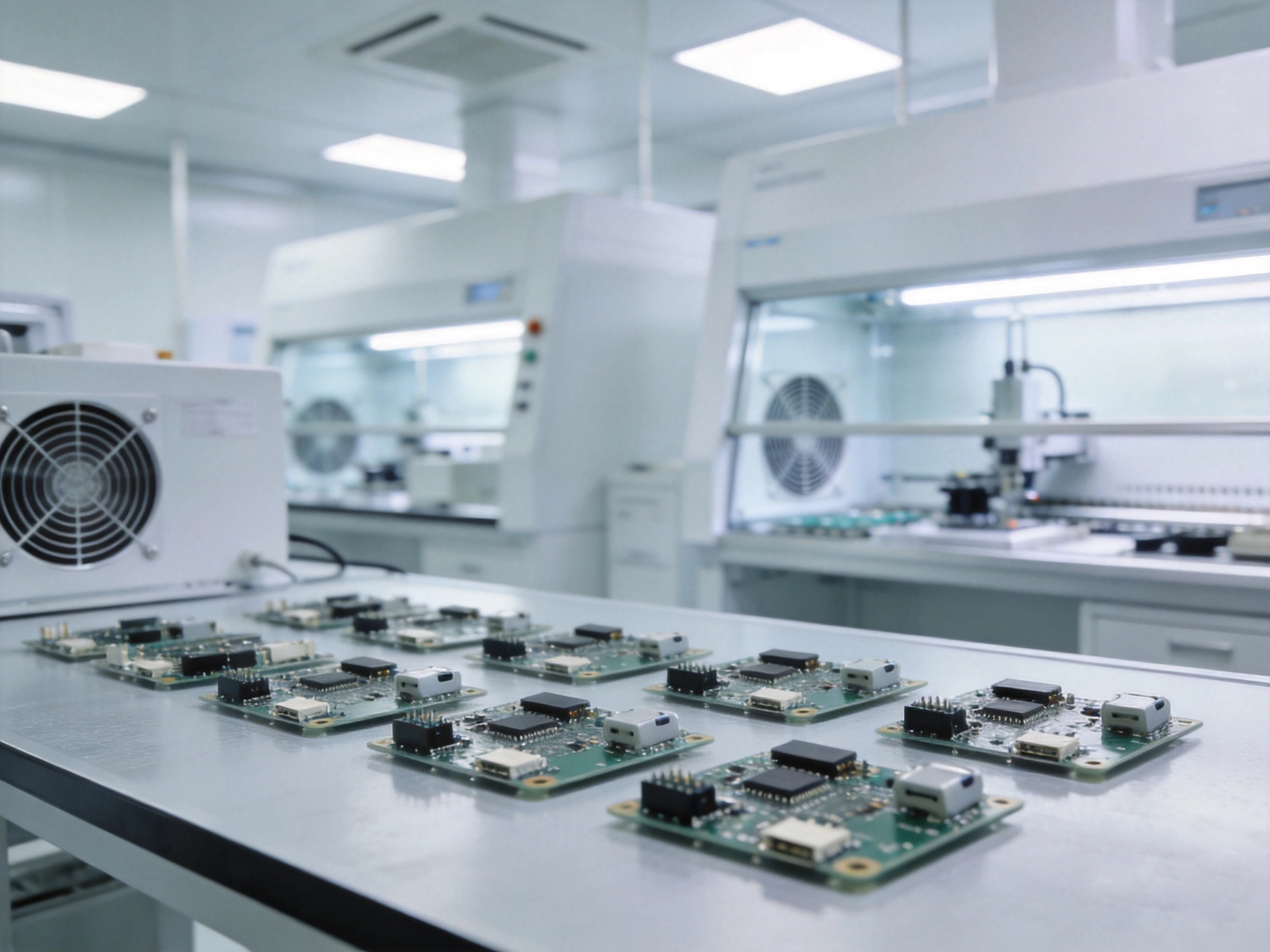
When electronics are designed to reside inside the human body, the stakes transcend typical manufacturing concerns. Implantable medical devices—pacemakers, neurostimulators, cochlear implants, drug delivery systems—must operate flawlessly for years while in constant contact with biological tissue. A single particle of contamination can trigger inflammation, infection, or device failure with potentially fatal consequences.
This reality demands manufacturing environments far more controlled than standard Electronics Production. Cleanroom manufacturing for implantable medical PCBA isn't merely a best practice—it's a regulatory requirement and ethical imperative. Understanding the standards, controls, and verification processes ensures that life-critical devices meet the stringent requirements their application demands.
Implantable electronics face challenges that no other electronic devices encounter. Understanding these challenges clarifies why cleanroom manufacturing is non-negotiable.
The human body is exquisitely sensitive to foreign materials. Particles that would be harmless on a consumer Electronics Assembly can trigger immune responses when implanted. Inflammatory reactions can cause pain, tissue damage, and device rejection. In worst cases, contamination leads to systemic infection requiring surgical device removal.
Common contaminants in standard manufacturing environments include:
Cleanroom manufacturing addresses these contamination sources through environmental controls, specialized materials, and rigorous processes.
Implantable devices must function reliably for years—often a decade or more—without maintenance or repair. A pacemaker cannot be serviced; a neurostimulator cannot be rebooted. Contamination introduced during manufacturing can cause latent defects that manifest years after implantation.
Corrosion from ionic contamination, dendritic growth from residual moisture, and adhesive failures from surface contamination can all cause device failures long after implantation. Cleanroom manufacturing minimizes these risks.
Regulatory agencies worldwide require controlled manufacturing environments for implantable devices. The FDA, European Medicines Agency, and other regulatory bodies expect cleanroom manufacturing as part of the quality management system for implantable electronics. Manufacturing in uncontrolled environments would fail regulatory review.
ISO 14644 defines cleanroom classifications based on particle concentration. The standard specifies maximum allowable particles per cubic meter of air at specified particle sizes:
For implantable medical PCBA, most critical assembly operations occur in ISO Class 5 or Class 6 environments. Less sensitive operations may occur in Class 7 or Class 8 areas, but the final assembly and sealing of implantable devices typically requires the highest classification.
Before ISO 14644, Federal Standard 209E defined cleanroom classifications. Though officially cancelled, terminology from this standard remains common:
Modern specifications reference ISO classifications, but understanding legacy terminology helps when working with older documentation or facilities.
Specific device types may have stricter requirements based on their function:
Cleanrooms achieve particle control through High Efficiency Particulate Air (HEPA) filtration. HEPA filters capture 99.97% of particles 0.3μm and larger. For ISO Class 5 environments, Ultra Low Penetration Air (ULPA) filters may be used, capturing 99.999% of particles 0.12μm and larger.
Airflow patterns prevent particle accumulation:
Air changes per hour vary by classification: ISO Class 5 may require 500+ air changes per hour, while ISO Class 8 might require 10-20 changes.
Cleanrooms maintain positive pressure relative to surrounding areas. This pressure cascade ensures that when doors open, clean air flows out rather than contaminated air flowing in. For facilities with multiple cleanroom zones, pressure increases progressively toward the most critical areas.
Typical pressure differentials:
Environmental parameters affect both contamination control and process reliability:
Tight control is essential. Temperature variations can affect Solder Paste performance and component reliability. Humidity fluctuations impact ionic contamination and cleaning effectiveness.
All cleanroom surfaces must minimize particle generation and facilitate cleaning:
Personnel are the primary contamination source in cleanrooms. Human skin sheds approximately 10 million particles per day. Gowning contains this contamination:
Gowning follows specific sequences to prevent contamination. A typical order: shoe covers → hood → coveralls → boots → face mask → gloves. Each step prevents contaminating previously donned items.
Cleanroom behavior minimizes particle generation:
All personnel must complete cleanroom training before entry. Training covers:
Personnel qualification includes practical demonstration of gowning and observed performance in the cleanroom environment.
All materials entering the cleanroom require controlled entry:
Assembly processes must minimize contamination:
Cleaning removes contamination that might remain after assembly:
Validate cleaning effectiveness through ionic contamination testing per IPC-TM-650 or equivalent standards.
Proper handling prevents recontamination:
ISO 13485 is the quality management system standard for medical devices. It requires:
The FDA's Quality System Regulation (QSR) governs Medical Device Manufacturing in the United States. Key requirements include:
Cleanroom processes require validation demonstrating consistent results:
Continuous or periodic particle counting verifies cleanroom performance:
Biological contamination poses particular risk for implantables:
Continuous monitoring with alarmed limits ensures environmental parameters remain within specification. Calibration of monitoring equipment is essential.
Contamination control should be risk-based, focusing resources on the highest-risk operations:
Apply contamination controls in order of effectiveness:
Measuring ionic contamination verifies cleaning effectiveness:
Cleanroom-grade visual inspection detects contamination:
For implantable devices, bioburden testing verifies microbial control:
Choosing the right manufacturer for implantable medical PCBA requires thorough evaluation:
Cleanroom manufacturing for implantable medical PCBA represents one of the most demanding applications of Electronics Manufacturing technology. The combination of contamination control, rigorous quality systems, and validated processes ensures that life-critical devices perform safely for their intended service life.
Success requires commitment at every level—from facility design and maintenance to personnel training and process control. There are no shortcuts; every aspect of cleanroom operation must be executed consistently to protect patients whose lives depend on these devices.
As implantable medical technology advances, cleanroom requirements will only increase. Miniaturization, new materials, and expanding applications demand ever-tighter contamination control. Manufacturers who invest in people, processes, and infrastructure to meet these demands will remain essential partners in bringing life-improving and life-saving devices to patients worldwide.
For engineers developing implantable medical devices, understanding cleanroom manufacturing standards enables informed decisions throughout the development process. From design decisions that affect manufacturability to Supplier Qualification and process validation, this knowledge ensures that devices reach patients with the quality and reliability their critical applications demand.
Best Turnkey PCB Assembly for Medical & Healthcare Devices: ISO 13485 ComplianceJune/29/2026
Best Turnkey PCB Assembly for Portable Diagnostic EquipmentAugust/12/2026
Traceability and Documentation in Medical PCB AssemblySeptember/20/2026
How to Find Manufacturers Specializing in Low Volume Turnkey PCBAJuly/31/2026
How Turnkey PCB Solutions Simplify Project Management for Engineers?October/14/2026
Longevity and Lifecycle Management in Industrial PCBASeptember/18/2026
Advanced Turnkey SMT Assembly Techniques for High-Density InterconnectsMay/26/2026
Optimizing Reflow Profiles for Flawless Turnkey SMT AssemblySeptember/30/2026