Open Nav

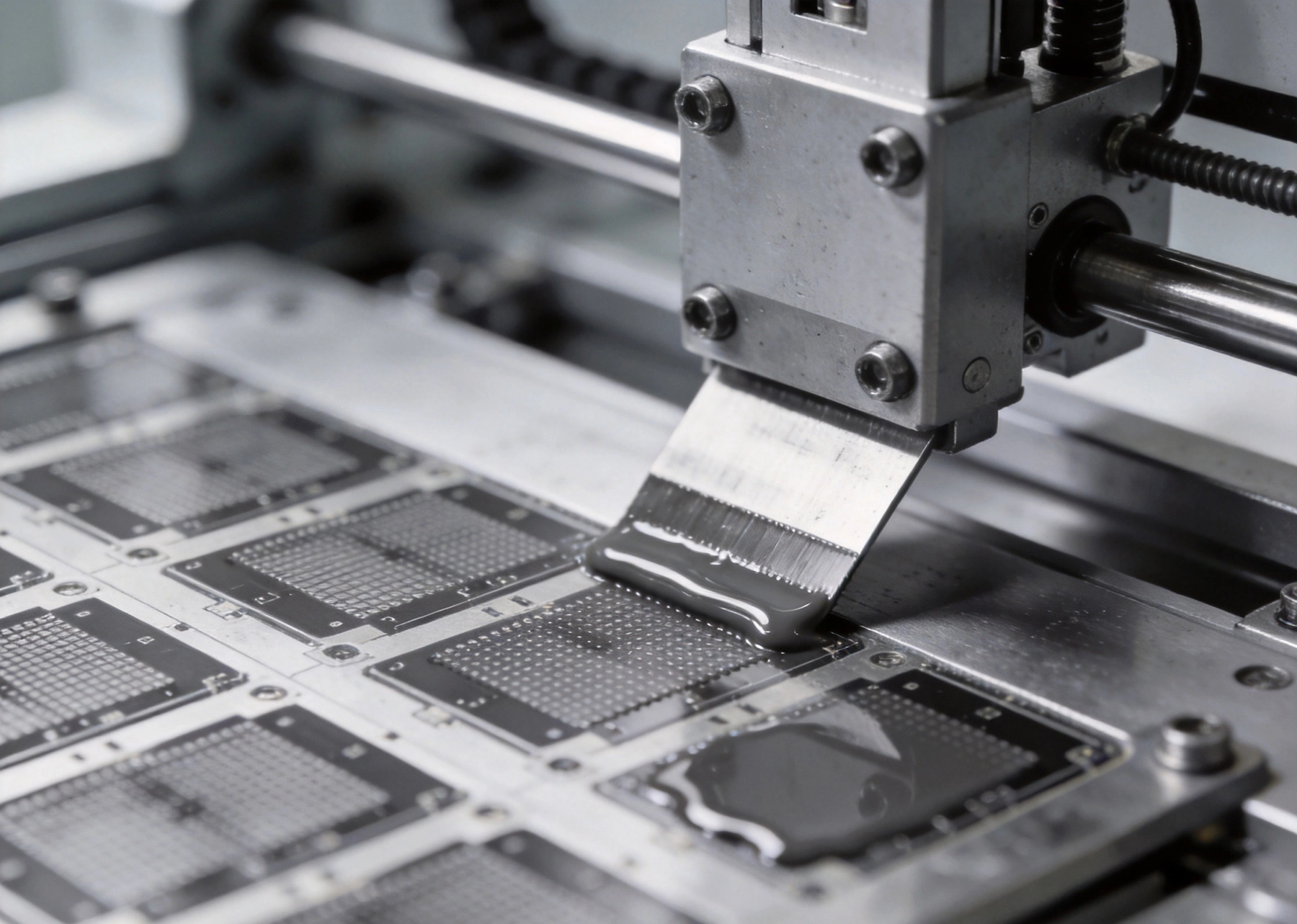
Solder paste technology sits at the foundation of modern Surface Mount Technology assembly, yet its critical importance is often underestimated until defects begin appearing on the production line. In turnkey Smt Assembly operations, where multiple product types and varying complexities flow through the same equipment, solder paste performance can make the difference between first-pass yields exceeding 98 percent and costly rework cycles that consume profit margins. Understanding how solder paste characteristics interact with printing equipment, stencil design, and reflow profiles enables assembly operations to achieve consistent quality while maintaining the flexibility that turnkey services demand.
Industry data consistently demonstrates the outsized impact of Solder Paste Printing on overall assembly outcomes. Studies indicate that approximately 60 percent of SMT process defects originate from Solder Paste Printing issues, making it the single largest contributor to assembly failures. This concentration of defect sources presents both a challenge and an opportunity: while poor paste control can devastate yields, targeted improvements in paste selection, storage, and application deliver disproportionate returns in quality improvement.
Solder paste consists of three primary components: solder alloy powder, flux medium, and various additives that modify rheological properties. The solder powder provides the metallic content that forms the actual solder joint during reflow, while the flux cleans oxide from surfaces, promotes wetting, and temporarily holds components in place before soldering. The ratio of powder to flux, typically 85 to 90 percent metal by weight, determines paste viscosity and printability characteristics.
Solder powder particle size classification follows industry standards with Type 3, Type 4, Type 5, and Type 6 designations indicating progressively smaller particle sizes. Type 3 powder with particle sizes of 25 to 45 microns remains adequate for most standard SMT applications including 0402 and 0603 components. Type 4 powder with 20 to 38 micron particles provides improved release characteristics for fine-pitch QFPs and small chip components. Type 5 and Type 6 powders with sub-25 micron particles enable printing through extremely small stencil apertures for advanced packaging applications including 0201 passives and micro-BGA devices.
No-clean solder pastes dominate modern assembly operations due to their compatibility with high-volume production and reduced post-reflow cleaning requirements. Water-soluble pastes offer superior flux activity and are preferred for high-reliability applications where complete flux removal is required. Rosin-based pastes provide excellent wetting characteristics but require solvent cleaning, limiting their use in environmentally sensitive operations. Lead-free formulations using SAC305 alloy have become standard following RoHS directives, though these alloys demand tighter process control due to higher melting points and reduced wetting compared to traditional tin-lead compositions.
Stencil design represents the foundation of successful solder paste printing, translating PCB pad geometries into physical apertures that control paste deposition volume and location. Poor stencil design creates print defects that no amount of process optimization can overcome, while well-designed stencils enable consistent, high-quality printing across varying production conditions.
Aperture sizing follows established guidelines based on component pitch and pad dimensions. For standard chip components, stencil apertures typically match pad dimensions or are slightly reduced to control paste volume. Fine-pitch components require area ratio calculations to ensure adequate paste release from small apertures. The area ratio, defined as aperture opening area divided by aperture wall area, should exceed 0.66 for reliable paste release. Below this threshold, paste adheres to aperture walls rather than transferring to the PCB, resulting in insufficient deposits.
Stencil thickness directly impacts paste deposition volume. Standard laser-cut stainless steel stencils with 100 to 150 micron thickness suit most applications. Step-down stencils with locally reduced thickness in fine-pitch areas enable optimal paste volume for both large and small components on the same board. Electroformed nickel stencils provide smoother aperture walls and superior paste release compared to laser-cut alternatives, justifying their higher cost for demanding applications.
Aperture geometry modifications address specific printing challenges. Rounded corners improve paste release and reduce clogging. Home plate or inverted home plate shapes for fine-pitch QFPs reduce bridging tendency by controlling paste volume at lead tips. Split apertures for large thermal pads reduce voiding by allowing flux volatilization during reflow while maintaining adequate solder volume.
The solder paste printing process requires precise control of multiple interrelated parameters. Print speed, squeegee pressure, separation speed, and stencil cleaning frequency must be balanced to achieve consistent, high-quality deposits across the entire PCB surface.
Squeegee pressure represents one of the most critical printing parameters. Insufficient pressure fails to completely fill stencil apertures with paste, resulting in insufficient deposits. Excessive pressure causes paste scooping from large apertures and accelerates stencil wear. Optimal pressure typically ranges from 0.5 to 1.5 kilograms per centimeter of squeegee length, with specific values determined through process characterization for each board and paste combination. Metal squeegee blades provide more consistent pressure distribution than polyurethane alternatives, particularly for fine-pitch printing.
Print speed balances paste filling time with production throughput. Standard speeds of 20 to 70 millimeters per second suit most applications. Fine-pitch components benefit from slower speeds that allow adequate time for paste to fill small apertures. Speed and pressure interact: higher speeds may require increased pressure to maintain fill characteristics, while slower speeds permit reduced pressure.
Stencil separation speed after printing affects paste release and shape definition. Too rapid separation can cause paste tails and bridging between adjacent pads. Too slow separation extends cycle time and may cause paste slump. Separation speeds of 0.5 to 3 millimeters per second typically provide optimal results, with specific values optimized based on paste rheology and aperture characteristics.
Proper solder paste storage and handling maintains consistent paste properties throughout the production shift. Temperature excursions, moisture exposure, and extended working life all degrade paste performance and contribute to printing defects.
Unopened solder paste containers require refrigerated storage at 2 to 10 degrees Celsius to maintain flux activity and prevent viscosity changes. Paste stored outside this range experiences accelerated flux degradation and particle oxidation, leading to poor wetting and increased voiding. Shelf life for refrigerated paste typically extends to six months, though manufacturer specifications should be consulted for specific products.
Thawing procedures before use are critical for moisture control. Frozen paste must thaw at room temperature for at least four hours before opening to prevent condensation on cold paste surfaces. Condensation introduces moisture that causes solder balling and spattering during reflow. Never accelerate thawing with external heat sources, as this creates temperature gradients and moisture traps within the paste container.
Once opened, solder paste has limited working life at room temperature, typically four to eight hours depending on formulation and environmental conditions. Exposed paste absorbs atmospheric moisture and loses volatile flux components, changing rheological properties. Implementing paste rotation schedules and discarding expired material prevents use of degraded paste that would compromise print quality.
Mixing requirements after thawing ensure uniform distribution of solder particles and flux. Manual stirring for three to five minutes or mechanical mixing homogenizes paste that may have separated during storage. Skipping mixing leads to inconsistent viscosity and print defects including insufficient deposits and uneven solder joint formation.
The production environment significantly impacts solder paste performance and printing consistency. Temperature, humidity, and airborne contamination all interact with paste characteristics to affect print quality and subsequent reflow outcomes.
Controlled environment conditions stabilize paste rheology throughout the production shift. Recommended temperature ranges of 22 to 28 degrees Celsius and relative humidity of 40 to 60 percent provide consistent paste behavior. High humidity causes paste to absorb moisture, leading to solder balling and spattering. Low humidity increases static electricity, causing paste to stick to stencil surfaces rather than transferring to the PCB.
Automated Solder Paste Inspection systems provide critical process control feedback. SPI equipment measures paste volume, height, and alignment for every pad, detecting printing defects before components are placed. Real-time SPI data enables immediate process adjustment when drift occurs, preventing continued production of defective boards. Statistical Process Control tracking of SPI measurements identifies trends before they produce out-of-specification conditions.
Stencil cleaning frequency balances defect prevention with production efficiency. Insufficient cleaning leads to aperture clogging and insufficient deposits. Excessive cleaning wastes production time and solvent. Cleaning every 5 to 10 prints typically maintains adequate stencil condition, with frequency adjusted based on paste characteristics and component density. Automated under-stencil wiping systems provide consistent cleaning without interrupting production flow.
Understanding the relationship between solder paste characteristics and specific assembly defects enables targeted troubleshooting and prevention. Most common SMT defects trace to paste-related causes that can be addressed through material selection or process control.
Insufficient solder defects, characterized by small or incomplete solder joints, typically result from inadequate paste volume due to clogged stencil apertures, low squeegee pressure, or excessive scooping. Addressing these root causes through stencil cleaning, pressure adjustment, or aperture design modification eliminates the defect source rather than merely detecting failures after they occur.
Solder bridging between adjacent pads or leads stems from excessive paste volume, paste slump after printing, or misalignment during component placement. Stencil aperture reduction, improved separation speed control, and paste viscosity management reduce bridging tendency. Low-activity flux formulations may also contribute by failing to properly manage paste spreading during reflow.
Voiding within solder joints, particularly problematic for thermal pad and BGA applications, relates to flux volatile content, reflow profile characteristics, and paste oxidation state. Flux with excessive volatile content generates gas bubbles that become trapped in solidifying solder. Optimized soak zone profiles allow volatilization before solder melting, while fresh paste with minimal oxidation reduces gas generation.
Tombstoning of chip components, where one end lifts during reflow creating an open circuit, results from uneven wetting forces caused by pad design, paste volume imbalance, or component placement offset. Balanced stencil aperture design and precise placement alignment minimize this defect. Paste with appropriate tack force holds components properly positioned through reflow.
Turnkey Smt Assembly presents unique challenges for solder paste management due to frequent product changeovers, varying component mixes, and diverse customer requirements. The flexibility demanded by turnkey operations makes solder paste control even more critical for maintaining yields across diverse production scenarios.
Product changeovers require careful paste management to prevent cross-contamination between different solder alloys or flux chemistries. Lead-free and tin-lead products must be physically separated to prevent alloy mixing that would compromise reliability. Flux residue compatibility between consecutive products must be considered when scheduling production sequences.
Component density variations within and between products demand adaptable printing processes. High-mix turnkey operations benefit from programmable stencil printers with recipe storage for different board configurations. Quick-change squeegee and stencil systems minimize changeover time while maintaining setup accuracy.
Documentation and traceability requirements in turnkey operations extend to solder paste lot tracking and usage logs. Customers increasingly require evidence of paste storage conditions, working life compliance, and lot traceability for quality audits. Implementing barcode tracking and electronic record systems satisfies these requirements while supporting process improvement analysis.
Maximizing SMT assembly yields through solder paste technology requires systematic implementation of best practices across material selection, process control, and continuous improvement activities.
Material selection should match paste characteristics to application requirements. High-reliability automotive and medical products benefit from water-soluble pastes with superior flux activity despite cleaning requirements. Consumer Electronics prioritize no-clean formulations for cost efficiency. Fine-pitch and advanced packaging applications require Type 4 or Type 5 powder for adequate printing through small apertures.
Process characterization establishes optimal parameter ranges for each product family. Design of Experiments methodology identifies parameter interactions and optimizes settings for specific board configurations. Regular process audits verify that actual production conditions remain within characterized ranges.
Preventive maintenance programs for printing equipment sustain process capability. Squeegee blade inspection and replacement schedules prevent blade wear from affecting print quality. Stencil tension verification ensures consistent snap-off behavior. Printer calibration maintains alignment accuracy critical for fine-pitch printing.
Operator training addresses the human factors in paste handling and printing. Proper paste handling techniques, recognition of paste degradation indicators, and response to printing defects enable frontline personnel to maintain quality. Cross-training across multiple operations provides flexibility while maintaining process knowledge.
Emerging solder paste technologies promise to address current limitations while enabling next-generation assembly requirements. These developments impact turnkey operations by expanding process windows and supporting advanced packaging technologies.
Ultra-fine powder technologies with Type 6 and Type 7 classifications enable printing through stencil apertures below 100 microns, supporting emerging Component Miniaturization. These powders require modified flux formulations to manage increased surface area and oxidation tendency while maintaining printability.
Low-temperature solder formulations address thermal stress concerns with temperature-sensitive components and substrates. BiSnAg and other low-melting alloys enable step-soldering processes and reduce warpage in large or thin PCBs. These alloys require compatible flux systems and reflow profile modifications.
Recycled content solder pastes respond to sustainability requirements without compromising performance. Welco powder technology enables consistent spherical powder from recycled sources, maintaining printability and joint reliability. This development supports environmental initiatives increasingly required by major OEMs.
Solder paste technology fundamentally determines SMT assembly yields through its influence on every stage from printing through final reflow. The 60 percent contribution of paste-related factors to total assembly defects makes paste control the highest-return investment for yield improvement in turnkey operations. Success requires attention to material selection, storage protocols, printing parameters, environmental control, and continuous monitoring through SPI systems.
Turnkey Assembly operations face particular challenges in maintaining paste quality across diverse products and frequent changeovers, but these challenges can be addressed through systematic process control and operator training. The investment in paste management infrastructure and procedures pays dividends through reduced rework, improved customer satisfaction, and competitive advantage in quality-sensitive markets.
As Component Miniaturization continues and new packaging technologies emerge, solder paste technology will evolve to meet these challenges. Staying current with paste developments and maintaining flexible, well-controlled printing processes positions Turnkey Assembly operations to capitalize on these advances while delivering consistent quality to their customers.
Advanced Turnkey SMT Assembly Techniques for High-Density InterconnectsMay/26/2026
Quality Control Standards in Turnkey SMT Assembly (IPC-A-610 Explained)July/07/2026
Turnkey SMT Assembly: Handling 01005 Components and Micro BGAsJune/08/2026

Turnkey PCB Assembly Insights: 2026 Industry Trends and Market AnalysisMay/26/2026

Turnkey PCB Assembly Insights: The Shift Towards High-Mix Low-Volume ProductionJuly/02/2026

The Optimal Balance of Cost, Quality, and Speed in One-Stop PCB Assembly ServiceJune/02/2026

Best Turnkey PCB Assembly Services: Balancing Cost, Quality, and SpeedJuly/01/2026
Why Transparency is the Key Feature of the Best Turnkey PCB Assembly ProvidersJuly/24/2026