Open Nav

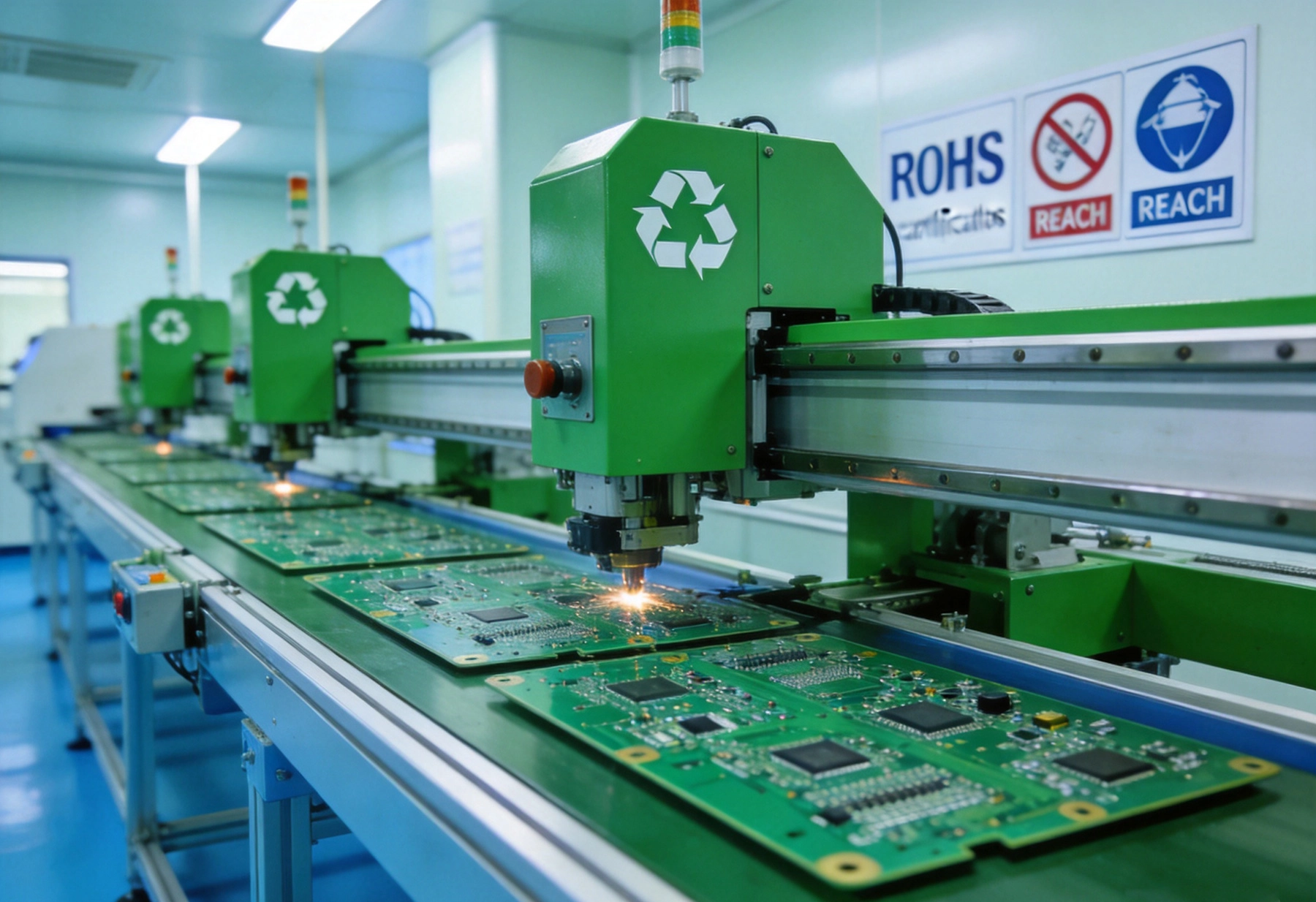
Environmental regulations shape every aspect of modern Electronics Manufacturing. When you order turnkey Pcb Assembly, your manufacturer must navigate a complex landscape of restrictions on hazardous substances, chemical registration requirements, and documentation obligations. Understanding RoHS and REACH compliance protects your products from recalls, legal liability, and reputational damage while meeting the environmental expectations of customers and markets worldwide.
The Restriction of Hazardous Substances directive originated in the European Union in 2002 and has been updated several times since. RoHS restricts specific dangerous materials found in electrical and electronic equipment. The current version, RoHS 3 or EU Directive 2015/863, limits ten substance categories in products sold in EU markets.
The restricted substances and their maximum concentration values by weight in homogeneous materials are lead at 0.1%, mercury at 0.1%, cadmium at 0.01%, hexavalent chromium at 0.1%, polybrominated biphenyls at 0.1%, polybrominated diphenyl ethers at 0.1%, bis(2-ethylhexyl) phthalate at 0.1%, butyl benzyl phthalate at 0.1%, dibutyl phthalate at 0.1%, and diisobutyl phthalate at 0.1%.
Homogeneous material means one material of uniform composition throughout or a material that cannot be mechanically disjointed into different materials. This definition matters practically because it means every individual component, solder joint, plating layer, and insulation must individually meet these limits, not just the product as a whole.
RoHS compliance applies to electrical and electronic equipment categories including large household appliances, small household appliances, IT equipment, consumer equipment, lighting equipment, electrical and electronic tools, toys, sports equipment, medical devices, monitoring instruments, automatic dispensers, and semiconductor equipment. The category your product falls into determines specific applicability and any exemptions that may apply.
REACH stands for Registration, Evaluation, Authorization, and Restriction of Chemicals. This European Union regulation, effective since 2007, governs chemical substances including those used in Electronics Manufacturing. Unlike RoHS which focuses specifically on electronics, REACH applies broadly across industries and addresses chemical substances in their own right.
The regulation requires companies that manufacture or import substances in quantities over one tonne per year to register those substances with the European Chemicals Agency. This registration generates safety data that informs downstream users about proper handling and risks. Electronics manufacturers indirectly depend on REACH compliance because their Supply Chain must register the chemicals in solder, plating, coatings, and plastics.
REACH authorization requirements restrict substances of very high concern from being used without explicit approval. These SVHC substances include certain carcinogens, mutagens, reproductive toxicants, and persistent bioaccumulative chemicals. Manufacturers must track SVHC presence in products and report to customers when concentration exceeds 0.1% by weight.
The REACH restriction list has grown to include hundreds of substances with specific concentration limits for specific applications. Some restrictions overlap with RoHS while others fill gaps, covering substances like skin sensitizers, phthalates in consumer products, and flame retardants in electronics enclosures.
The most visible RoHS impact in Pcb Assembly is the elimination of lead-based solders. Traditional tin-lead solder with approximately 37% lead melts at 183 degrees Celsius and produces highly reliable solder joints. Lead-free alternatives like tin-silver-copper (SAC) alloys melt at 217-227 degrees Celsius, requiring higher assembly temperatures and creating new reliability challenges.
SAC305, containing 96.5% tin, 3% silver, and 0.5% copper, has become the dominant lead-free solder alloy. Its superior wetting characteristics and relatively low melting point make it suitable for most applications. Other alloys including tin-copper, tin-silver, and nickel-stabilized variants serve specialized needs like high-temperature applications or sensitive components.
The higher reflow temperatures required for lead-free soldering stress components and boards more than traditional assembly. Typical lead-free profiles peak at 245-260 degrees Celsius compared to 225-235 degrees for leaded processes. This temperature increase affects component moisture sensitivity ratings, board warp, and copper pad integrity. Manufacturers must optimize profiles specifically for lead-free assemblies.
Lead-free solder joints also behave differently over time. Tin whiskers, fine metallic filaments that grow from solder surfaces, can cause short circuits in extreme cases. While mitigation techniques like adding small amounts of lead or using nickel additives reduce whisker risk, long-term reliability of lead-free solder remains an active research area.
Beyond solder, many materials in PCB construction fall under RoHS and REACH restrictions. The laminate substrate itself must not contain restricted flame retardants. Many older laminates used polybrominated biphenyls or polybrominated diphenyl ethers as flame retardants, both now restricted. Modern laminates use alternative chemistries that meet fire safety standards without restricted substances.
Halogen-free laminates have become the norm for RoHS-compliant products. These materials typically use phosphorus-based or nitrogen-based flame retardant systems instead of halogens. While halogen-free materials may have different electrical or mechanical properties than their halogenated predecessors, high-quality modern laminates perform equivalently for most applications.
Metal finishing restrictions affect PCB surface finishes. HASL (hot air solder leveling) with lead-bearing solder is prohibited for RoHS compliance. Alternative finishes include lead-free HASL, immersion silver, electroless nickel immersion gold (ENIG), organic solderability preservatives (OSP), and immersion tin. Each finish has different shelf life, solderability, and cost characteristics.
Connector housings, cable insulation, and plastic components must also comply with substance restrictions. Some connector manufacturers lagged in lead-free transitions, creating availability challenges for specific parts. Turns (Turnkey Assembly) manufacturers must verify compliance documentation for every component in the bill of materials, not just the board and solder.
Hexavalent chromium is restricted under RoHS and particularly relevant for metal surface treatments. Many industrial chromate conversion coatings used to protect aluminum heat sinks and enclosures contain hexavalent chromium. Compliant alternatives include trivalent chromium processes, proprietary coatings, and alternative passivation treatments.
When specifying finishes for your product, explicitly require RoHS-compliant surface treatments. Ask your manufacturer to verify that any chromate conversion coatings are specifically trivalent chromium processes rather than traditional hexavalent methods. Documentation from the metal finishing supplier should confirm the process chemistry.
Cadmium provides excellent wear resistance and conductivity for electrical contacts, but it is restricted to 0.01% concentration, the tightest limit in RoHS. Many connector manufacturers phased out cadmium decades ago, but some specialized contacts still used cadmium for high-reliability applications. Alternative materials like tin, nickel, and gold over appropriate underplates now serve these applications.
Cadmium is also a REACH SVHC due to its carcinogenic properties and environmental persistence. REACH authorization requirements may further restrict cadmium uses beyond RoHS limits. Verify with your component suppliers that their products contain no cadmium plating or contacts.
RoHS compliance requires manufacturers to maintain technical documentation demonstrating that products meet substance restrictions. This documentation includes bill of materials analysis, supplier declarations, and test reports where applicable. The concept of due diligence means that manufacturers must take reasonable steps to verify supplier claims rather than blindly accepting compliance statements.
Declarations of conformity from component suppliers provide the foundation for compliance documentation. These declarations state that specific part numbers comply with RoHS and may reference specific substance restrictions. Many suppliers use standardized declaration formats like the IEC 62421 or IPC 1752 family of standards that structure compliance information consistently.
Material declarations become more complex for complex assemblies. Each subcomponent, fastener, cable, and piece of packaging that contains homogeneous material must be verified. Turnkey Assembly services simplify this burden because the manufacturer coordinates compliance verification across their Supply Chain. You still need overall product compliance verification, but the manufacturer handles component-level documentation.
REACH compliance documentation requirements center on communication about substances of very high concern. If your product contains any SVHC above 0.1% concentration, you must provide this information to recipients of the product and respond to consumer inquiries within 45 days. Maintaining SVHC documentation helps you respond to these inquiries efficiently.
The European RoHS directive inspired similar regulations worldwide. China RoHS, officially called Management Methods for Restricting the Use of Hazardous Substances in Electrical and Electronic Products, took effect in 2007 with phased implementation. The regulation mirrors EU requirements but uses Chinese conformity assessment procedures and marking requirements.
China RoHS requires products to mark content of restricted substances using a symbol specified in the regulation. Products containing no restricted substances above limits use an e-mark, while products with substances above limits must use an X-mark and provide an inventory of those substances. Importers must register products with Chinese authorities before sale.
Other jurisdictions have adopted or are developing similar restrictions. Korea has KC RoHS requirements aligned with EU standards. The United States lacks a comprehensive federal RoHS law, though California and other states have electronics recycling requirements. Japan has J-MOSS marking requirements for certain product categories. Taiwan has CNS 15663 requirements similar to China RoHS.
For global product distribution, manufacturers must track which regulations apply to each market and ensure compliance with the strictest requirements across all regions. A product sold in Europe, China, and Korea must meet EU RoHS limits regardless of where the stricter interpretation lies. Turnkey manufacturers experienced in international compliance can help navigate these overlapping requirements.
RoHS and REACH include exemption provisions for applications where alternatives are not technically feasible or where restriction would cause disproportionate harm. These exemptions are time-limited and periodically reviewed, with the expectation that alternatives will be developed and implemented before exemptions expire.
Examples of current RoHS exemptions include lead in high-melting-temperature solders for applications like telecommunications infrastructure where reliability at high temperatures is critical. Another exemption covers lead in glass of cathode ray tubes and fluorescent lamps. Certain medical device applications have extended exemptions recognizing the cost and difficulty of reformulating products in highly regulated industries.
Exemption management is a significant compliance responsibility. You must track which exemptions apply to your products, when they expire, and what alternatives are available. Using an expired exemption voids your compliance. Many manufacturers have had to redesign products or reformulate processes when exemptions expired without adequate alternatives.
Requesting new exemptions is possible but requires substantial technical justification and lobbying through industry associations. The exemption review process typically takes years and may result in reduced scope or shortened duration. Budget time and resources if your product genuinely requires an exemption not currently available.
Turnkey manufacturers bear responsibility for supply chain compliance but depend on their own suppliers for component and material compliance. Qualified manufacturers maintain Supplier Qualification programs that verify compliance capabilities before awarding business. These programs include questionnaires, document review, and periodic audits.
Ask potential turnkey assembly partners about their Supplier Qualification process. How do they verify that component distributors and laminate suppliers meet RoHS requirements? What documentation do they require from tier-two and tier-three suppliers? How do they handle non-conforming materials or suspected compliance issues?
Incoming material inspection can verify certain compliance characteristics but cannot test for every restricted substance. Analytical methods like X-ray fluorescence can screen for heavy metals but may not detect all relevant substances. Manufacturers rely primarily on declarations and traceability rather than destructive testing of every lot.
Audit programs verify that suppliers maintain their compliance claims over time. Manufacturing processes change, formulations evolve, and supply chains shift. Regular audits ensure that compliance documentation remains current and accurate throughout the business relationship.
Compliance documentation means little if manufacturing processes introduce restricted substances. Turnkey manufacturers must segregate lead-free and lead-containing processes, materials, and storage to prevent cross-contamination. A single tin-lead solder splash in a supposedly lead-free assembly can cause non-compliance.
Workmanship standards for lead-free assembly differ from traditional practices. The higher processing temperatures require adjusted reflow profiles, different paste handling procedures, and modified inspection criteria. Skilled manufacturers understand these differences and train their process engineers and operators accordingly.
Traceability systems link finished products back to specific manufacturing lots, component batches, and raw material lots. When a compliance issue surfaces, traceability enables targeted recalls rather than blanket product retrievals. Turnkey manufacturers with robust traceability infrastructure can quickly identify affected products and narrow the scope of potential problems.
Change control processes manage modifications to materials and processes that might affect compliance. Any change in component supplier, laminate type, solder alloy, or surface finish requires re-verification of compliance status. Manufacturers should notify customers of significant changes that might affect their product compliance declarations.
ISO 14001 certification demonstrates that a manufacturer has an environmental management system meeting international standards. While ISO 14001 does not specifically guarantee RoHS or REACH compliance, it establishes the framework for controlling environmental aspects including restricted substance management.
Systems thinking about environmental compliance integrates chemical management throughout operations. Green procurement policies ensure that purchased materials meet environmental requirements. Hazardous substance storage and handling procedures prevent accidental contamination. Waste management processes properly dispose of restricted materials at end of life.
Industry initiatives like the IPC International Green Manufacturing Standard provide specific guidance for electronics manufacturing environmental compliance. Manufacturers following these standards have documented procedures for RoHS and REACH compliance that can be audited and verified.
Environmental responsibility extends beyond manufacturing to product end of life. The EU WEEE directive addresses electronics waste collection and recycling, complementing RoHS substance restrictions. Many jurisdictions have enacted WEEE-equivalent laws requiring producer responsibility for end-of-life electronics.
While PCB manufacturers are typically not responsible for end-of-life compliance, they can design products for recyclability. Using standard connectors, avoiding mixed-material assemblies, and marking plastics for proper sorting all facilitate recycling. Some customers specifically require design-for-recycling considerations in their products.
Conflict minerals disclosure requirements address mining practices in supply chains rather than substance restrictions. The Dodd-Frank Act requires companies to report on tin, tantalum, tungsten, and gold sourcing from the Democratic Republic of Congo region. This regulation intersects with Pcb Manufacturing through component and material supply chains, though it is separate from RoHS and REACH.
Evaluating Turnkey Pcb manufacturers for environmental compliance requires asking specific questions. What percentage of their business is RoHS-compliant versus legacy lead-containing? How do they handle customers transitioning from leaded to lead-free products? What documentation do they provide with compliant shipments?
Request samples of their compliance documentation packages. Professional turnkey manufacturers can provide substance declarations, certificates of conformance, and traceability records. Ask about their process for handling compliance questions or suspected non-conformances during production.
Verify their claims through your own due diligence. Cross-reference provided declarations against known supplier databases. Ask for test reports from accredited laboratories when documentation seems insufficient. For critical applications, consider engaging third-party compliance verification services.
RoHS and REACH compliance is mandatory for electronics products sold in global markets. These regulations restrict hazardous substances in products and require documentation demonstrating compliance. Turnkey Pcb Manufacturing simplifies compliance management by centralizing supplier qualification, documentation, and process control.
Lead-free soldering is the most visible change from RoHS compliance, requiring higher assembly temperatures and different reliability considerations than traditional tin-lead processes. Beyond solder, restricted substances affect laminates, surface finishes, connectors, and every homogeneous material in the product.
Documentation requirements include supplier declarations, compliance records, and traceability linking finished products to their component and material sources. REACH additionally requires tracking substances of very high concern and reporting their presence above 0.1% concentration.
Global regulations beyond EU RoHS include China RoHS, Korea RoHS, and requirements in other markets. Products distributed internationally must meet applicable regulations in each market, typically by designing to the strictest requirements.
Selecting experienced Turnkey Manufacturing partners with robust compliance programs reduces your risk and administrative burden. Verify their claims through documentation review and appropriate due diligence.
Environmental compliance is an ongoing responsibility, not a one-time achievement. Exemptions expire, regulations evolve, and supply chains change. Maintain current compliance documentation and monitor regulatory developments that might affect your products.
Turnkey PCB Manufacturing for Rigid-Flex and HDI BoardsJuly/08/2026
A Step-by-Step Walkthrough of the Turnkey PCB Manufacturing ProcessJune/09/2026
Cost-Effective Turnkey PCB Assembly Strategies for Smart Home DevicesAugust/06/2026
Turnkey PCB Manufacturing: Integrating Fabrication and Assembly SeamlesslyMay/26/2026

Best Turnkey PCB Assembly for Energy & Power Electronics: Handling High VoltageJune/17/2026

Turnkey PCB Assembly Insights: 2026 Industry Trends and Market AnalysisMay/26/2026
Key Insights on DFM (Design for Manufacturing) in Turnkey ProjectsJuly/26/2026
High Volume Turnkey PCBA: Ensuring Consistency and Yield at ScaleJune/12/2026