
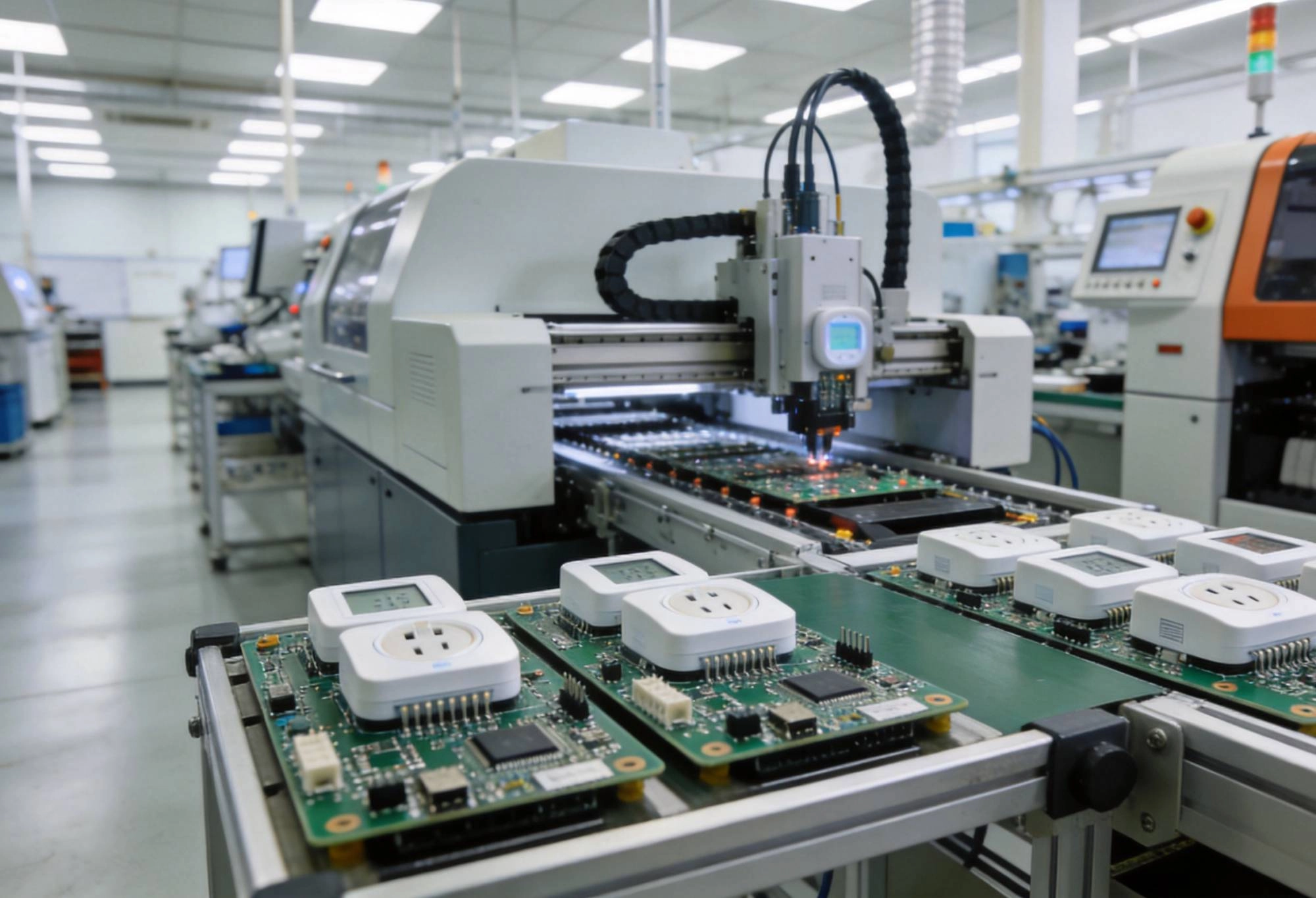
The smart home market continues expanding rapidly, with consumers adopting connected thermostats, security cameras, voice assistants, and automation controllers at accelerating rates. This growth creates both opportunity and challenge for manufacturers: market demand is strong, but price competition is fierce, and margins are increasingly squeezed. Success in smart home electronics requires manufacturing strategies that optimize cost without compromising the quality and reliability consumers expect from products they trust in their homes.
Turnkey PCB Assembly provides a compelling solution for smart home device manufacturers seeking cost efficiency without sacrificing quality. By consolidating design, Component Sourcing, manufacturing, and quality verification under single accountability, turnkey approaches eliminate interface complexity and reduce administrative overhead. Understanding how to leverage turnkey strategies effectively helps manufacturers navigate the cost-quality-schedule tradeoff that determines market success.
Smart home devices present unique manufacturing challenges that influence cost optimization strategies. Understanding these characteristics helps manufacturers select appropriate approaches.
Modern smart home devices combine multiple functions on single assemblies—processing, wireless connectivity, sensor interfaces, power management, and user interface elements all compete for board space and component budgets. This complexity creates manufacturing challenges that affect cost: higher layer counts, finer pitch components, and more rigorous quality requirements for Wireless Performance.
Feature integration trends continue accelerating, with each product generation adding capabilities while maintaining or reducing price points. Manufacturers must achieve cost reductions continuously just to maintain margin as competitive pressure intensifies. Manufacturing strategies must enable cost optimization without sacrificing the reliability that affects brand reputation in consumer markets.
Smart home devices span from niche products with thousands of units to mass-market products with millions of units annually. Volume dramatically affects manufacturing economics: higher volumes justify investment in tooling, automation, and process optimization that lower per-unit costs. Manufacturing strategies appropriate for prototype quantities may be entirely unsuitable for volume production.
Price points in smart home markets range from sub-$20 sensors to premium devices exceeding $200. Manufacturing costs represent different percentages of selling price depending on market positioning. Premium products may tolerate higher manufacturing costs in exchange for superior quality and features. Mass-market products require aggressive cost optimization to achieve viable margins.
Smart home devices operate in home environments where failure creates significant customer dissatisfaction. A security camera that fails provides no security value. A voice assistant that requires frequent resets frustrates users expecting seamless interaction. Quality requirements in consumer markets may exceed those in some industrial applications, despite lower price points.
Reliability expectations extend beyond functional performance to include aesthetic quality. Visible defects—scratches, blemishes, poor solder joint appearance—trigger returns even when products function correctly. Manufacturing strategies must achieve both functional excellence and cosmetic quality that satisfy consumer expectations.
Components typically represent 50-70% of Pcb Assembly cost. Component optimization provides the largest opportunity for cost reduction.
Component selection during design significantly impacts manufacturing cost. Using components readily available from multiple sources keeps pricing competitive and ensures supply availability. Proprietary or specialized components with limited sources command premium pricing and create supply risk. Designing with standard, widely-used components enables cost optimization through Volume Pricing and supplier competition.
Component footprints matter beyond just pricing. Components available only in moisture-sensitive packages require additional handling and baking processes that increase manufacturing cost. Components without compatible automated placement programs require manual handling that dramatically increases assembly cost. Design teams should consult with manufacturing partners during component selection to avoid by accident creating expensive manufacturing requirements.
Smart home devices typically require wireless connectivity—WiFi, Bluetooth, Zigbee, Z-Wave, or proprietary protocols. Integration strategy significantly affects cost. Discrete component solutions—individual radios, filters, matching networks, and antennas—provide flexibility but require careful RF design and more board space. Integrated wireless modules simplify design but add component cost and may limit customization options.
Module selection should consider total cost including external components, certification requirements, and development support. Modules with integrated antennas reduce component count but may limit range performance. Modules requiring external antennas add component cost but may achieve better Wireless Performance in challenging environments. Tradeoff analysis during design enables optimal selection.
Power management components significantly affect both component cost and ongoing operating cost. Inefficient power supplies waste energy, requiring larger batteries or power adapters. Over-engineered power supplies add cost without proportionate benefit. Optimal power architecture balances component cost against efficiency, battery life, and thermal considerations.
Switching regulators generally cost more than linear regulators but provide superior efficiency, particularly in battery-powered devices. The cost premium for switching regulators may be justified by extended battery life that differentiates products in the market. Analysis should consider total cost of ownership, not just component cost, when selecting power architectures.
Beyond component cost, manufacturing processes offer substantial optimization opportunities for cost-effective production.
PCB Fabrication cost depends significantly on panel utilization. PCBs panelized efficiently—filling more of the standard fabrication panel—achieve lower per-board cost. Array designs that place multiple boards in optimal orientations maximize panel utilization. Working with manufacturers to optimize panelization can reduce bare board cost by 20-30% compared to inefficient arrangements.
V-score and tab-route panelization approaches have different cost and convenience tradeoffs. V-scored panels are easier to separate but may leave visible marks. Tab-route panels require additional material for routing but provide cleaner separation. For high-volume production, investment in routing fixtures may be justified by improved assembly handling and reduced defect rates.
Placement efficiency affects assembly cost significantly. Components placed per hour represents a fixed capacity resource. Designs that minimize placement time—through efficient component staging, reduced changeover, and optimized placement sequences—achieve lower assembly cost. Component selection influences placement efficiency: tape-and-reel components place faster than trays or tubes. Smaller components generally place faster than larger ones.
Through-hole components add substantial assembly cost compared to surface-mount alternatives. Where electrical requirements permit, converting through-hole components to surface-mount equivalents reduces assembly cost and improves manufacturing throughput. Connectors and transformers may require through-hole construction for mechanical reasons, but many components have surface-mount alternatives worth considering during design.
Testing adds cost but provides quality assurance that prevents field failures and returns. Over-testing wastes resources on unnecessary verification. Under-testing increases failure risk that damages brand reputation and generates return costs. Optimal test strategy balances verification thoroughness against cost, focusing test resources on highest-risk areas.
Functional test development represents significant investment that manufacturers amortize across production volumes. High-volume products justify comprehensive test development. Prototype and low-volume production may rely on simpler test approaches that provide adequate verification at lower cost. Test strategy should scale with production volume and quality requirements.
Component supply chains significantly affect both cost and availability. Strategic Supply Chain management protects against shortages while optimizing pricing.
Component distributors offer different value propositions. Large authorized distributors provide supply reliability and authenticity assurance but may not offer lowest pricing. Independent distributors may provide competitive pricing but carry counterfeit risk. Broker sources offer spot pricing flexibility but without supply commitment or quality assurance.
Strategic sourcing often combines sources for different component categories. High-risk components—those with long lead times, single sources, or obsolescence exposure—justify authorized distributor pricing for supply security. Commodity components with multiple sources and stable availability may be sourced from independent distributors for cost advantage. This differentiated approach optimizes both cost and risk.
Inventory carries cost—capital tied up, storage required, obsolescence risk. Insufficient inventory creates stockout risk that halts production. The balance between inventory investment and supply security depends on component criticality and supply stability.
Just-in-time inventory works for stable components with reliable supply. Risky components—long lead times, volatile demand, obsolescence exposure—warrant buffer inventory investment. Manufacturer consignment programs shift inventory cost to suppliers while ensuring availability. Vendor-managed inventory provides similar benefits with different relationship dynamics.
Component lead times affect both cost and planning flexibility. Standard lead times for catalog components typically range from 4-12 weeks. Expedited processing adds premium cost. Long lead time components constrain planning flexibility, requiring early commitment before market demand is certain.
Design choices affect lead time exposure. Components with long lead times should be identified early and ordered proactively. Alternative Components with shorter lead times may be worth considering if performance requirements can be met. Managing lead time risk through component selection and inventory strategy protects production scheduling.
Cost optimization must not compromise quality to the point where field failures exceed acceptable levels. Finding the appropriate balance requires understanding true cost of quality.
Field failures generate costs beyond simple repair or replacement. Return processing—receiving, diagnosing, repairing or replacing, and reshipping—costs substantially more than the component that failed. Customer dissatisfaction affects brand reputation and future purchase decisions. In smart home markets, where products are often purchased based on reviews and recommendations, reputation impact extends far beyond individual failure costs.
Analysis should quantify total cost of field failures including administrative overhead, logistics, and reputation impact. This true cost often exceeds naive estimates by factors of five to ten. Understanding actual failure costs informs appropriate investment in prevention through quality systems and testing.
Burn-in testing screens assemblies for early-life failures by operating them under stress conditions. This screening moves failures from the field to manufacturing, where they cost less and affect fewer customers. For products where failure is costly or reputation-damaging, burn-in may be justified despite added cost.
Temperature cycling and power cycling provide effective burn-in screening. Duration and stress levels determine screening effectiveness. Extended burn-in identifies more defects but increases manufacturing cycle time and cost. Risk-based burn-in duration—longer for critical applications, shorter for less demanding uses—balances screening effectiveness against cost.
Consumer products face cosmetic quality requirements that may exceed functional requirements. Visible defects—solder joint discoloration, component marking issues, scratches on enclosures—trigger returns despite correct function. Establishing clear cosmetic standards with manufacturing partners prevents disputes and ensures consistent quality.
Cosmetic standards should be documented with reference images showing acceptable and unacceptable examples. Ipc Standards provide baseline acceptance criteria, but consumer product expectations may be stricter for visible areas. Differentiating critical cosmetic areas—visible in normal use—from less-critical areas—internal, hidden behind covers—enables appropriate quality investment.
Selecting appropriate turnkey partners significantly impacts Cost-effective Manufacturing success.
Smart home device manufacturing has specific requirements: fine-pitch component placement for wireless modules, RF expertise for antenna integration, wireless certification experience, and consumer-quality cosmetic standards. Partners with relevant experience provide value beyond basic assembly capability.
Evaluate partners based on track record with similar products. Request references from comparable projects and evaluate their success. Partners with demonstrated success in smart home markets bring process optimization and problem-solving capability that new entrants cannot match.
Manufacturing partners must have capacity matching your production requirements—not just current volumes but growth potential as products succeed. Partners at capacity limit production flexibility and may prioritize other customers. Understanding current loading and growth capacity helps avoid constraints that limit market success.
Scalability includes Component Sourcing capability. Partners with strong distributor relationships can secure components during shortage conditions. Partners without Supply Chain leverage may struggle to deliver during supply constraints, limiting sales regardless of manufacturing capability.
Cost-effective Manufacturing requires honest communication about challenges and opportunities. Partners who communicate proactively about potential problems enable response before issues become crises. Partners who hide problems until they cannot be concealed create crises that damage relationships and production.
Transparency about cost structure enables collaborative optimization. Partners willing to share cost breakdowns enable joint identification of optimization opportunities. Partners who treat cost information as proprietary limit collaborative improvement that could benefit both parties.
Cost optimization is not a one-time achievement but continuous improvement requiring ongoing attention.
Manufacturing yield directly affects cost—yield losses represent wasted material and processing that flows directly to cost. Analyzing yield by defect type identifies improvement opportunities. Addressing root causes of recurring defects reduces yield loss and improves cost efficiency.
Statistical analysis of yield trends reveals whether improvements are effective and whether new issues are emerging. Tracking yield over time—across production runs, product versions, and manufacturing locations—provides insight that individual data points cannot.
Manufacturing experience provides feedback that should inform design evolution. Patterns of manufacturing difficulty—components that are challenging to place, features that cause defects—suggest design modifications that improve producibility. Turnkey partners committed to continuous improvement provide this feedback proactively rather than accepting yield loss as inevitable.
Design modifications should be evaluated for manufacturing impact before implementation. Changes that simplify manufacturing without affecting performance provide cost reduction opportunities. Collaborative design reviews that include manufacturing input identify opportunities that pure electrical optimization might miss.
Cost-effective Turnkey PCB Assembly for smart home devices requires systematic optimization across design, component selection, manufacturing processes, and Supply Chain Management. The strategies outlined—strategic component selection, manufacturing efficiency optimization, Supply Chain Risk Management, and quality balance—provide a framework for achieving cost targets while meeting quality expectations that consumer markets demand.
Success in competitive smart home markets requires ongoing cost optimization, not one-time achievements. Continuous improvement in manufacturing efficiency, yield, and Supply Chain Management maintains competitive position as markets evolve and price pressure intensifies. Partners committed to collaborative optimization provide value beyond basic manufacturing capability.
The path to cost-effective smart home manufacturing combines strategic decisions during design—component selection, architecture choices, feature tradeoffs—with operational excellence in manufacturing execution. Manufacturers who master both dimensions achieve the cost-quality-schedule balance that enables market success in this demanding and competitive landscape.
Cost reduction focuses on component optimization—selecting components available from multiple sources, using standard packages, and avoiding moisture-sensitive components requiring extra handling. Manufacturing efficiency improvements through panelization optimization, placement efficiency, and appropriate testing levels also reduce cost. Focus cost reduction efforts on areas that don't affect reliability, preserving quality investment where it matters for field performance.
Select components available in standard packages from multiple sources. Avoid proprietary or specialized components with limited suppliers. Consider wireless module integration versus discrete implementations based on total cost analysis. Evaluate power architecture efficiency for battery-powered devices. Design with components having proven manufacturing compatibility rather than theoretical performance advantages.
Understand true cost of field failures including return processing, reputation impact, and customer satisfaction effects. This true cost often exceeds naive estimates significantly. Invest in quality proportionate to these actual failure costs rather than minimizing quality investment arbitrarily. Differentiate quality standards between functional requirements and cosmetic requirements, focusing investment where it affects product success.
High-volume production justifies comprehensive test development investment amortized across many units. Automated Optical Inspection and X-ray inspection for hidden joints provide defect detection. Functional test validates product operation. Risk-based test levels—more thorough for higher-risk functions—balance verification thoroughness against cost. Field failure data should inform test strategy refinement over time.
Turnkey solutions consolidate procurement, manufacturing, and quality under single accountability, simplifying cost management across these functions. Established turnkey providers leverage supplier relationships for competitive component pricing. Volume commitments across multiple customers may provide allocation priority during shortages. Single-point accountability simplifies problem resolution that fragmented supplier relationships complicate.
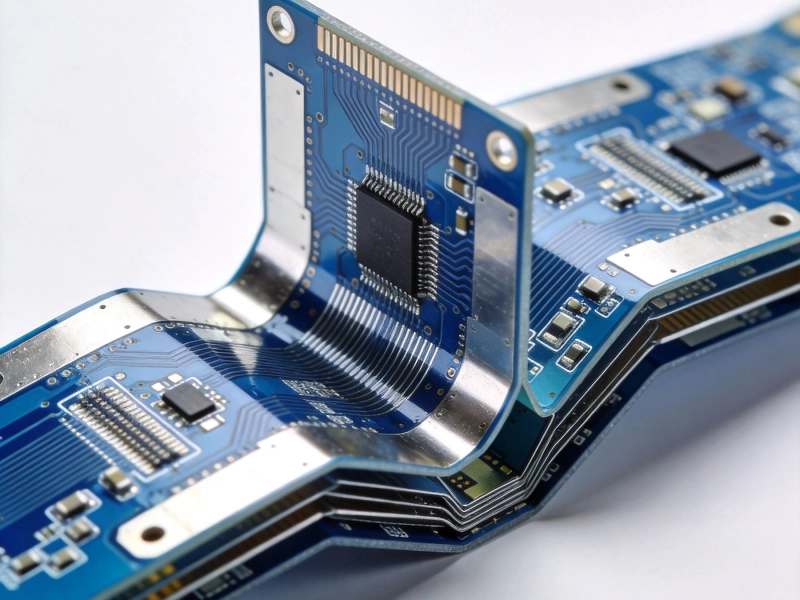
Turnkey PCB Manufacturing for Rigid-Flex and HDI BoardsJuly/08/2026
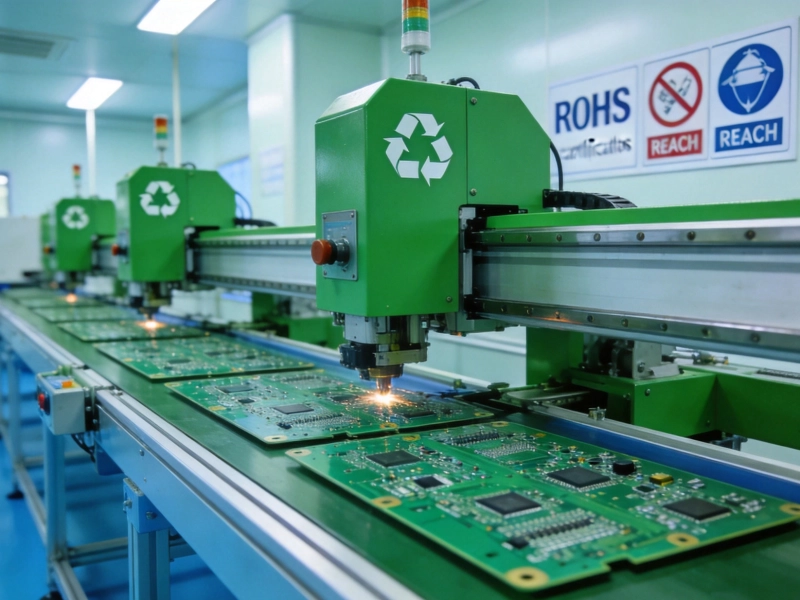
Turnkey PCB Manufacturing: Ensuring Environmental Compliance (RoHS/REACH)September/07/2026
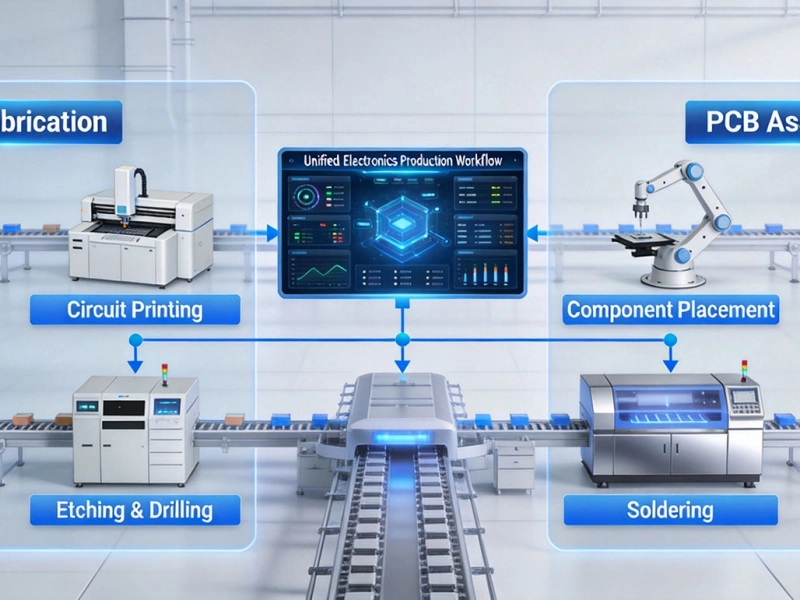
Turnkey PCB Manufacturing: Integrating Fabrication and Assembly SeamlesslyMay/26/2026
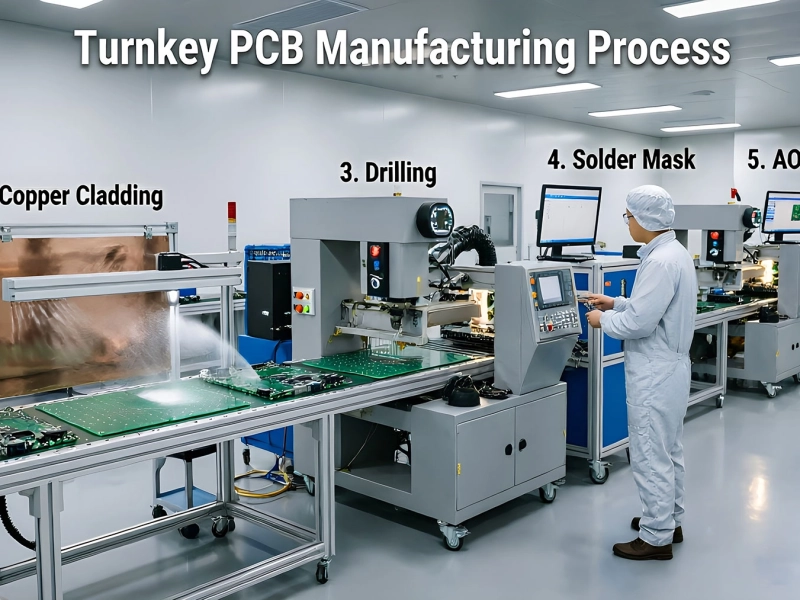
A Step-by-Step Walkthrough of the Turnkey PCB Manufacturing ProcessJune/09/2026
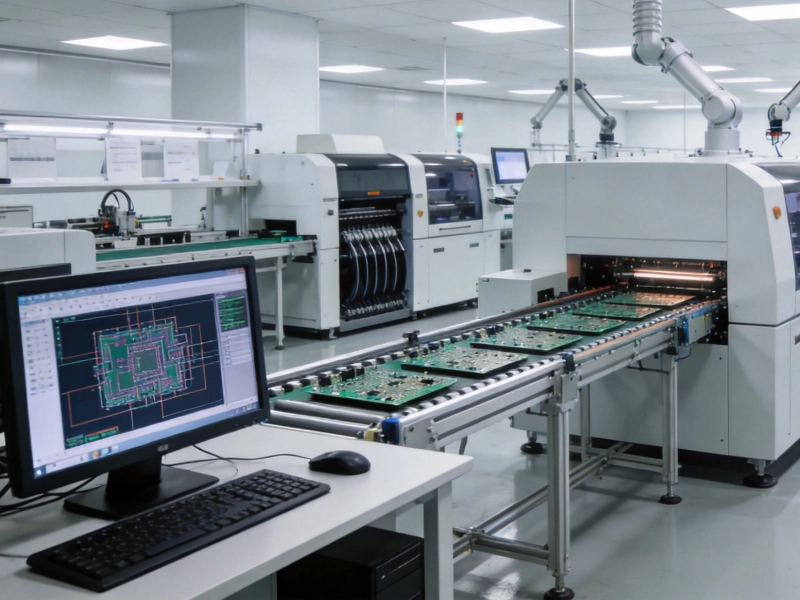
Turnkey PCB Solutions: Bridging the Gap Between Design and Mass ProductionAugust/06/2026
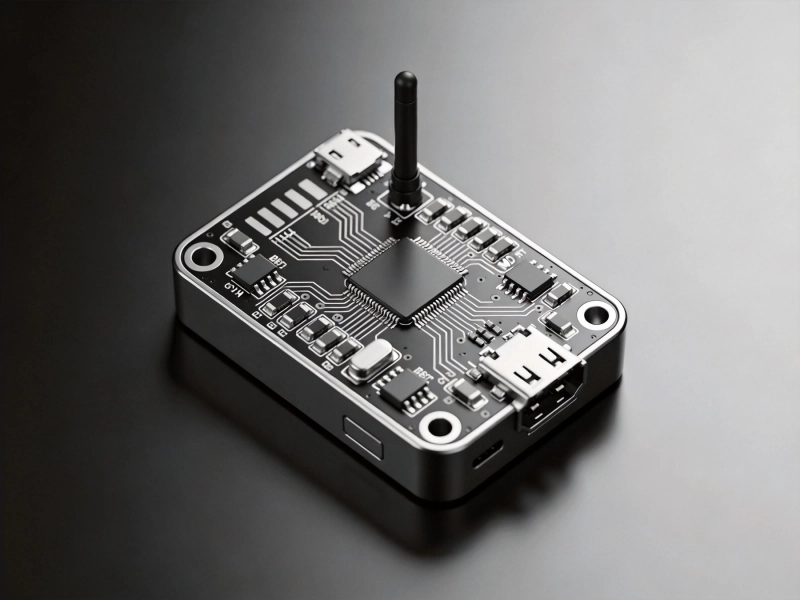
Ensuring Wireless Performance in IoT Turnkey PCB AssemblySeptember/14/2026

Ruggedized PCB Assembly for Harsh Industrial EnvironmentsJuly/20/2026
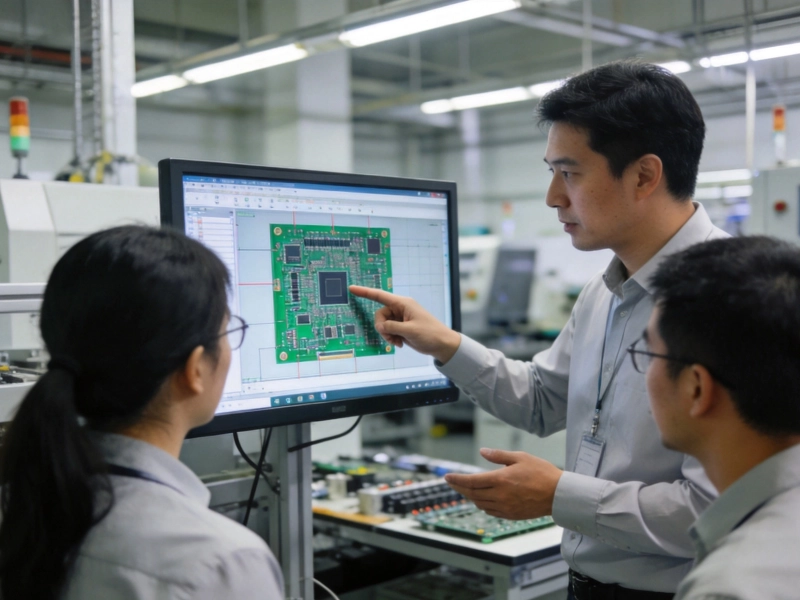
Key Insights on DFM (Design for Manufacturing) in Turnkey ProjectsJuly/26/2026