In Consumer Electronics, a bad board is an annoyance—return it, replace it, move on. In medical devices, a bad board can be a patient safety event. A pacemaker that fails to deliver therapy, an infusion pump that delivers the wrong dose, or a diagnostic imaging system that produces inaccurate results—each of these failures can trace back to a Pcb Assembly defect that was not caught, not documented, or not traceable to its root cause. That is why traceability and documentation in medical Pcb Assembly are not bureaucratic overhead but the regulatory and ethical foundation of every board that goes into a patient-contacting or patient-adjacent device.
This article examines the traceability and documentation requirements that govern Medical Pcb Assembly, the standards that define them, the practical systems that implement them, and the consequences of getting them wrong.
The Regulatory Framework: Who Demands What
Medical Pcb Assembly sits at the intersection of multiple regulatory systems, each with its own documentation and traceability requirements:
FDA 21 CFR Part 820 (Quality System Regulation)
The U.S. Food and Drug Administration's Quality System Regulation (QSR) is the baseline requirement for any medical device sold in the United States. Key traceability and documentation provisions include:
- §820.90 — Nonconforming product. Every nonconforming component, in-process material, and finished device must be identified, documented, and dispositioned. The records must enable root-cause investigation back to the specific component lot, process step, and operator.
- §820.181 — Device history record (DHR). A DHR must be prepared for each batch, lot, or individual device. It must include the date of manufacture, component inputs, process parameters, inspection results, and labeling used. The DHR must demonstrate that the device was manufactured in accordance with the device master record (DMR).
- §820.184 — Device master record (DMR). The DMR is the recipe: drawings, specifications, procedures, labeling, and packaging requirements. Every DHR must reference the DMR version that was in effect at the time of manufacture.
- §820.198 — Complaint files. When a complaint arrives, the manufacturer must be able to trace the complained-of device back through its entire manufacturing history—including the PCB assembly—to identify the cause and scope of the issue.
ISO 13485:2016 (Medical Devices — Quality Management Systems)
Iso 13485 is the international counterpart to the QSR and is required for CE marking in Europe. Its traceability requirements go further in some areas:
- Clause 7.5.9 — Traceability. Traceability must be maintained for components, work environment conditions, and personnel for products where traceability is a requirement. The extent of traceability must be defined and documented—this is not optional for implantable or life-supporting devices.
- Clause 7.5.9.2 — Particular requirements for traceability. For implantable medical devices, traceability must extend to all components and materials, and records must identify where the product was distributed. This "forward traceability" means you must be able to identify every device that contains a component from a suspect lot.
- Clause 4.2.4 — Control of records. Records must remain legible, identifiable, and retrievable for the defined retention period—which for implantable devices is at least the lifetime of the device plus one year, or as required by regulation (often 15–30 years).
EU MDR 2017/745 (Medical Device Regulation)
The European Medical Device Regulation, fully effective since May 2021, adds Unique Device Identification (UDI) requirements that propagate down to the component level. Every medical device must carry a UDI, and the UDI-DI (device identifier) must link to a record that includes the manufacturing traceability chain. For Class IIb and III devices (which include most implantable and life-supporting electronics), the Notified Body will audit the entire traceability chain from raw material to finished device.
What Traceability Means in Practice for PCB Assembly
Traceability in medical PCB assembly is not a single system—it is a layered architecture that connects every input, process, and output through auditable linkages. The five critical layers are:
1. Component-Level Traceability
Every component on the board must be traceable to:
- Manufacturer and part number. The exact component as specified in the BOM—including manufacturer part number (MPN), not just a generic description.
- Lot or batch code. The manufacturer's lot code, as received. This is the primary key for any recall or failure investigation.
- Date code. For semiconductor components, the date code (YYWW format) indicates when the die was fabricated. Age-sensitive components (electrolytic capacitors, certain adhesives) require date-code-based shelf-life control.
- Supplier and receiving lot. If components are sourced through a distributor rather than directly, the distributor's lot and receipt date add another link in the chain.
- Storage conditions. Moisture-sensitive devices (MSL-rated per IPC/JEDEC J-STD-020) must have their floor-life tracked from the time the moisture-barrier bag is opened until the component is soldered.
Practical implementation requires barcode or 2D-code labeling on every reel, tray, and tube, scanned at every transfer point: receiving → incoming inspection → warehouse → kitting → SMT placement → reflow → inspection → conformal coat → final test. Paper-based tracking is not viable for boards with hundreds of components; electronic traceability systems (MES/software) are mandatory.
2. Process-Level Traceability
Every process step that transforms the board must be recorded with sufficient detail to reproduce or investigate:
- Solder Paste Printing. Stencil ID, paste lot, squeegee speed, pressure, separation speed, and inspection results (SPI data for every pad).
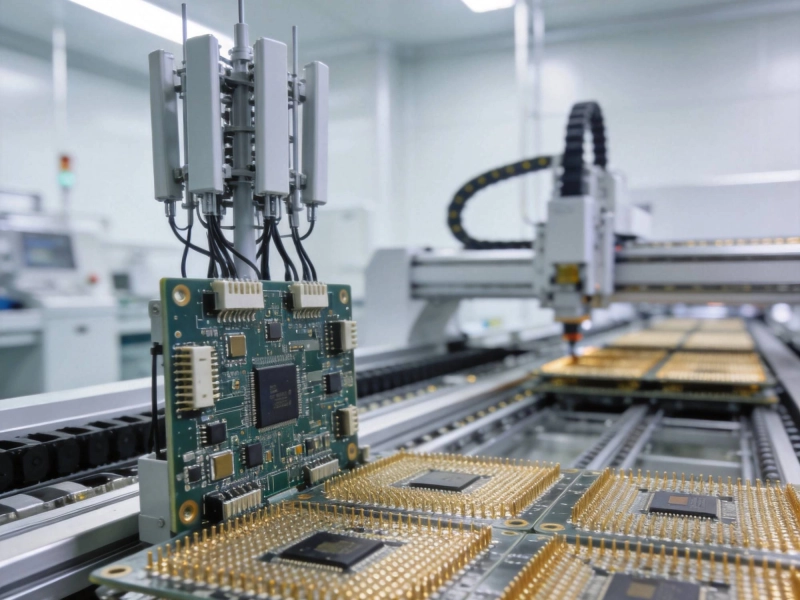
- Component placement. Machine ID, program revision, nozzle assignments, placement coordinates for every component, and any placement exceptions (manually placed or skipped components).
- Reflow Soldering. Oven ID, profile ID, actual temperature profile measured by profiler (thermocouple data for each zone), and date/time stamp for each board or panel.
- Inspection. AOI and X-ray machine IDs, program revisions, and defect calls for every component—both the defect image and the disposition (accept, rework, scrap).
- Conformal Coating. Coating material lot, application method (selective spray, dip, brush), thickness measurements, and cure schedule.
- Electrical testing. ICT or flying-probe program revision, test fixture ID, pass/fail results for every test point, and any repairs made to achieve a passing result.
The critical design principle: every record must link to the specific board serial number or panel ID. Without that linkage, process data is interesting but not traceable.
3. Material and Environmental Traceability
The manufacturing environment itself must be documented:
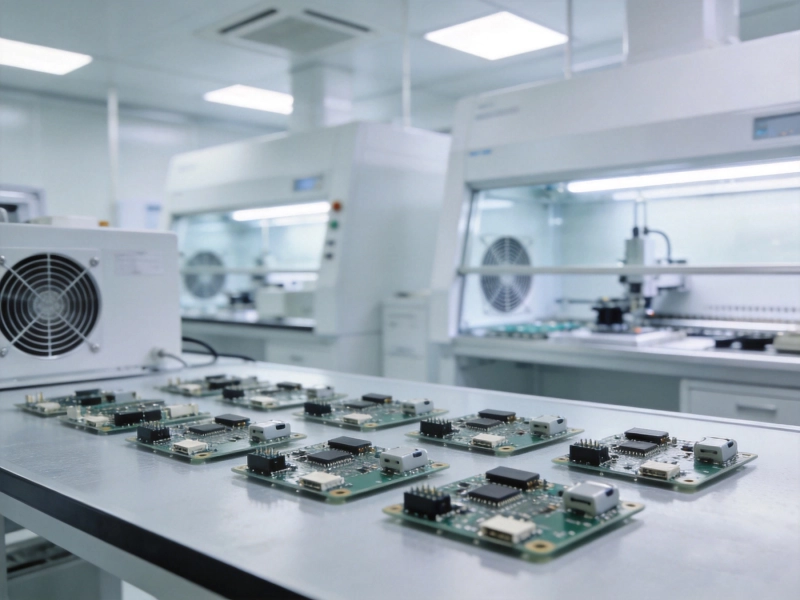
- Cleanroom classification. Medical PCB assembly for implantable or sterile-pack devices typically occurs in ISO Class 7 (10,000) or Class 8 (100,000) cleanrooms. Particle counts, temperature, and humidity must be monitored and recorded at defined intervals.
- ESD control. ESD audit records, wrist-strap and heel-test logs, and ionizer verification data must be maintained. ESD damage is a latent defect—traceability to ESD compliance is essential for failure investigation months or years after assembly.
- Consumables. Solder Paste, flux, cleaning solvents, Conformal Coating, and even the IPA used for manual cleaning must be tracked by lot. A contaminated flux lot can cause dendritic growth that manifests as a field failure years later.
4. Personnel Traceability
For medical devices, the identity of the person performing each operation must be recorded:
- Operator login at every station (barcode badge or biometric).
- Training qualification records linked to the operator ID—verifying that the operator was trained and qualified on the specific process before performing it.
- Supervisor override or exception logs (when an operator makes a judgment call that deviates from the standard procedure).
This is not about blame; it is about investigation. If a pattern of defects correlates to a single operator, that points to a training or process issue—not a personnel problem.
5. Forward Traceability: Board to Patient
The ultimate purpose of traceability is the ability to answer the question: "Which patients have devices containing PCBs from the suspect lot?" This requires forward traceability from the component lot through the PCB serial number through the device serial number to the distribution record. The chain looks like:
Component lot → Board serial → Sub-assembly serial → Device serial → UDI → Distribution record → Implant record (for implantables)
Every arrow in that chain must be an auditable database link. A gap in any link breaks the chain—making a recall broader and more costly than necessary, or worse, missing affected devices entirely.
The Device History Record (DHR): The Centerpiece of Documentation
The DHR is the single most important document in Medical Device Manufacturing. For a PCB assembly, the DHR includes:
- Identification. Board part number, revision, serial number or lot number, quantity in the lot, and date(s) of manufacture.
- DMR reference. The specific revision of the DMR (drawings, BOM, routing, specifications) that was in effect at the time of manufacture. This proves the board was built to the correct revision.
- Component records. For every component on the BOM: manufacturer, MPN, lot code(s) used, date code(s), quantity consumed, and any deviations or substitutions (with engineering approval documentation).
- Process records. The complete set of process data described in Section 2 above, organized by routing step.
- Inspection and test records. All incoming, in-process, and final inspection results—including raw data, not just pass/fail summaries.
- Nonconformance records. Any nonconforming material or process events, with root-cause investigation, corrective action, and disposition (use as-is, rework, scrap, or return to vendor).
- Labeling and packaging records. Verification that the correct labels were applied and the correct packaging configuration was used.
- Release signature. The quality representative who reviewed the DHR for completeness and compliance before releasing the lot for distribution.
A DHR is not a form you fill out at the end—it is a live record that is built step-by-step as the board moves through the manufacturing routing. If the MES cannot produce a complete DHR on demand, the traceability system is incomplete.
Process Validation: Documenting That the Process Works
Traceability documents what happened. Process validation documents that what happened is capable of producing a conforming product. For medical PCB assembly, key validations include:
- Installation Qualification (IQ). The equipment is installed per the manufacturer's specifications, utilities are verified, and calibration is current. Documented with installation records, utility maps, and calibration certificates.
- Operational Qualification (OQ). The process produces conforming output over the full range of operating parameters. For a reflow oven, this means running profiles at the minimum and maximum conveyor speeds and zone temperatures defined in the process window, and verifying that all solder joints meet IPC-A-610 Class 3 criteria at both extremes.
- Performance Qualification (PQ). The process produces conforming output consistently over time with production materials and operators. Typically three consecutive lots of at least 30 boards each, with zero defects or with defects within statistically justified limits.
Validation is not a one-time event. Any change to the validated process—new oven, new paste, new component supplier, revised placement program—triggers a change control evaluation that may require re-validation (full or partial). The change control record must document the rationale, the risk assessment, the validation plan, the results, and the approval to implement the change.
Implementing Traceability: Technology Choices
Manufacturing Execution Systems (MES)
An MES is the backbone of electronic traceability. For medical PCB assembly, the MES must support:
- Serialized board tracking at the individual unit level (not just lot level) for Class II and III devices.
- Component-to-board linking: every component's reel lot mapped to the specific board serial on which it was placed.
- Process parameter capture at the board level: actual reflow profile data, SPI measurements, and AOI defect images stored per board.
- Electronic DHR generation: the ability to compile all records for a board or lot into a reviewable document on demand.
- Audit trail: every record entry, modification, or deletion logged with timestamp, user ID, and reason. Records must be unalterable or alteration-controlled per 21 CFR Part 11 (electronic records and signatures).
Barcode and 2D Code Strategies
- Board-level serials. A 2D DataMatrix code on each board (or panel) encodes the serial number. Scanned at every station, this links all process data to the board.
- Component-level codes. Reels carry manufacturer-applied or warehouse-applied 2D codes per IPC/JEDEC J-STD-060 (component packing label standard). The placement machine scans the reel code at load and records it against every component placed from that reel.
- Human-readable backups. Barcode systems fail—scanners break, labels smear, codes are damaged. Every electronic traceability point should have a manual-entry fallback with verification (double-entry or scan-after-entry) for critical data.
Document Control and Retention
- All quality records must be retained for the device lifetime plus one year minimum, or as specified by regulation. For implantable devices, this can be 30+ years.
- Electronic records must be stored in systems that ensure readability for the full retention period—which means accounting for software obsolescence, storage media degradation, and file-format evolution. PDF/A (archival PDF) is the recommended format for long-term record storage.
- Backup and disaster recovery procedures must be validated. Losing traceability records is a reportable event for many regulatory authorities.
Common Documentation Failures and Their Consequences
- Gap in component lot tracking. A reel was loaded without scanning the barcode. If that component lot is later recalled, the manufacturer cannot identify which boards are affected and must expand the recall to all boards built during the period of uncertainty—costing millions and eroding regulatory confidence.
- Incomplete DHR. A reflow profile was not recorded for a specific board. During a complaint investigation, the absence of that record cannot prove the process was in control—and the default regulatory assumption is that it was not. This can trigger a 483 observation (FDA) or nonconformity (Notified Body) even if no actual defect exists.
- Uncontrolled changes. A technician adjusted a reflow zone temperature without a change-control record. If the adjustment correlates with a field-failure cluster, the lack of documentation prevents root-cause confirmation and may force a broader recall.
- Expired consumables. Solder Paste used beyond its shelf life was not flagged by the traceability system. The resulting joints may have latent defects (grainy microstructure, voiding) that fail under thermal cycling—years after the board ships.
- Training records not linked to operations. An operator performed conformal coating without documented qualification. A coating defect caused an in-use failure. The investigation reveals the training gap, compounding the device failure with a systemic quality-system failure.
Each of these scenarios has played out in real FDA warning letters and Notified Body audit findings. They are not theoretical risks.
Audit Readiness: What Inspectors Will Ask
When an FDA investigator or Notified Body auditor walks onto your PCB assembly floor, they will ask to see specific records. Being able to produce them quickly and completely is the difference between a clean audit and a costly observation. Key requests include:
- "Show me the DHR for lot XYZ." Produce the complete DHR within minutes—electronically, with all linked records accessible.
- "Trace this component lot through your system." Starting from a component manufacturer's lot code, show every board that received components from that lot, and every device that contains those boards.
- "Show me your change control for this process change." Produce the change-control record with risk assessment, validation plan, and approval signatures.
- "Demonstrate your nonconforming product process." Walk through a real nonconformance: identification, segregation, investigation, corrective action, and disposition—with all records linked and time-stamped.
- "Show me training records for these operators." For every operator who worked on the sampled lot, show qualification records for the specific processes they performed.
If any of these requests takes more than a few minutes to fulfill, the traceability system needs improvement. Auditors interpret delays as evidence of disorganization, which triggers deeper scrutiny.
Choosing a Medical PCB Assembly Partner
Not every CM is qualified—or equipped—to assemble medical PCBs. When evaluating partners, verify:
- Iso 13485 certification with a scope that explicitly includes PCB assembly (not just final device assembly).
- FDA registration (if shipping to the U.S.) and compliance with 21 CFR Part 820.
- MES with medical-traceability capability: serialized board tracking, component-to-board lot linkage, electronic DHR, Part 11-compliant electronic records.
- Cleanroom capability appropriate to your device classification (ISO Class 7 minimum for implantable and sterile-pack devices).
- Process validation portfolio: documented IQ/OQ/PQ for every process used on your board, with change-control procedures that you are comfortable with.
- Record retention capability: secure, backed-up electronic storage with demonstrated readability for the required retention period.
- Audit history: clean FDA and Notified Body audit results for the past 3+ years, with no outstanding observations or warning letters.
Conclusion
Traceability and documentation in medical PCB assembly exist for one reason: when something goes wrong—and eventually, something will—the records must enable a swift, accurate, and complete response that protects patients. Every gap in the traceability chain widens the scope of uncertainty during an investigation, leading to broader recalls, longer investigations, and greater regulatory exposure. Every missing document is a missed opportunity to prove that the process was in control and the product was conforming.
Building a traceability system that meets FDA, ISO 13485, and EU MDR requirements is a significant investment—in MES software, barcode infrastructure, process instrumentation, training, and quality-engineering discipline. But the cost of not having it is far greater: a recall that cannot be scoped, an audit that cannot be passed, or a patient event that cannot be investigated. In Medical Device Manufacturing, traceability is not overhead—it is the safety net that catches everything else.
For medical PCB assembly with full regulatory traceability, ISO 13485-certified processes, and audit-ready documentation systems, contact our medical manufacturing team to discuss your device requirements.
FAQ
What level of traceability is required for medical PCBs?
For Class II devices, lot-level traceability is typically sufficient. For Class III (implantable or life-supporting) devices, ISO 13485 Clause 7.5.9.2 requires unit-level (serial-number) traceability of all components and materials, plus forward traceability to distribution records.
What is a Device History Record (DHR)?
A DHR is the complete manufacturing record for a specific batch, lot, or unit of a medical device. It documents that the product was manufactured in accordance with the Device Master Record (DMR), including all component lots, process parameters, inspection results, and any nonconformances or deviations.
How long must medical PCB traceability records be retained?
Per ISO 13485, records must be retained for at least the lifetime of the device as defined by the manufacturer, plus one year. For implantable devices, this is commonly 15–30 years. FDA requirements under 21 CFR Part 820 are similar, with some records requiring indefinite retention.
Can medical PCB traceability be paper-based?
Theoretically yes, but practically no. Boards with hundreds of components and multiple process steps generate thousands of data points per unit. Paper-based systems cannot reliably link component lots to individual boards or generate DHRs on demand. Electronic MES-based traceability is the industry standard and is expected by auditors.
What happens if a traceability gap is found during an audit?
An auditor will issue an observation (FDA 483) or nonconformity (Notified Body) requiring corrective action. The manufacturer must investigate the gap, determine the scope of affected product, implement systemic corrective action, and provide evidence of effectiveness. Unresolved gaps can lead to warning letters, consent decrees, or suspension of certification.